



கம்பராமாயணம் 1572 · அயோத்தியா 3.5
பாடல் · The poem
Tap a word to see its gloss in the commentary and where else it occurs.
பொருள் · Meaning in Tamil
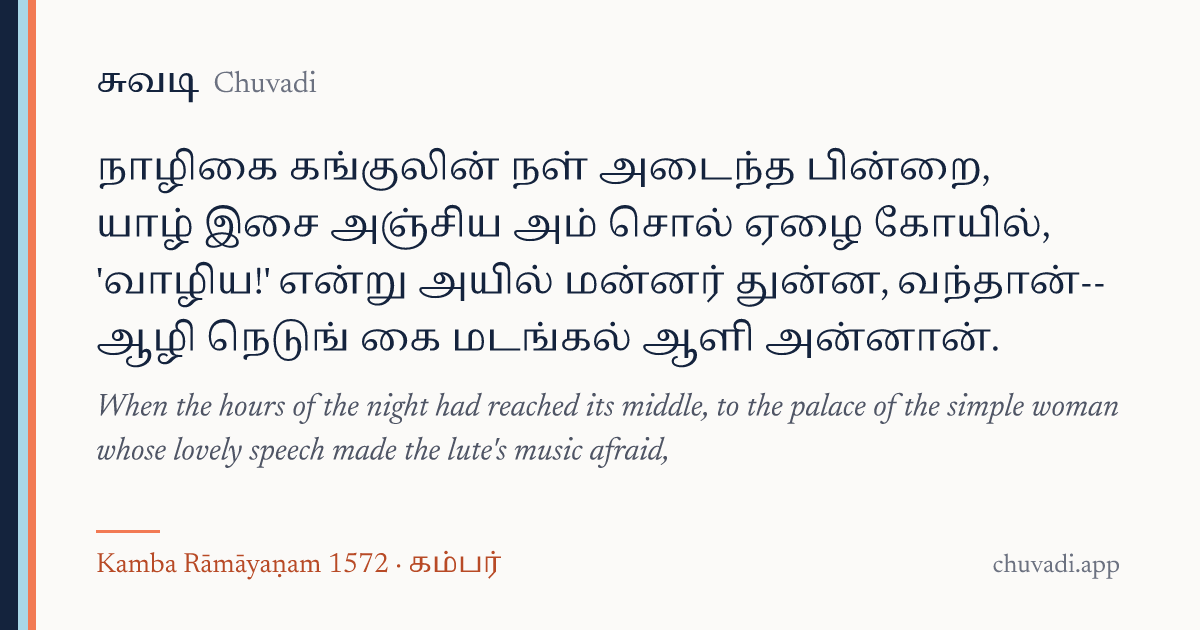
ஆழி நெடுங் கை - ஆணைச் சக்கரம் ஏந்தும் நீண்ட கைகளை யுடைய; ஆளி மடங்கல் அன்னான் - சிங்க ஏறு போன்றவனான தயரதன்; கங்குலின் நாழிகை நள் அடைந்த பின்றை - இராப்பொழுது நடுவை அடைந்த பின்னர்; வாழிய என்று அயில் மன்னர் துன்ன - “வாழ்க” என்று கூறிக்கொண்டு வேலேந்திய அரசர்கள் பக்கத்தில் சூழ்ந்துவர; யாழ் இசை அஞ்சிய அம்சொல் ஏழை கோயில் - யாழினது ஒலியும் அஞ்சப்பெற்ற அழகிய மொழியையுடைய கைகேயியின் மாளிகைக்கு; வந்தான் - வந்தடைந்தான்.
மறுநாள் இராமனுக்கு முடிசூட்டுவதற்குரிய விழா ஏற்பாடுகளைச் செய்வதில் காலம் கழிந்தமையால் இரவில் காலந் தாழ்த்துக் கைகேயியின் இருப்பிடம் நோக்கி மகிழ்ச்சியோடு தயரதன் சென்றான். ஏழை - பெண்; பிறர் பேச்சைக் கேட்டு ஆராயாது நடத்தலின் அறிவில்லாதவள் என்னும் குறிப்பும் புலப்பட வைத்தார். மடங்கல் - பிடரிமயிர் மடங்கியிருக்கப் பெற்றது; காரணப் பெயர்.
ஆங்கிலம் · English translationAI
Translation
- When the hours of the night had reached its middle,
- to the palace of the simple woman whose lovely speech made the lute's music afraid,
- while spear-bearing kings thronged about him crying 'Long may you live!', there came
- the lion-like king, whose long arm bears the wheel of command.
What the poem says
Busy all evening with arrangements for Irāmaṉ's coronation the next morning, Tacarataṉ comes late at night, in high spirits, to Kaikēyi's palace, escorted by kings who wish him long life.
Her speech is said to be so sweet that even the lute fears the comparison. The word used for her, ēḻai, ordinarily just means 'woman', but it also means 'simple, foolish', and the poet lets that second sense show: she is one who acts on another's words without thinking.