



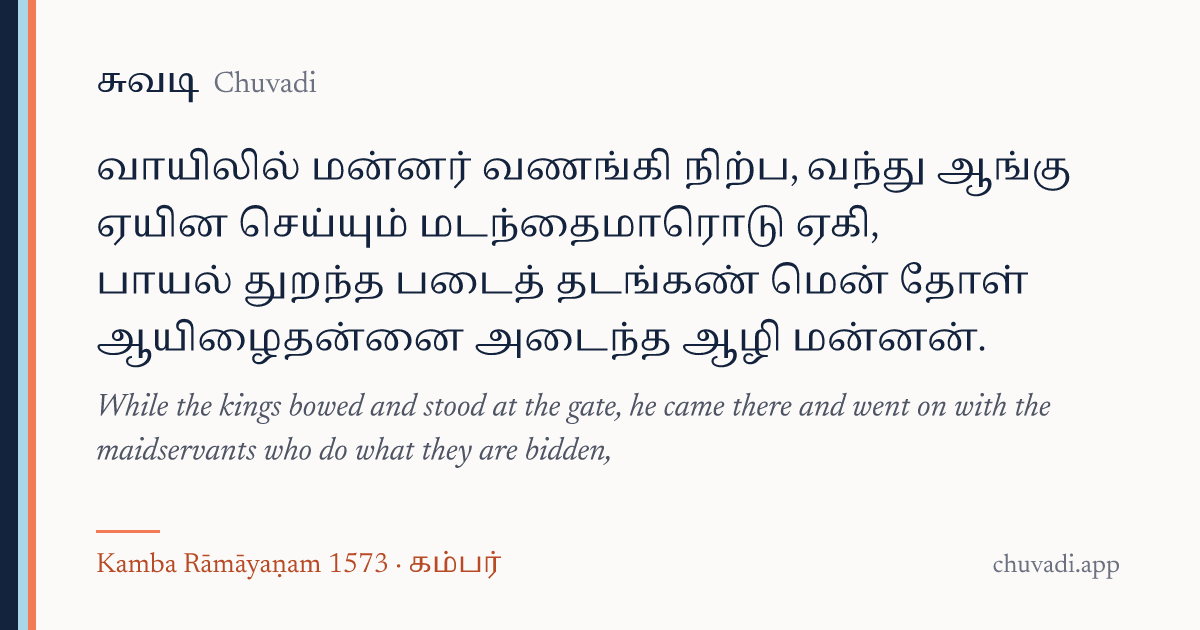
கம்பராமாயணம் 1573 · அயோத்தியா 3.6
பாடல் · The poem
Tap a word to see its gloss in the commentary and where else it occurs.
பொருள் · Meaning in Tamil
மன்னர் வணங்கி வாயிலில் நிற்ப - தன்னுடன் வந்த அரசர்கள் தொழுது அந்தப்புர வாயிலில் நிற்க; ஆங்கு வந்து - அவ்விடத்தில் ஓடிவந்து; ஏயின செய்யும் மடந்தைமாரொடு ஏகி - கட்டளையிட்ட வற்றைச் செய்யும் பணிப்பெண்களோடு சென்று; பாயல் துறந்த - படுக்கையைவிட்ட; படைத் தடங் கண் - வேல் போலும் கூரிய பெரிய கண்களையும்; மெல்தோள் - மென்மையான தோள்களையும் உடைய; ஆய் இழைதன்னை - கைகேயியை; அடைந்த ஆழிமன்னன் - சேர்ந்த அந்தச் சக்கரவர்த்தி (எடுக்கலுற்றான் என அடுத்த பாடலோடு முடியும்).
தயரதன் மாளிகையின் உள்ளே சென்று, தரையிலே அலங்கோலமாகக் கிடந்த கைகேயியைக் கண்டான் என்பது கருத்து. அந்தப்புரத்தில் அயல் ஆடவர் செல்ல இயலாதாகலின் மன்னர் வெளியே நின்றனர். ஆயிழை - பெண் என்னும் பொருட்டாய் நின்றது, கைகேயி அணிகலன்களைத் துறந்து கிடத்தலின்.
ஆங்கிலம் · English translationAI
Translation
- While the kings bowed and stood at the gate, he came there
- and went on with the maidservants who do what they are bidden,
- and reached the lady of choice jewels, with soft shoulders and large spear-like eyes, who had left her bed,
- he, the king of the wheel of command.
What the poem says
Leaving the escorting kings at the entrance, since no outside man may enter the women's quarters, Tacarataṉ goes in with the maids and finds Kaikēyi lying on the bare floor. The sentence is completed in the next verse, where he tries to lift her.
She is called 'the lady of choice jewels' although she has just thrown her jewels away. Here the epithet simply means 'woman', and the gap between the title and her present state is pointed.