



கம்பராமாயணம் 1577 · அயோத்தியா 3.10
பாடல் · The poem
Tap a word to see its gloss in the commentary and where else it occurs.
பொருள் · Meaning in Tamil
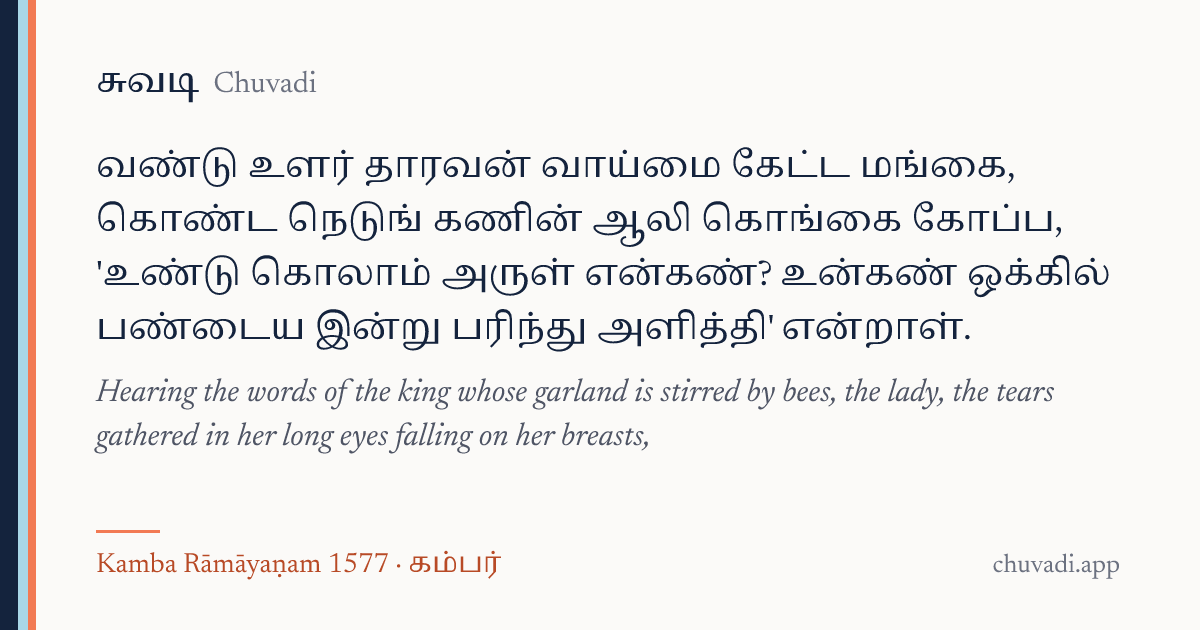
வண்டு உளர் தாரவன் - வண்டுகள் ஒலிக்கும் மாலையை அணிந்த அரசனது; வாய்மை கேட்ட மங்கை - சொற்களைச் செவியுற்ற கைகேயி; நெடுங் கணின் கொண்ட ஆலி - நீண்ட கண்களில் கொண்ட நீர்த்துளிகள்; கொங்கை கோப்ப - மார்பில் வீழ (அழுது கொண்டு); “என்கண் அருள் உன்கண் ஒக்கின் - உன்னிடத்தில் உள்ளதானால், பண்டைய - முன்னே எனக்குக் கொடுத்தவற்றை; பரிந்து அளித்தி - அன்புகொண்டு அளிப்பாய்,” என்றாள் - என்று சொன்னாள்.
இப் பாட்டில் கைகேயி நயமாகப் பேசித் தயரதனது சூளுரையைப் பெறவகை செய்கிறாள். ‘நெடுங்கணின் கொண்ட ஆலி’ என மாற்றிக் கூட்டுக. பண்டைய என்றது - சம்பரனோடு போர் நிகழ்ந்தபோது கைகேயி உதவியதற்குத் தயரதன் மகிழ்ந்து கொடுத்த வரம் இரண்டையும் குறித்தது. பண்டைய - பலவின்பால் பெயர். தன் கருத்தை அறிந்தபின்னர் அரசன் அதற்கு உடன்படுதல் அரிதாகலின் ‘பரிந்து அளித்தி’ என்றாள்.
ஆங்கிலம் · English translationAI
Translation
- Hearing the words of the king whose garland is stirred by bees, the lady,
- the tears gathered in her long eyes falling on her breasts,
- said: 'Is there grace toward me? If it is truly in you,
- then lovingly grant me today what was promised of old.'
What the poem says
Weeping, Kaikēyi answers the king's promise with a carefully worded request: if he really feels kindly toward her, let him now grant 'the old things'.
She means the two boons Tacarataṉ once gave her in gratitude when she helped him in the war against the demon Campara. She does not yet say what she will ask, because once he knew he would hardly agree; first she draws him into a pledge.