



கம்பராமாயணம் 1578 · அயோத்தியா 3.11
பாடல் · The poem
Tap a word to see its gloss in the commentary and where else it occurs.
பாட வேறுபாடு · Project Madurai reads
பொருள் · Meaning in Tamil
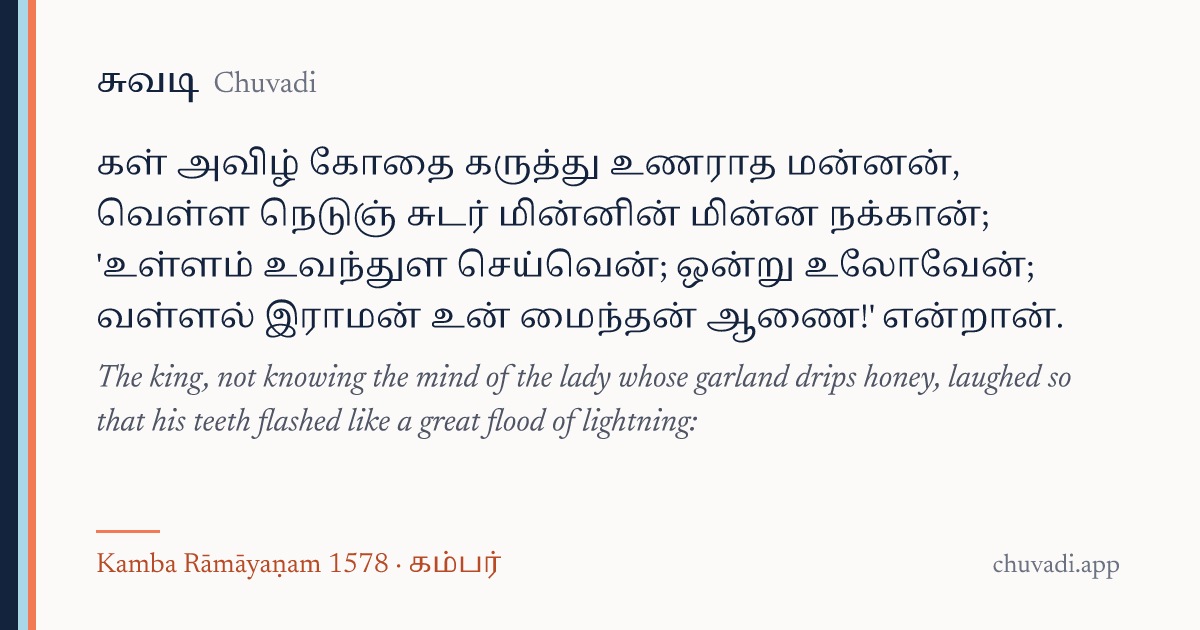
கள் அவிழ் கோதை - தேன் வழியும் கூந்தலையுடைய கைகேயியினது; கருத்து உணராத மன்னன் - எண்ணத்தை அறியாத தயரதன்; வெள்ள நெடுஞ் சுடர் மின்னின் - மிகுந்த பேரொளியையுடைய மின்னல்போல; மின்ன நக்கான் - விளங்கும்படி சிரித்து; “உள்ளம் உவந்துள செய்வேன் - உன் மனம் விழைந்தனவற்றைச் செய்வேன்; ஒன்று உலோவேன் - அதில் சிறிதும் உலோபம் செய்யேன்; உன் மைந்தன் - நினக்கு மகனும்; வள்ளல் - பெருவள்ளலுமான; இராமன் ஆணை - இராமன்மேல் சத்தியம்,” என்றான்.
கைகேயியின் உபாயம் பயன் தந்தது இதனால் கூறப்பட்டது. தயரதன் நகை பிறர் பேதைமையால் எழுந்தது. கைகேயி இந்நாள்வரை இராமனிடம் பேரன்புடையவள் என்னும் உறுதியால் ‘உன் மைந்தன் இராமன்’ என்றான்.
கள்ளவிழ் கோதை; அடையடுத்த ஆகுபெயர். லோபம் - வடசொல்; ஈயாமை என்பது பொருள்.
ஆங்கிலம் · English translationAI
Translation
- The king, not knowing the mind of the lady whose garland drips honey,
- laughed so that his teeth flashed like a great flood of lightning:
- 'Whatever your heart desires I will do; I will hold back nothing;
- I swear by Irāmaṉ, your son, the generous one!'
What the poem says
Kaikēyi's stratagem works. Not suspecting her purpose, Tacarataṉ laughs indulgently, the laugh of one amused at what he takes for a woman's simple fancy, and promises to give her whatever she wants without stint.
He seals the promise by swearing on Irāmaṉ, whom he calls 'your son', because until this day Kaikēyi has loved Irāmaṉ as her own. The irony is bitter: the oath sworn on Irāmaṉ is the one that will send him into exile.