



கம்பராமாயணம் 1579 · அயோத்தியா 3.12
பாடல் · The poem
Tap a word to see its gloss in the commentary and where else it occurs.
பொருள் · Meaning in Tamil
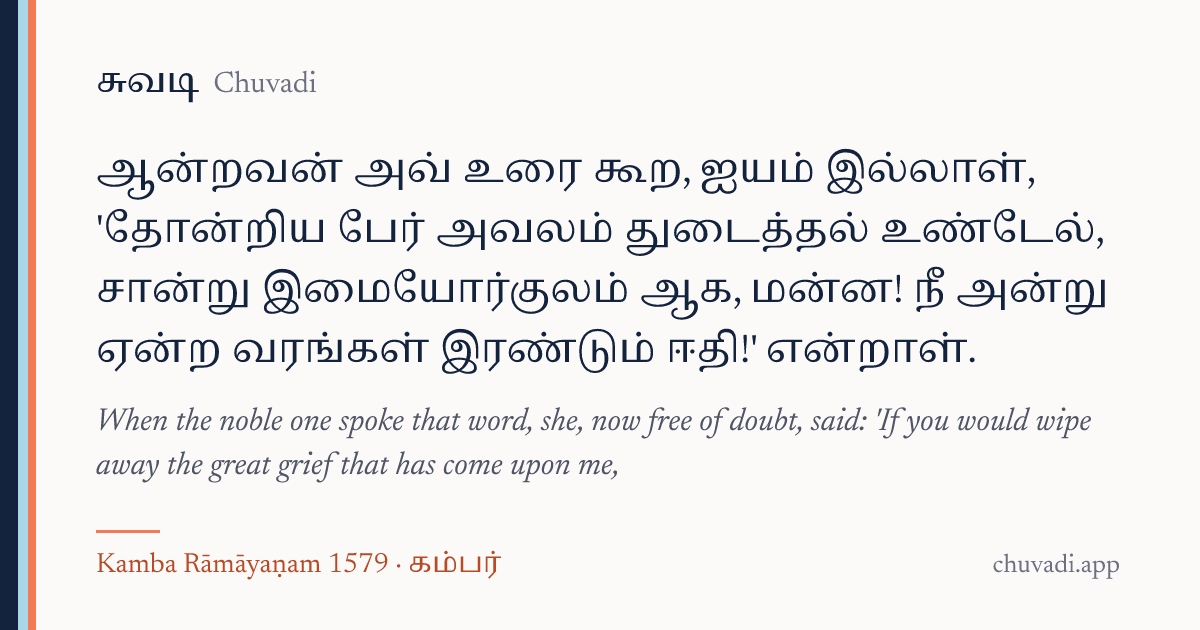
ஆன்றவன் - குணங்களால் நிறைந்த தயரதன்; அவ் உரை கூற - அந்த உறுதிமொழியைச் சொல்ல; ஐயம் இல்லாள் - தன் கருத்து நிறைவேறும் என்பதில் ஐயம் நீங்கியவளான கைகேயி; “மன்ன - அரசனே; தோன்றிய பேர் அவலம் துடைத்தல் உண்டேல் - எனக்கு உண்டாகிய பெரிய துன்பத்தைக் களைவது உளதானால்; இமையோர் குலம் சான்று ஆக - தேவர்கூட்டம் சாட்சியாக; நீ அன்று ஏன்ற வரங்கள் இரண்டும் ஈதி - நீ சம்பராசுரப்போர் நிகழ்ந்த அந்நாளில் எனக்களிப்பதாக மனம் இசைந்த இரு வரங்களையும் இப்பொழுது கொடுப்பாய்;” என்றாள்.
தயரதன் விருப்பத்திற்கு மாறான வரங்களைத் தான் கேட்கப்போவதால் அவன் வாக்குத் தவறினாலும் தவறலாம் என்பதால் அவனைக் கட்டுப்படுத்த எண்ணித் தேவர் கூட்டம் சான்றாக முன்பு தந்த வரங்களைத் தருமாறு அவனிடம் வேண்டுகிறாள்.
சான்று - சாட்சி. ஆக - வினையெச்சம். ஈதி - ஏவல் வினைமுற்று.
ஆங்கிலம் · English translationAI
Translation
- When the noble one spoke that word, she, now free of doubt,
- said: 'If you would wipe away the great grief that has come upon me,
- then, O king, with the race of the gods as witness, the two boons
- you agreed to that day, give them now!'
What the poem says
Sure now that her plan will succeed, Kaikēyi names her request: the two boons Tacarataṉ promised her on the day of the war against the demon Campara.
Because what she is about to ask runs against the king's wishes, and he might go back on his word, she binds him by calling the gods as witnesses to the promise.