



கம்பராமாயணம் 1580 · அயோத்தியா 3.13
பாடல் · The poem
Tap a word to see its gloss in the commentary and where else it occurs.
பாட வேறுபாடு · Project Madurai reads
பொருள் · Meaning in Tamil
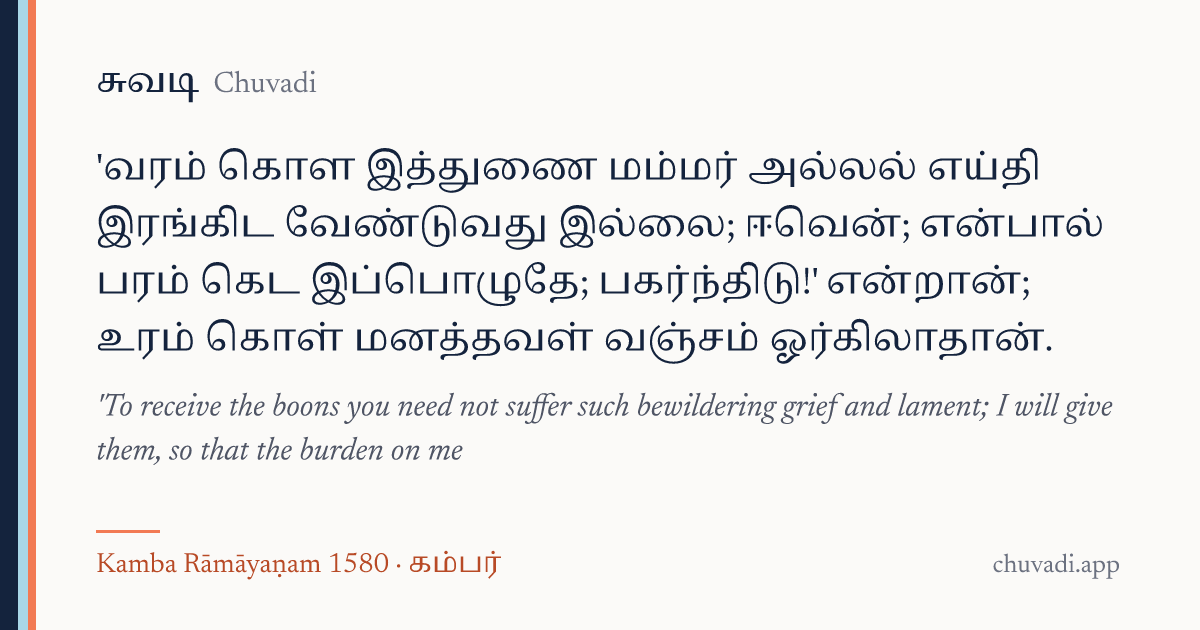
உரம் கொள் மனத்தவள் - வன்மை கொண்ட நெஞ்சத்தையுடைய கைகேயியின்; வஞ்சம் ஓர்கிலாதான் - வஞ்சனையை ஆராய்ந்து அறியாத தயரதன்; “வரம் கொள இத்துணை - (யான் கொடுப்பதாகச் சொன்ன) வரங்களைப் பெற்றுக்கொள்ள இவ்வளவு; மம்மர் அல்லல் எய்தி - தடுமாற்றம் தரும் துன்பம் அடைந்து; இரங்க வேண்டுவது இல்லை - நீ வருந்த வேண்டுவது இல்லை; என்பால் பரம் கெட - என்னிடத்துள்ள மனச்சுமை நீங்கும்படி; இப்பொழுதே ஈவென் - இப்பொழுதே தருவேன்; பகர்ந்திடு - சொல்வாய்;” என்றான்.
இயல்பில் மென்மையான கைகேயியின் மனம் கூனியின் சொல்லால் மாறி இப்பொழுது வன்மைகொண்டிருப்பதால் ‘உரங்கொள் மனத்தவள்’ என்றார். கைகேயியின் மீது கொண்ட அதிக அன்பால் அவள் சொற்களில் உள்ள வஞ்சத்தை ஆராய்ந்து அறியாதவனாகத் தயரதன் இருந்தமையால் ‘ஓர்கிலாதான்’ என்றார். ஓர்தல் - ஆராய்தல்.
ஆங்கிலம் · English translationAI
Translation
- 'To receive the boons you need not suffer such bewildering grief
- and lament; I will give them, so that the burden on me
- is lifted, this very moment; speak!' he said,
- he who did not perceive the deceit of the hard-hearted one.
What the poem says
Tacarataṉ, eager to be free of the debt of his old promise, tells Kaikēyi there is no need for all this weeping: he will grant the boons at once if she will only name them.
The poet calls her 'hard-hearted' because her naturally gentle nature has been hardened by the words of the hunchbacked maid Mantarai. The king, blinded by love for her, does not stop to examine her words for the deceit hidden in them.