



கம்பராமாயணம் 1581 · அயோத்தியா 3.14
பாடல் · The poem
Tap a word to see its gloss in the commentary and where else it occurs.
பொருள் · Meaning in Tamil
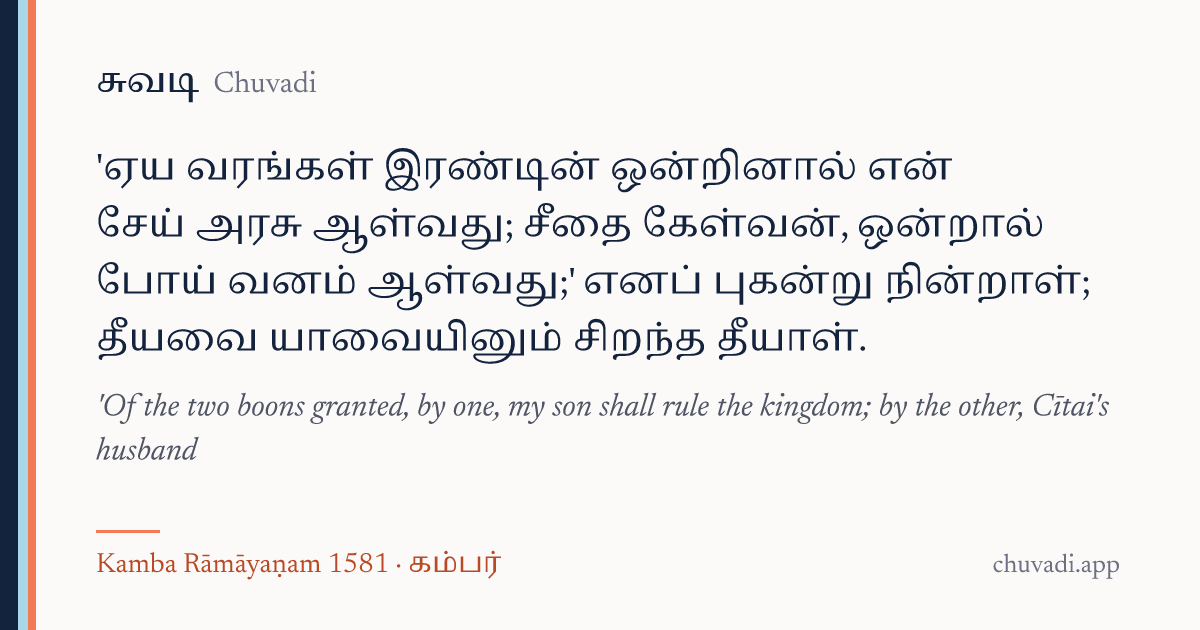
தீயவை யாவையினும் சிறந்த தீயாள் - கொடியவை என்று சொல்லப்படும் எல்லாவற்றிலும் மேம்பட்ட கொடியவளான கைகேயி; “ஏய வரங்கள் இரண்டின் - (நீ) கொடுத்த இரு வரங்களுள்; ஒன்றினால் - ஒரு வரத்தினால்; என் சேய் அரசு ஆள்வது - என் மகன் பரதன் நாட்டை ஆளுதல் வேண்டும்; ஒன்றால் - மற்றொன்றினால்; சீதை கேள்வன் போய் வனம் ஆள்வது - சீதைக்குக் கணவனாகிய இராமன் (இந்நாட்டை விட்டுச்) சென்று காட்டை ஆளுதல் வேண்டும்;” எனப் புகன்று - என்று சொல்லி; நின்றாள் - மனங் கலங்காமல் உறுதியாக நின்றாள்.
தீயவை - நெருப்பு, கூற்றுவன், நஞ்சு, பாம்பு முதலியன. ‘சிறந்த’ என்பது கொடிய என்னும் பொருளைத் தரும், ‘நல்ல பாம்பு’, ‘நல்ல வெயில்’ என்பவற்றில் நல்ல என்பது கொடிய என்னும் பொருளைத் தருவது போல. இத்தகைய கொடிய சொற்களை அஞ்சாது சொல்லி நிற்றல் இவளையன்றிப் பிறர்க்கு அரிது என்பதனால் ‘புகன்று நின்றாள்’ என்றார். ஆள்வது - வியங்கோள் வினைமுற்று.
ஆங்கிலம் · English translationAI
Translation
- 'Of the two boons granted, by one, my
- son shall rule the kingdom; by the other, Cītai's husband
- shall go away and rule the forest,' she said, and stood firm,
- she, more deadly than every deadly thing.
What the poem says
Kaikēyi names the two boons: by the first, her son Paratan is to rule the kingdom; by the second, Irāmaṉ, Cītai's husband, is to go and 'rule the forest', a cruelly ironic way of saying he is to be banished.
The poet calls her more deadly than all deadly things, such as fire, death, poison and the serpent. Having said these words without fear, she stands unshaken; few but she could have uttered them and held her ground.