



கம்பராமாயணம் 1582 · அயோத்தியா 3.15
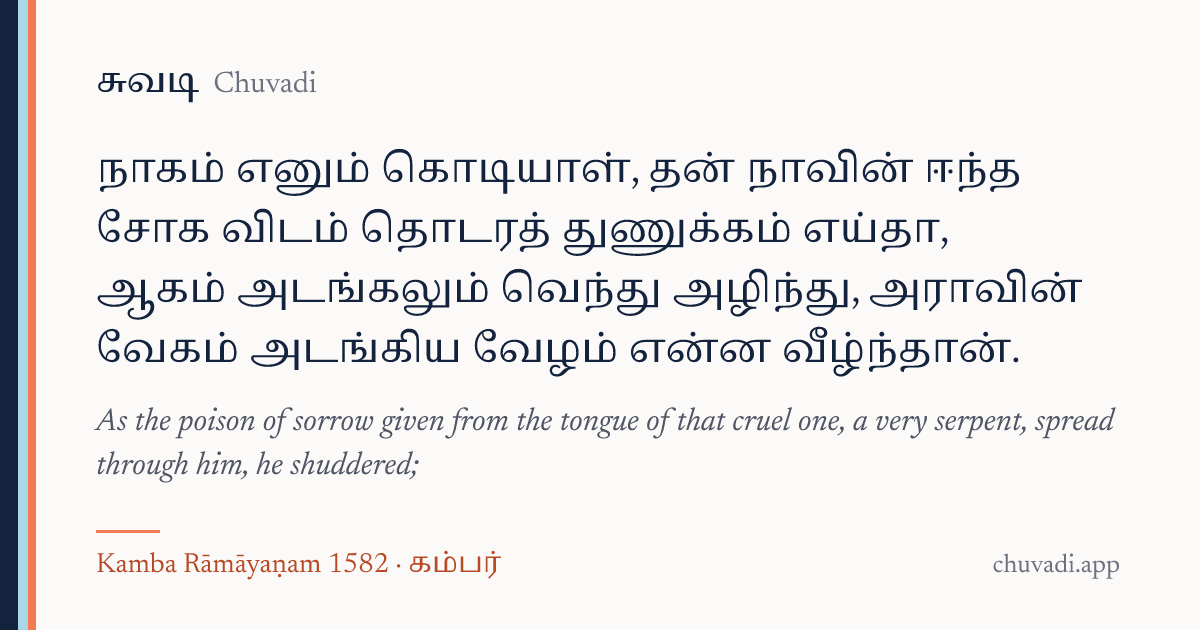
பாடல் · The poem
Tap a word to see its gloss in the commentary and where else it occurs.
பொருள் · Meaning in Tamil
நாகம் எனும் கொடியாள் - பாம்பு என்று சொல்லத்தக்க கொடியவளாகிய கைகேயி; தன் நாவின் ஈந்த - தனது நாக்கினின்றும் வெளியிட்ட; சோக விடம் தொடர - துன்பத்தைத் தரும் சொல்லாகிய நஞ்சு தன்னைப் பற்றிக்கொள்ள; துணுக்கம் எய்தா - நடுக்கம் அடைந்து; ஆகம் அடங்கலும் வெந்து அழிந்து - தன் உடல் முழுவதும் வெதும்பிச் சோர்ந்து; அராவின் வேகம் அடங்கிய - நச்சுப் பாம்பினால் தன் ஊக்கம் தணியப்பெற்ற; வேழம் என்ன - யானை போல; வீழ்ந்தான் - (தயரதன் கீழே) விழுந்தான்.
இதனால் கைகேயியின் சொற்களில் இருந்த கொடுமை கூறப்பட்டது. சோக விடம் - உருவகம். துயர்க் காரணம் சொற்களாதலால் ‘நாவின் வந்த விடம்’ என்று வேற்றுமையணியாகக் கூறினார். ‘ஆகம் வெந்து வீழ்ந்தான்’ - சினை வினை முதலோடு முடிந்தது. அராவின் - இன் ஏதுப் பொருளில் வந்தது.
ஆங்கிலம் · English translationAI
Translation
- As the poison of sorrow given from the tongue of that cruel one, a very serpent,
- spread through him, he shuddered;
- his whole body burned and failed, and like an elephant
- whose strength is spent by a snake's venom, he fell.
What the poem says
Kaikēyi's words act on Tacarataṉ like snake venom. She is the serpent, her tongue the fangs, and the 'poison of sorrow' runs through his whole body until, trembling and burning, he collapses.
The comparison of the great king to an elephant felled by a small snake's bite shows how a few words from her overpower his might. The poet stresses that this poison comes from the tongue, since words are the cause of his anguish.