



கம்பராமாயணம் 1583 · அயோத்தியா 3.16
பாடல் · The poem
Tap a word to see its gloss in the commentary and where else it occurs.
பொருள் · Meaning in Tamil
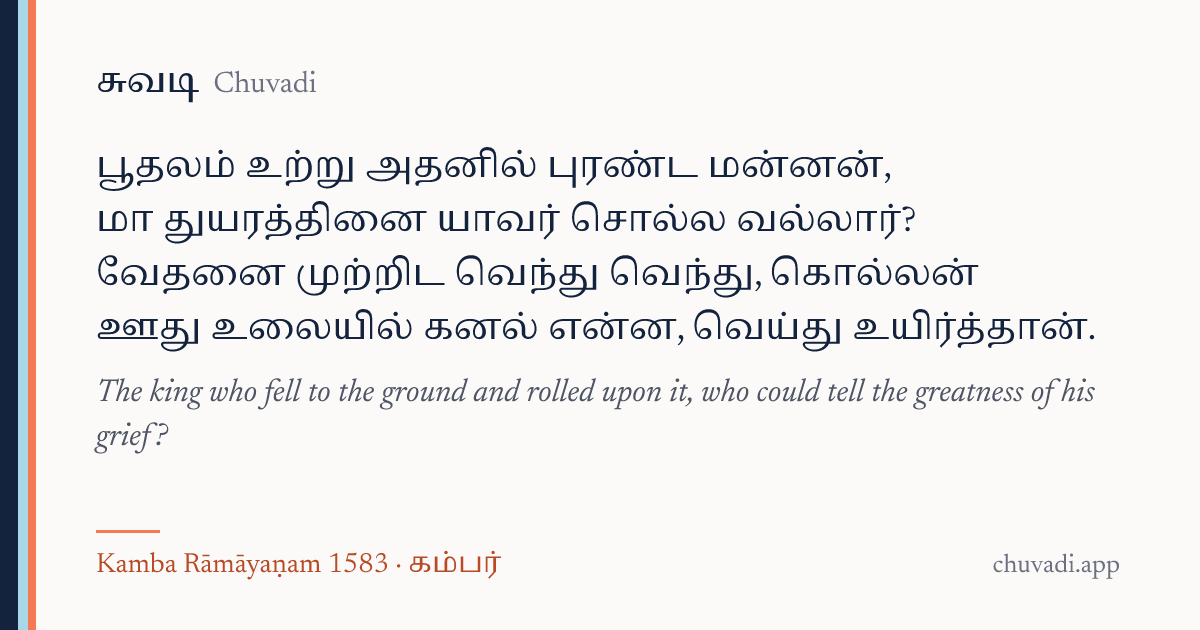
பூதலம் உற்று - தரையில் விழுந்து; அதனில் புரண்ட மன்னன் - அதன்மீது நிலைகொள்ளாது உருண்ட அரசனாகிய தயரதனது; மாதுயரத்தினை - பெருந்துன்பத்தினை; சொல்ல வல்லார் யாவர் - அளவிட்டுச் சொல்ல வல்லவர் யார்? (ஒருவரும் இல்லை); வேதனை முற்றிட - துன்பம் முதிர்ச்சி அடைய; வெந்து வெந்து - மனம் மிக வெதும்பி; கொல்லன் ஊதுஉலையில் கனல் என்ன - கருமான் (துருத்தியால்) ஊதுகின்ற உலைக்களத்துத் தீயைப்போல; வெய்து உயிர்த்தான் - வெப்பம் மிக்க பெருமூச்சு விட்டான்.
இது கவிக்கூற்று. தயரதன் நெட்டுயிர்ப்பின் வெம்மைக்குக் கொல்லனது உலைக்களம் உவமை. உலைத்தீ ஊதுந்தொறும் மேலெழுந்து மீண்டும் அடங்குவது போல, மன்னனது வெப்பம் மிக்க உயிர்ப்பு மிக்கும் அடங்கியும் நிகழ்ந்தது. வெந்து வெந்து - அடுக்கு மிகுதிப்பொருளைக் காட்டுவது.
ஆங்கிலம் · English translationAI
Translation
- The king who fell to the ground and rolled upon it,
- who could tell the greatness of his grief?
- As his anguish grew full he burned and burned, and like the fire
- in a smith's blown forge he breathed out scorching sighs.
What the poem says
The poet speaks in his own voice: no one could describe the grief of the king rolling on the floor.
His hot, heaving sighs are compared to the fire in a blacksmith's forge, which flares up each time the bellows blow and then sinks back, so his burning breath rises and falls. The repetition 'burned and burned' marks the intensity of his torment.