



கம்பராமாயணம் 1584 · அயோத்தியா 3.17
பாடல் · The poem
Tap a word to see its gloss in the commentary and where else it occurs.
பொருள் · Meaning in Tamil
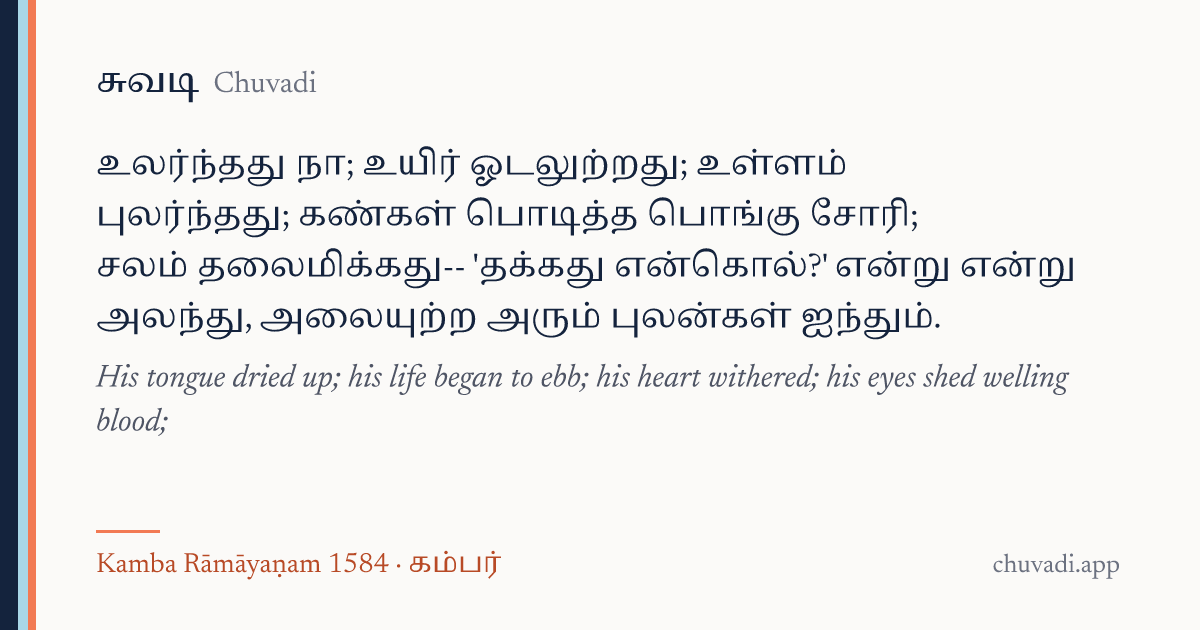
நா உலர்ந்தது - (தயரதனுக்கு) நாக்கு வறண்டது; உயிர் ஓடல் உற்றது - உயிர்போகத் தொடங்கியது; உள்ளம் புலர்ந்தது - மனம் வாடியது; கண்கள் பொங்குசோரி பொடித்த - கண்கள் மிகுதியாகக் குருதி சிந்தின; சலம் தலைமிக்கது - கவலை மிகுந்தது; அரும் புலன்கள் ஐந்தும் - அரிய ஐந்து பொறிகளும்; தக்கது என்கொல் என்று என்று - செய்யத்தக்கது என்ன என்று எண்ணி எண்ணி; அலந்து அலையுற்ற - கலங்கித் தவித்தன.
இதில் தயரதன் அடைந்த அவல மெய்ப்பாடுகள் காட்டப்படுகின்றன. கோபத்தால் கண்கள் இரத்தம் சிந்தின. புலன் - ஈண்டுப் பொறிகளைக் குறித்தது; ஆகுபெயர். ‘அலந்து அலையுற்ற’ என்பதனை ‘அலந்தலையுற்ற’ என்று கொள்வாரும் உண்டு. அலந்தலை - ஒருசொல்; கலக்கம் என்பது பொருள். சலம் - கோபமும் ஆம்.
ஆங்கிலம் · English translationAI
Translation
- His tongue dried up; his life began to ebb; his heart
- withered; his eyes shed welling blood;
- his distress grew beyond bounds; asking again and again 'What is to be done?',
- his five precious senses reeled in confusion.
What the poem says
The poet lists the physical signs of Tacarataṉ's anguish: a parched tongue, life seeming to slip away, a withered heart, eyes that weep blood in his anger and pain, and all five senses thrown into confusion as he asks himself over and over what he can possibly do.
The word for 'distress' can also mean anger, and some readers take 'reeled in confusion' as one compound word meaning bewilderment.