



கம்பராமாயணம் 158 · பால 4.2
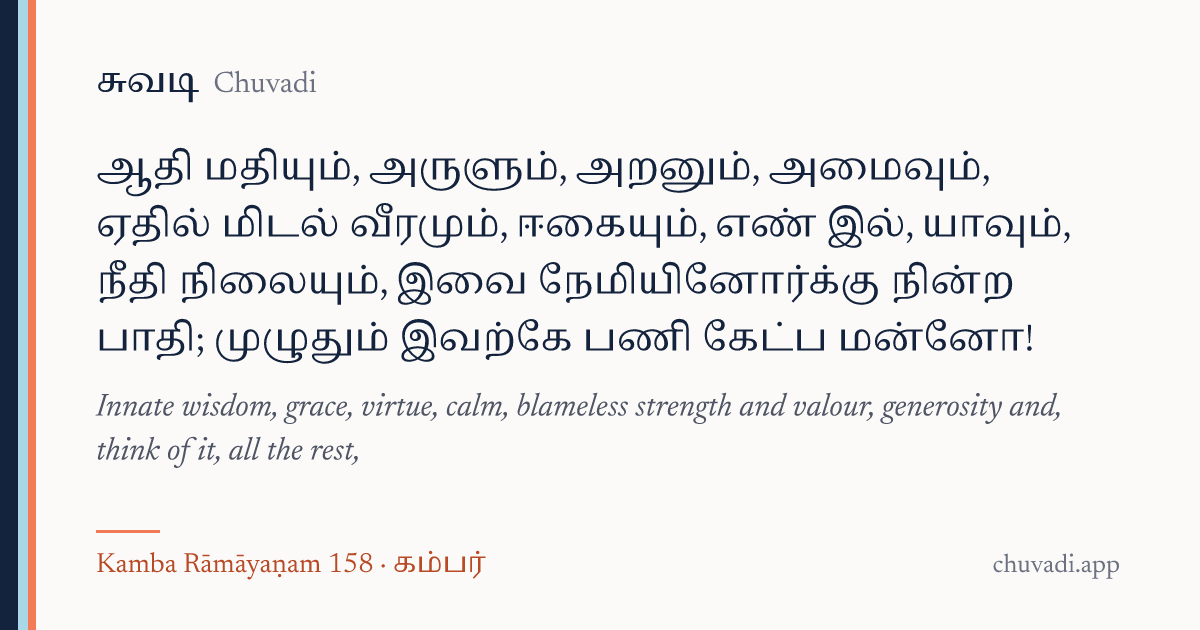
பாடல் · The poem
Tap a word to see its gloss in the commentary and where else it occurs.
பொருள் · Meaning in Tamil
ஆதி மதியும் அருளும் - முதன்மையாகிய மெய்யறிவும், அருளும்; அறனும் அமைவும் - தனக்குக் கூறிய அறநெறி தவறாமையும் சாந்த குணமும்; ஏதில் மிடல் வீரமும் - குற்றமற்ற வலிமை பொருந்திய வீரமும்; ஈகையும் நீதி நிலையும் - கொடையும், நீதியின்கண் நிற்றலும்; எண்ணில் யாவும் இவை - போன்ற நற்பண்புகளாகிய இவை; நேமியினோர்க்குப் பாதிநின்ற - மற்ற அரசர்களுக்குப் பாதியே நின்றன; முழுதும் இவற்கே பணிகேட்ப - அக்குணங்கள் முழுவதும் இந்தத் தசரத மன்னனுக்கே ஏவல் கேட்டு நிற்பனவாகும்.
மன் ஓ: அசைச் சொற்கள். கேட்ப: எதிர்கால வினை. அமைவு: நிறைவுமாம். ‘நேமியினோர்க்கு அவை நின்று’ எனவும் ‘இவற்கு பணி கேட்ப’ எனவும் கூறியதன் நயம் கருதத்தக்கது. தொடர்பில்லாதவரிடமும் செல்லும் அருள்உடையான் ஆதலின் தொடர்புடையவரிடம் அன்பும் உடையான் என்பது தானே புலனாகும். ‘எண்ணில்’ என்றதற்கு யோசித்துப் பார்த்தால் என்பதும் பொருளாம். “நட்பும், தயையும், கொடையும் பிறவிக்குணம்” என்றபடி பிறப்பில் அமைந்த இயல்பான அறிவையே ‘ஆதிமதி’ என்றார். ‘ஆதிம்மதி’ நீதிந்நிலை என ஓசை நயம் கருதி மிக்கது. விரித்தல் விகாரம்.
ஆங்கிலம் · English translationAI
Translation
- Innate wisdom, grace, virtue, calm,
- blameless strength and valour, generosity and, think of it, all the rest,
- and steadfastness in justice — of these, the kings who rule by the wheel
- held only half; the whole of them waited on him alone, ready to serve.
What the poem says
Every royal virtue is listed: native wisdom, compassion, righteousness, composure, courage, generosity and justice. Other emperors possess only half of them, but all of them wait on Tacarataṉ like servants for his command.
The commentary explains that 'innate wisdom' means understanding a person is born with rather than learns.