



கம்பராமாயணம் 159 · பால 4.3
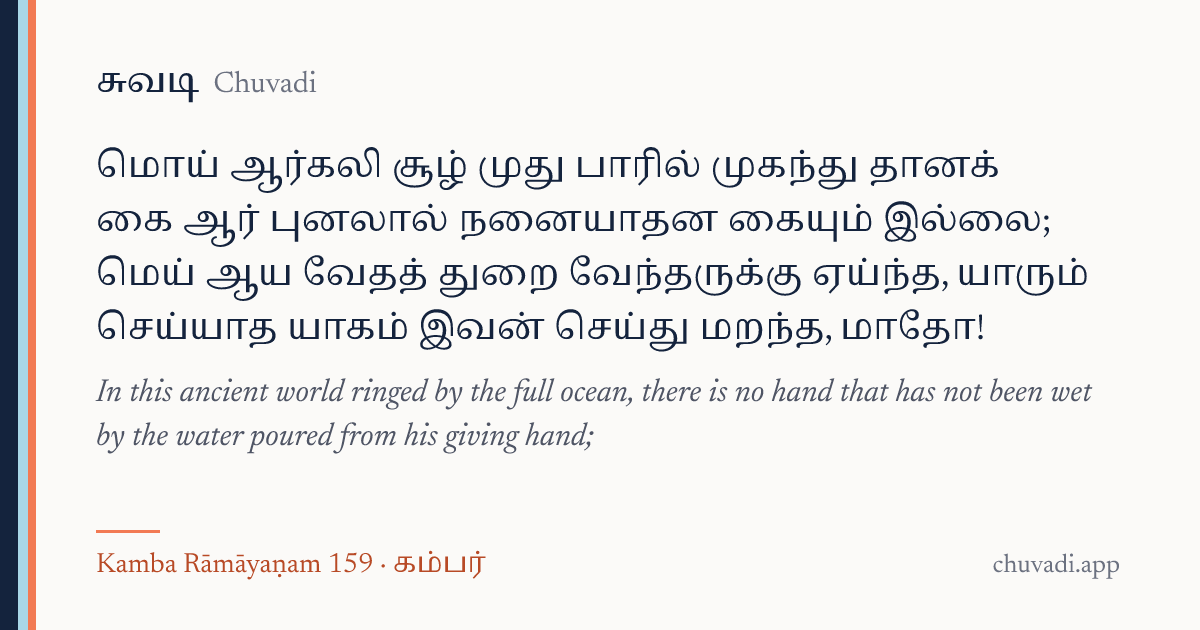
பாடல் · The poem
Tap a word to see its gloss in the commentary and where else it occurs.
பொருள் · Meaning in Tamil
மொய் ஆர்கலி சூழ் முது பாரில் - நிறைந்த கடலால் சூழப் பட்டதும் பழமை வாய்ந்ததுமான இந்த உலகத்தில்; முகந்து தானக் கை ஆர்புனலால் - வாரிமுகந்து, தானம் செய்கின்ற கையில் நிறைந்த நீரினால்; நனையாதன கையும் இல்லை - நனைக்கப் பெறாத கைகளும் இல்லை; மெய்யாய வேதத்துறை வேந்தருக்கு - நிலைபெற்ற வேத நெறியில் நிற்கும் அரசர்களுக்கு; ஏய்ந்த யாரும் செய்யாத யாகம் - பொருந்தியனவான வேறு எவரும் செய்ய இயலாது நின்ற யாகங்கள்; இவன் செய்து மறந்த - இந்தத் தசரத மன்னனால் செய்யப்பட்டு மறக்கப் பெற்றவையாகும்.
மாதோ: அசை. மொய்: வலிமை, இங்கு நிறை உணர்த்தி நின்றது. ஆர்கலி: கடல் (நிறைந்த ஓசை உடையது) என்பது பொருளாம். ‘முதுபார்’ என்றது, உலகின் தொன்மையை நினைந்தென்க. வேந்தர்க்கு ஏய்ந்த யாகங்கள், இராச சூயம் - அசுவமேதம் முதலியனவாகும். வேறு எவராலும் செய்ய இயலாது நின்ற யாகங்கள் எல்லாம், தசரத மன்னன் எப்போதோ செய்து மறந்து விட்டவையாம். தானக்கை: தானம் தரும் கை. தானம் வழங்குவதற்கு முன், நீர் வார்த்தல் மரபு. தயரதன் வார்த்த நீரால் நனையாத கைகளே இல்லை என்கிறார் கவி. இது பிறிதினவிற்சி யணியாம்.
ஆங்கிலம் · English translationAI
Translation
- In this ancient world ringed by the full ocean, there is no hand
- that has not been wet by the water poured from his giving hand;
- and the sacrifices fit for kings of the true Vedic way, which no one else could perform,
- he performed — and forgot.
What the poem says
In Indian custom a gift was formally given by pouring water over the receiver's hand. Tacarataṉ has given so much that there is no hand on earth that his gift-water has not wetted.
The great royal sacrifices, such as the horse sacrifice and the royal consecration, which other kings can only dream of, he performed so long ago and so easily that he has forgotten them.