



கம்பராமாயணம் 160 · பால 4.4
பாடல் · The poem
Tap a word to see its gloss in the commentary and where else it occurs.
பாட வேறுபாடு · Project Madurai reads
பொருள் · Meaning in Tamil
அன்னான் - மன்னர் மன்னனான அத்தயரதன்; எவர்க்கும் - தனது ஆட்சிக் கடங்கிய குடிமக்கள் எவர்க்கும்; அன்பின்தாய் ஒக்கும் - அன்பு செலுத்துவதில் பெற்ற தாயை ஒப்பவனாவான்; நலம் பயப்பின் தவம் ஒக்கும் - நன்மை செய்வதில் தவத்தைப் போன்றவனாவான்; முன்நின்று ஒரு செல்கதி உய்க்கும் நீரால் - தாய்தந்தையரின் கடைசிக் காலத்தில் முன்னே நின்று, இறுதிச்சடங்குகளைச் செய்து அவர்களை நற்கதியில் சேரச் செய்யும் தன்மையினால், சேய் ஒக்கும் - அவர்கள் பெற்ற மகனை ஒத்திருப்பான்; நோய் ஒக்கும்என்னின் - குடிமக்களுக்கு நோய்வருமாயின்; மருந்து ஒக்கும் - அதைப் போக்கி, குணப்படுத்தும் மருந்து போன்றவனுமாவான்; நுணங்கு கேள்வி ஆயப்புகுங்கால் - நுணுக்கமான கல்வித்துறைகளை ஆராயப்புகும் போது; அறிவு ஒக்கும் - நுட்பமான பொருளைக் காணும் அறிவினையும் ஒத்திருப்பான்.
தாயன்பு சிறந்தது. “தாயினும் சாலப்பரிந்து” என, இறையன்புக்கே தாயன்பை உவமையாகக் கூறினர் மேலோர். தனது குடிமக்களிடம் தாய் போல் அன்புடையவன்; நன்மை புரிவதில் தவம் போன்றவன்; நற்கதியடையச் செய்வதில் சேய் போன்றவன்; நோயுறும் காலை, அதைப் போக்கும் மருந்து போன்றவன்; ஆராய்ச்சிக்கு உதவும் அறிவு போன்றவன் என்றெல்லாம் தயரதனுடைய பண்பைச் சிறப்பித்துக் கூறுகிறார். குருகுமாரனான சிரவணனுடைய பெற்றோர்களுக்கு இறுதிச் சடங்குகளைச் செய்து - அவர்களைச் செல்கதி உய்த்த செயல் இவனது. “சேயொக்கும்” என்பது சிறப்பாகப் பொருந்துவதொன்றுதானே! ‘அறிவு’ குணவாகு பெயராய் அறிவுடையானை உணர்த்தி நின்றது.
ஆங்கிலம் · English translationAI
Translation
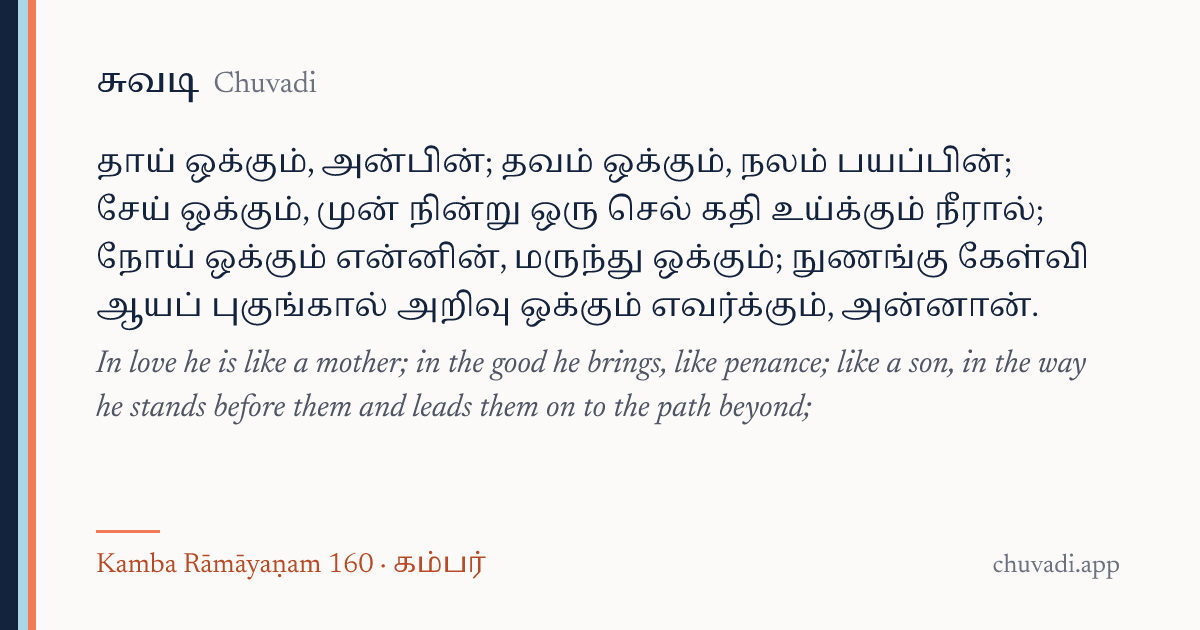
- In love he is like a mother; in the good he brings, like penance;
- like a son, in the way he stands before them and leads them on to the path beyond;
- if there is sickness, he is like medicine; when one sets out
- to probe subtle learning, he is like wisdom itself — to everyone, he is all these.
What the poem says
Tacarataṉ is everything to his people. He loves them like a mother and brings them blessings the way penance brings merit. Like a dutiful son, he sees them through to a good afterlife.
He is a cure in sickness and wisdom itself when hard questions come up. The commentary links the 'son' image to his later story of performing the last rites for the blind parents of the boy Śravaṇa.