



கம்பராமாயணம் 1592 · அயோத்தியா 3.25
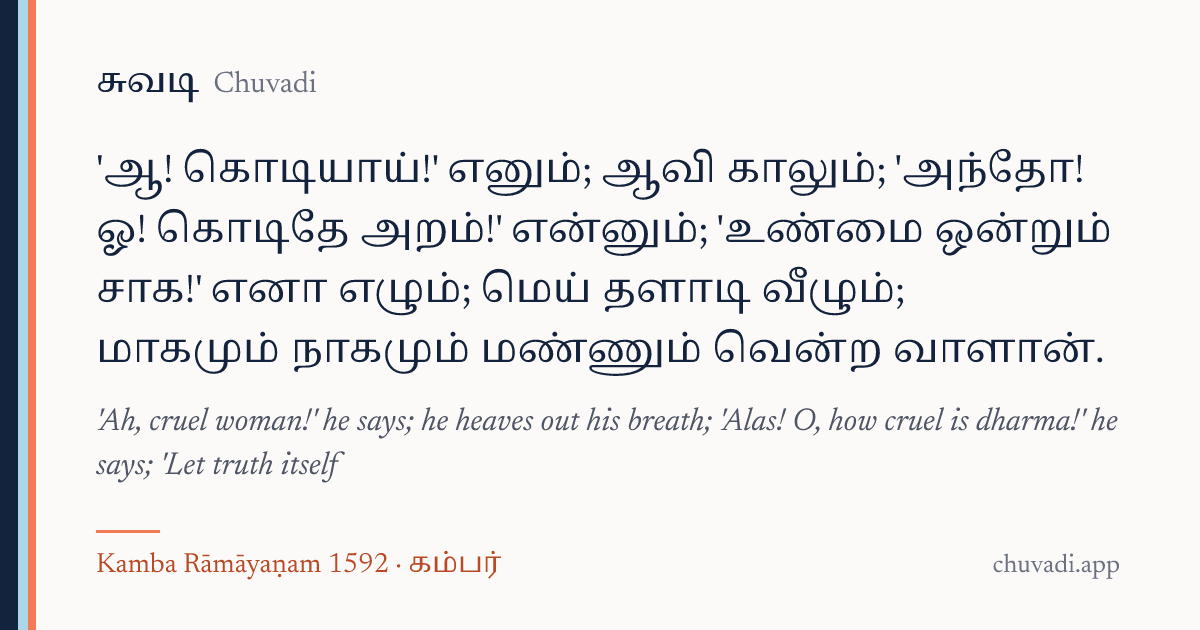
பாடல் · The poem
Tap a word to see its gloss in the commentary and where else it occurs.
பொருள் · Meaning in Tamil
மாகமும் நாகமும் மண்ணும் - மேலுலகத்தையும் கீழுலகத்தையும் நிலவுலகத்தையும்; வென்ற வாளான் - வெற்றி கொண்ட வாட்படையையுடைய தயரதன்; ஆ கொடியாய் எனும் - (கைகேயியைப் பார்த்து) ஐயோ, கொடியவளே என்பான்; ஆவி காலும் - பெருமூச்சுவிடுவான்; அந்தோ ஓ கொடிதே அறம் என்னும் - ஐயோ! தருமம் மிகவும் கொடியதே என்பான்; உண்மை ஒன்றும் சாக எனா - சத்தியம் என்பதொன்று சாகட்டும் என்று சொல்லிக்கொண்டு; எழும் - எழுந்திருப்பான்; மெய் தளாடி வீழும் - உடம்பு நிற்க முடியாமல் தள்ளாடி விழுவான்.
இப்பாட்டு ஒரு சோக சித்திரம்; மன்னவன் துயரத்தைப் படம்பிடித்துக் காட்டுகிறது. ஆ கொடியாய் - ஆ - இரக்கக் குறிப்பு. தயரதன் அறமும் உண்மையும் நன்மைக்குத் துணை புரியாமல் இராமன் காடு புகுதலாகிய தீமைக்கு வழி வகுத்தலின் அவற்றை இகழ்கிறான். மாகம் - துறக்கம். நாகம் - பாதாளம்.
ஆங்கிலம் · English translationAI
Translation
- 'Ah, cruel woman!' he says; he heaves out his breath; 'Alas!
- O, how cruel is dharma!' he says; 'Let truth itself
- die!' he cries, and rises; his body staggers and falls,
- he whose sword conquered heaven, the underworld and the earth.
What the poem says
A picture of grief: the king who once conquered the three worlds now cries out against Kaikēyi, sighs, and curses dharma itself, crying 'Let truth die!' He struggles up only to stagger and fall again.
He reviles righteousness and truthfulness because, instead of serving the good, they now bind him to the evil of sending Irāmaṉ to the forest: his promise, made in truth, is what forces his hand.