



கம்பராமாயணம் 1594 · அயோத்தியா 3.27
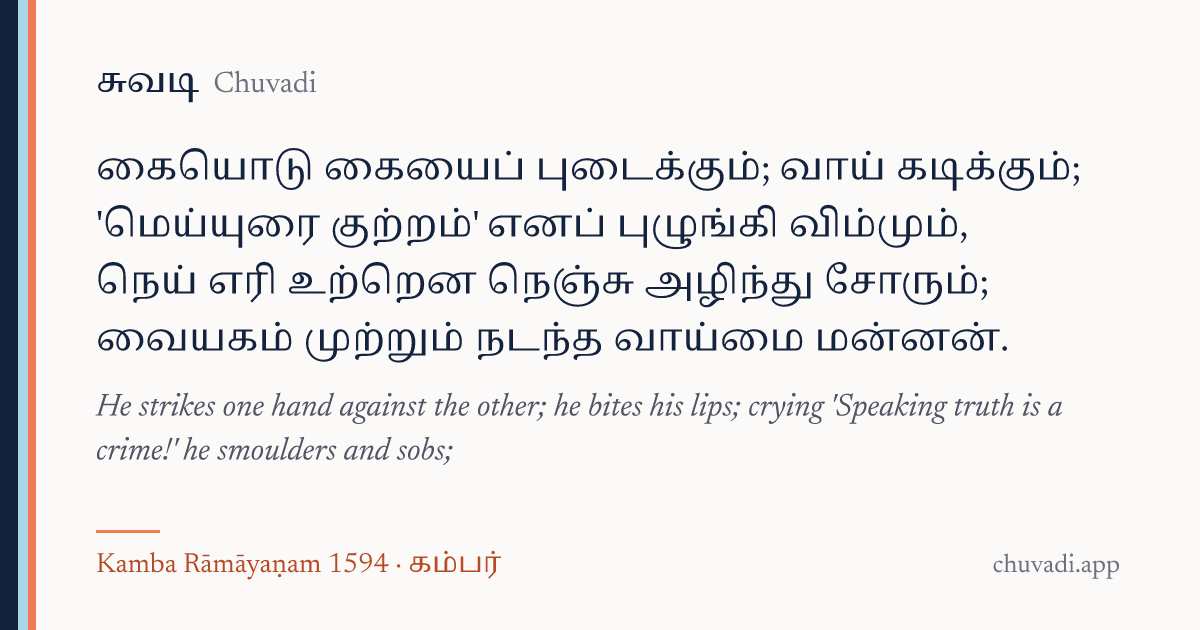
பாடல் · The poem
Tap a word to see its gloss in the commentary and where else it occurs.
பொருள் · Meaning in Tamil
வையகம் முற்றும் நடந்த - உலகம் முழுவதும் பெருவழக்காய் அறியப் பெற்ற; வாய்மை மன்னன் - சத்தியம் தவறாத தயரதன்; கையொடு கையைப் புடைக்கும் - கையுடன் மற்றொரு கையை ஓங்கி அடிப்பான்; வாய் கடிக்கும் - உதட்டைக் கடிப்பான்; மெய்உரை குற்றம் என - உண்மை சொல்லுதல் தீங்கைத் தருவது என்று சொல்லி; புழுங்கி விம்மும் - மனம் வெந்து பொருமுவான்; நெய் எரி உற்று என - நெய்யில் நெருப்புப் பட்டாற்போல; நெஞ்சு அழிந்து - மனம் உடைந்து; சோரும் - வருந்துவான்.
வாய்மை மன்னனாகிய தயரதனை மெய்யுரை குற்றம் என எண்ணச் செய்தது அவனுக்கு இராமபிரான்பால் உள்ள பேரன்பு. கைபுடைத்தல் வாய்கடித்தல் ஆகியவை சினத்தால் நிகழும் மெய்ப்பாடுகள்.
ஆங்கிலம் · English translationAI
Translation
- He strikes one hand against the other; he bites his lips;
- crying 'Speaking truth is a crime!' he smoulders and sobs;
- like ghee that has caught fire, his heart melts and he sinks down,
- the king whose truthfulness was known throughout the world.
What the poem says
Tacarataṉ, famed throughout the world for never breaking his word, is driven by his love for Irāmaṉ to the point of crying out that truthfulness itself is a fault, since it is his own promise that now traps him.
Striking hand against hand and biting the lips are the bodily signs of rage. His heart melts like ghee thrown on a fire.