



கம்பராமாயணம் 1600 · அயோத்தியா 3.33
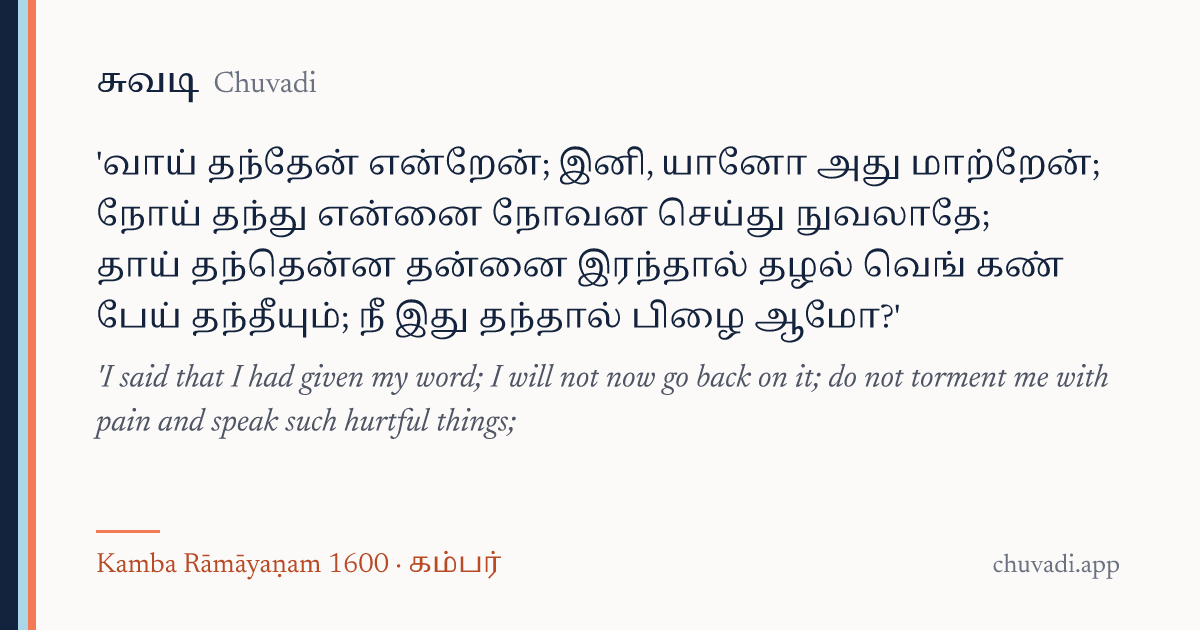
பாடல் · The poem
Tap a word to see its gloss in the commentary and where else it occurs.
பொருள் · Meaning in Tamil
“யானோ வாய் தந்தேன் என்றேன் - யான் வாயால் வரங்களைத் தந்தேன் என்று சொல்லிவிட்டேன்; இனி அது மாற்றேன் - இனி அதனைத் தவற மாட்டேன்; என்னை நோய் தந்து - எனக்கு வருத்தத்தைத் தந்து; நோவன செய்து - துன்புறத் தக்கவற்றைப் புரிந்து; நுவலாதே - (மேலும்) அத்தகைய சொற்களைச் சொல்லாதே; தன்னை இரந்தால் - தன்னை ஒருவர் இரந்து வேண்டினால், தாய் தந்து என்ன - தாய் மனம் இரங்கித் தருவதுபோல்; தழல்வெம் கண் பேய் - நெருப்புப் போலும் கொடிய கண்களையுடைய பேயும்; தந்தீயும் - கொடுக்கும்; நீ இது தந்தால் - நீ (யான் வேண்டும்) இதனைத் தருவாயானால்; பிழை ஆமோ - தவறாகுமோ?”
இரந்து கேட்டால் பேயும் தாய்போல இசையும் என்றால் பரதனுக்குத் தாயாகிய நீ இசைதல் தவறாகுமோ? என்றான். பேய் என்பதன்பின் சிறப்பும்மை விகாரத்தால் தொக்கது. தந்தீயும் - தரும்; வினைத் திரிசொல்.
ஆங்கிலம் · English translationAI
Translation
- 'I said that I had given my word; I will not now go back on it;
- do not torment me with pain and speak such hurtful things;
- if one begs of her, even a demon with fiery, cruel eyes
- gives, as a mother gives; if you grant this, would it be wrong?'
What the poem says
Tacarataṉ assures Kaikēyi that he is not going back on his promise, and begs her to stop wounding him with her words.
He argues that even a fierce-eyed demoness will give like a mother if someone pleads with her. Surely then it would be no wrong for her, Paratan's own mother, to grant what he asks: that Irāmaṉ be spared exile.