



கம்பராமாயணம் 1601 · அயோத்தியா 3.34
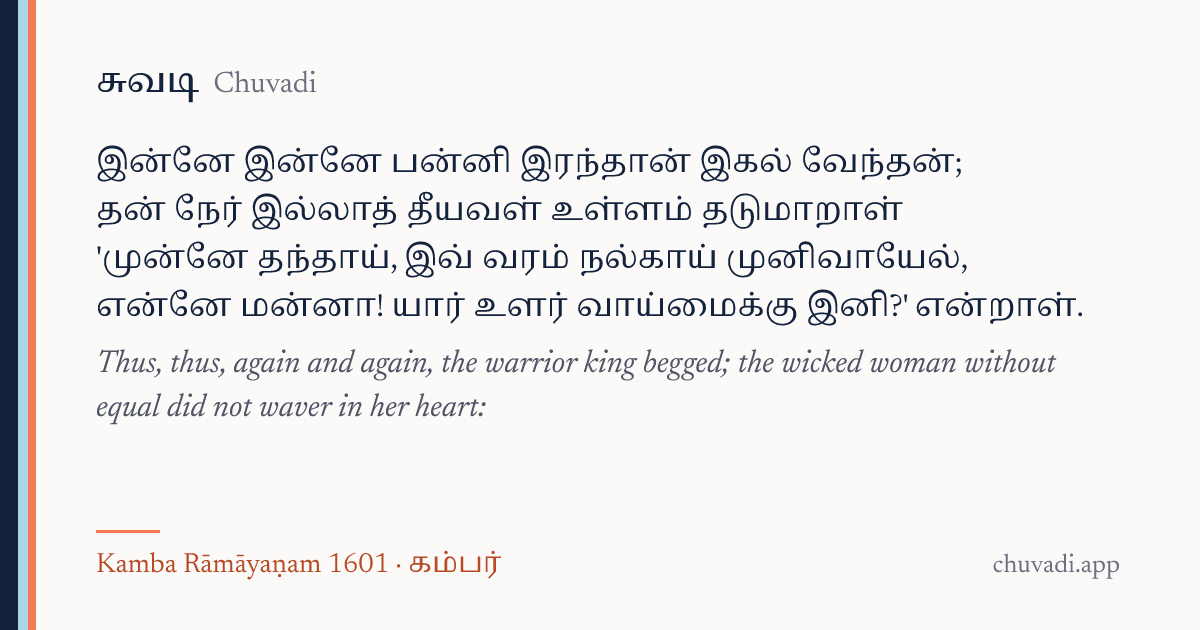
பாடல் · The poem
Tap a word to see its gloss in the commentary and where else it occurs.
பொருள் · Meaning in Tamil
இகல்வேந்தன் - வெற்றியையுடைய அரசர்க்கரசனாகிய தயரதன்; இன்னே இன்னே பன்னி இரந்தான் - இவ்வாறாகப் பலமுறை சொல்லி வேண்டினான்; தன் நேர் இல்லாத் தீயவள் - தனக்கு நிகரில்லாத தீயவளான கைகேயி; உள்ளம் தடுமாறாள் - மனம் சிறிதும் இரங்கினாள் அல்லள்; மன்னா - அரசே; இவ் வரம் முன்னே தந்தாய் - இந்த வரங்களை முன்னர் வாயால் தந்துவிட்டாய்; நல்காய் - இப்போது செயற்படுத்தமாட்டாய்; முனிவாயேல் - கோபிப்பாயானால்; என்னே - என்னாவது? வாய்மைக்கு இனி யார் உளர் - இனிமேல் வாய்மையைக் காப்பாற்றுதற்கு யார் இருக்கின்றார்?;” என்றாள்.
தன் கணவன் எவ்வளவு இரந்து வேண்டியும் இரங்காமையின் ‘தன் நேர் இல்லாத தீயவள்’ என்றார். ‘தீயவை யாவையினும் சிறந்த தீயாள்’ (1504) என்று முன்னர்க் குறித்தமை கருதத்தக்கது. நல்காய் என்பதனை முற்றெச்சமாக்கிச் செயற்படுத்தாமல் என்றும் பொருள் கொள்ளலாம். ‘மன்னா! யார் உளர் வாய்மைக்கு இனி’ என்பது இகழ்ச்சிக் குறிப்பு.
ஆங்கிலம் · English translationAI
Translation
- Thus, thus, again and again, the warrior king begged;
- the wicked woman without equal did not waver in her heart:
- 'You gave this boon before; you will not grant it; if you grow angry,
- what then, O king? Who will there be henceforth to uphold truth?' she said.
What the poem says
However often the king pleads, Kaikēyi does not budge. The poet calls her 'wicked without equal', echoing his earlier description of her as more deadly than every deadly thing.
She turns his own virtue against him with a sneer: he gave the boons long ago, now he will not honour them and even grows angry; if the great king himself breaks his word, who in the world will keep truth after this?