



கம்பராமாயணம் 1602 · அயோத்தியா 3.35
பாடல் · The poem
Tap a word to see its gloss in the commentary and where else it occurs.
பாட வேறுபாடு · Project Madurai reads
பொருள் · Meaning in Tamil
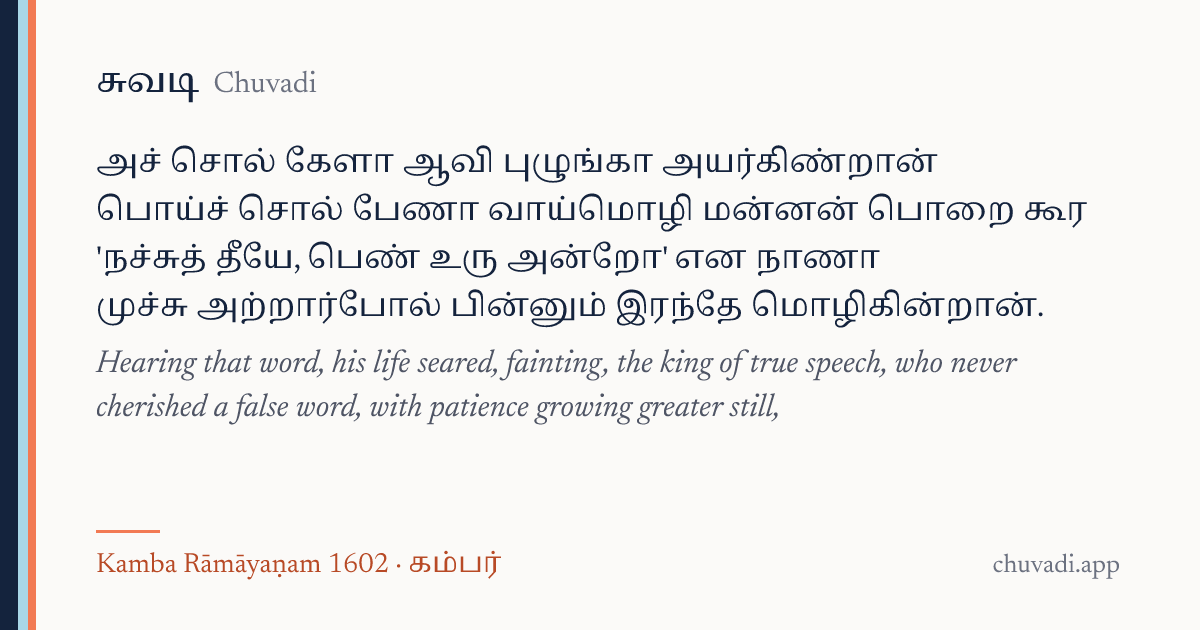
பொய்ச் சொல் பேணா - பொய்யான சொற்களைப் போற்றாத; வாய்மொழி மன்னன் - உண்மை மொழிகளைப் போற்றும் தயரதன்; அச் சொல் கேளா - அந்தச் சொற்களைக் கேட்டு; ஆவி புழுங்கா - உயிர் வெதும்பி; அயர்கின்றான் - சோர்ந்து; பொறை கூர - முன்னிலும் பொறுமை மேலிட; “நச்சுத் தீயே பெண் உரு அன்றோ” என - ‘(கொல்லும் தன்மையுள்ள) நஞ்சும், தீயுமே இப்பெண்ணின் தோற்றமாக வந்துள்ளனவன்றோ’ என்று எண்ணி; நாணா - வெட்கமுற்று; முச்சு அற்றார் போல் - மூச்சு அடங்கியவரைப்போல இருந்து; பின்னும் இரந்தே மொழிகின்றான் - மேலும் இரத்தலை மேற்கொண்டே பேசுகின்றான்.
இது, கைகேயியின் இகழ்ச்சிச் சொல் கேட்ட தயரதன் உற்ற சோகத்தையும் தொடர்ந்து வேறுவழியின்றி அவளிடம் இரந்து நிற்றலையும் கூறுகிறது. பேணா - ஈறுகெட்ட எதிர்மறைப் பெயரெச்சம். கேளா, நாணா - செய்யா என்னும் வாய்பாட்டு வினையெச்சங்கள். கூர் - உள்ளது சிறத்தலாகிய குறிப்புணர்த்தும் உரிச்சொல். முச்சு - மூச்சு என்பதன் குறுக்கல் விகாரம்.
ஆங்கிலம் · English translationAI
Translation
- Hearing that word, his life seared, fainting,
- the king of true speech, who never cherished a false word, with patience growing greater still,
- thinking 'Is she not poison and fire in a woman's form?', ashamed,
- like one whose breath has failed, spoke again, still begging.
What the poem says
Stung by Kaikēyi's taunt that he is the one betraying truth, Tacarataṉ, who has never cherished a lie, is crushed. He sees her now as poison and fire that have taken a woman's shape.
Yet, ashamed and nearly breathless, he has no other course, and with even greater forbearance he goes on pleading.