



கம்பராமாயணம் 1604 · அயோத்தியா 3.37
பாடல் · The poem
Tap a word to see its gloss in the commentary and where else it occurs.
பொருள் · Meaning in Tamil
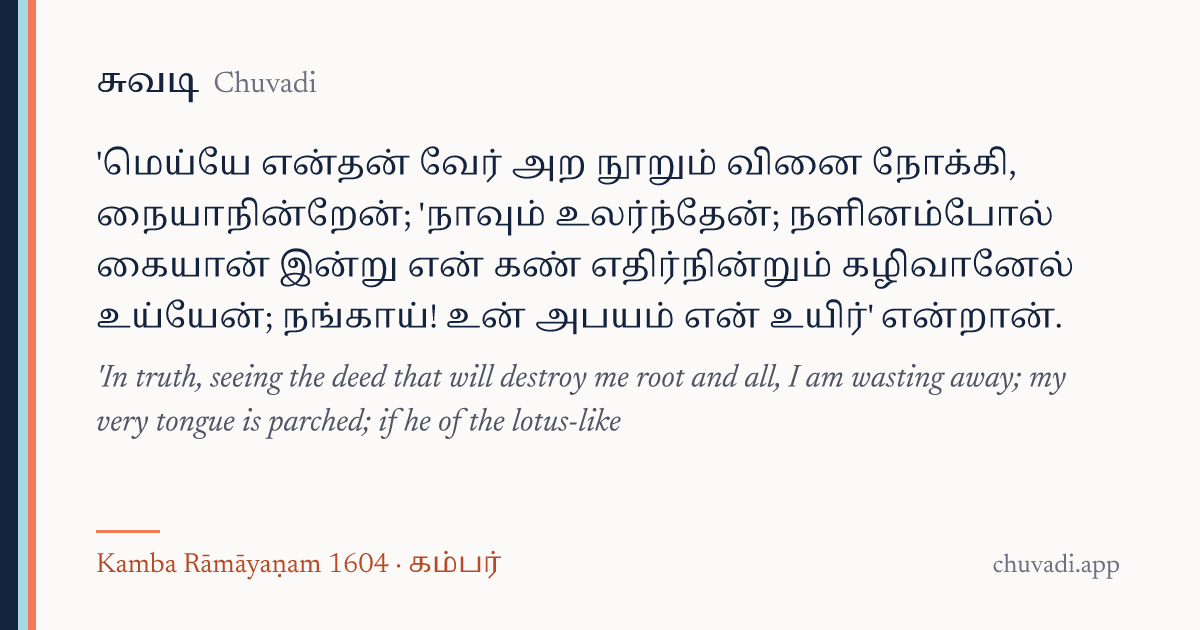
“மெய்யே - சத்தியமே; என்தன் வேர் அற நூறும் - எனது மூலம் கெடும்படி அழிக்கும்; வினை நோக்கி - எனது தீவினையை எண்ணி; நையா நின்றேன் - வருந்துகின்றேன்; நாவும் உலர்ந்தேன் - (உன்னோடு பேசிப் பேசி) நாக்கும் வறளப் பெற்றேன்; இன்று - இந்நாளில்; நளினம் போல் கையான் - தாமரை போலும் கைகளையுடைய இராமன்; என் கண் எதிர்நின்றும் கழிவானேல் - என் பார்வையினின்று நீங்கிக் காடு செல்வான் என்றால்; உய்யேன் - யான் பிழைத்திருக்கமாட்டேன்; நங்காய் - (ஆதலால்) பெண்ணே!; என் உயிர் உன் அபயம் - என்னுடைய உயிர் உன் அடைக்கலம் ஆகும்;” என்றான்.
தயரதன் இராமன் காடு சென்றால் தன் உயிர் நீங்கிவிடும் என்பதனைத் தெரிவித்துத் தன்னைக் காத்திடுமாறு கைகேயியை வேண்டினான்.
ஆங்கிலம் · English translationAI
Translation
- 'In truth, seeing the deed that will destroy me root and all,
- I am wasting away; my very tongue is parched; if he of the lotus-like
- hands goes away today from before my eyes,
- I shall not live; lady, my life is in your keeping,' he said.
What the poem says
Tacarataṉ tells Kaikēyi plainly that he sees this as a doom that will destroy him utterly. He has pleaded until his tongue is dry.
If Irāmaṉ of the lotus hands passes out of his sight today and goes to the forest, he will not survive. He places his life in her hands as one seeking refuge. The words foreshadow the king's death after Irāmaṉ's departure.