



கம்பராமாயணம் 1605 · அயோத்தியா 3.38
பாடல் · The poem
Tap a word to see its gloss in the commentary and where else it occurs.
பொருள் · Meaning in Tamil
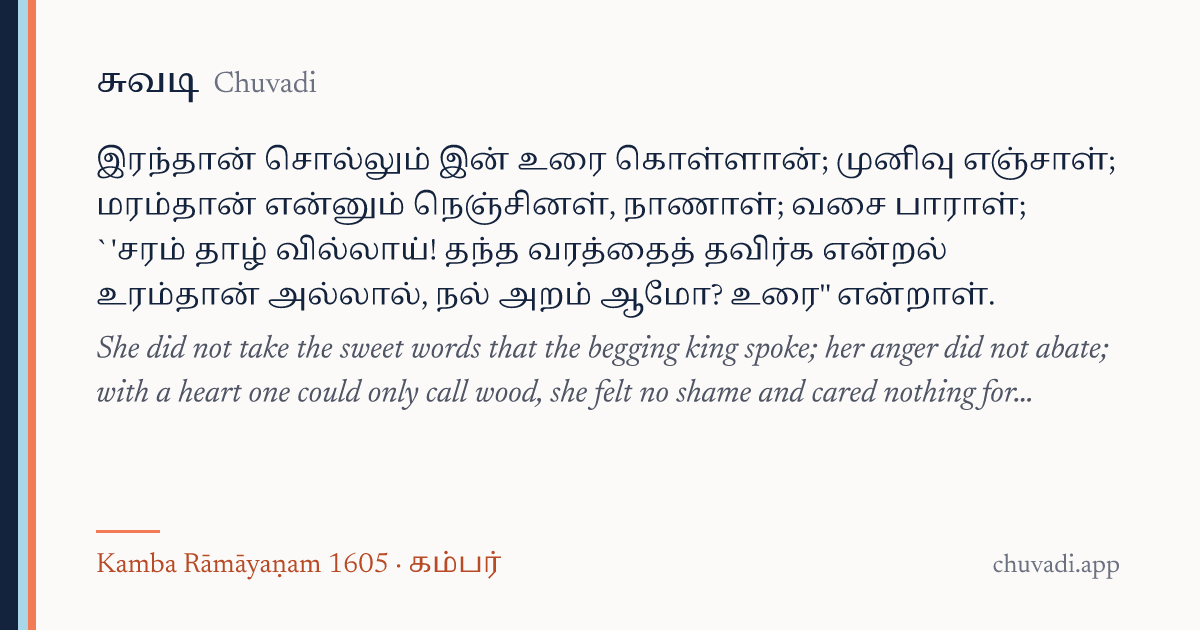
இரந்தான் சொல்லும் இன் உரை கொள்ளாள் - தயரதன் தன் பால் குறையிரந்து சொல்லும் இனிய சொற்களைக் கேளாதவளும்; முனிவு எஞ்சாள் - கோபம் தணியாதவளும்; மரம்தான் என்னும் நெஞ்சினள் - மரம் என்று சொல்லத்தக்க வன்மையான மனத்தைக் கொண்டவளும்; நாணாள் - வெட்கம் இல்லாதவளும்; வசை பாராள் - பழியைப் பற்றிக் கவலைப்படாதவளுமான கைகேயி; “சரம் தாழ் வில்லாய் - (தயரதனைப் பார்த்து) அம்புகள் தங்கும் வலிய வில்லையுடைய அரசே!; தந்த வரத்தைத் ‘தவிர்க’ என்றல் - முன்பு கொடுத்த வரத்தை விட்டுவிடு என்று வேண்டுவது; உரம்தான் அல்லால் - மன வலிமையேயன்றி; நல் அறம் ஆமோ உரை - நல்ல தருமம் ஆகுமோ சொல்லாய்;” என்றாள்.
கைகேயியின் வலிய நெஞ்சுக்கு மரத்தை உவமையாகச் சொன்னார் - திருத்தற்கு அரிதாதலின். இரும்பாயின் நெருப்புக்கு இளகும்; மரமோ சாம்பலாகுமே தவிர நெகிழாது. கைகேயி நெகிழாமல் நின்றமை உணர்த்தப்பட்டது. கொள்ளாள், நெஞ்சினள், நாணாள், பாராள் - வினையாலணையும் பெயர்கள்.
ஆங்கிலம் · English translationAI
Translation
- She did not take the sweet words that the begging king spoke; her anger did not abate;
- with a heart one could only call wood, she felt no shame and cared nothing for reproach:
- 'O lord of the bow on which arrows rest, to say "Withdraw the boon you gave"
- is mere obstinacy; can it be good dharma? Tell me,' she said.
What the poem says
Kaikēyi ignores the king's pleading. Her anger does not cool; she is shameless and indifferent to reproach. The poet likens her heart to wood: iron at least softens in fire, but wood only burns to ash without ever yielding.
She throws the issue of dharma back at him: asking someone to give up a boon already granted is just stubbornness on his part, she says, not righteousness.