



கம்பராமாயணம் 1607 · அயோத்தியா 3.40
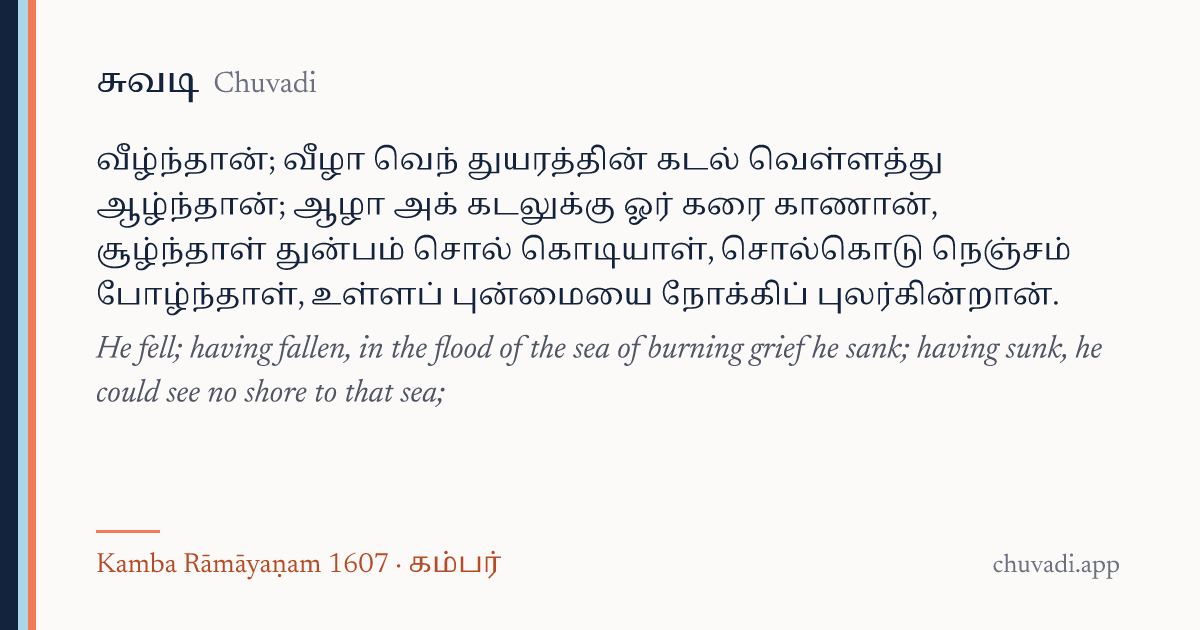
பாடல் · The poem
Tap a word to see its gloss in the commentary and where else it occurs.
பொருள் · Meaning in Tamil
வீழ்ந்தான் - (தயரதன்) மண்ணில் விழுந்தான்; வீழா - விழுந்து; வெம் துயரத்தின் கடல் வெள்ளத்து - கொடிய துயரமாகிய கடலின் வெள்ளத்தில்; ஆழ்ந்தான் - அழுந்தினான்; ஆழா - அழுந்தி; அக்கடலுக்கு ஓர் கரை காணான் - அந்தக்கடலுக்கு ஓர் எல்லை காணாதவன் ஆனான்; துன்பம் சூழ்ந்தாள் - தனக்குப் பெருந்துன்பத்தைச் சூழ்ந்துகொண்டவளும்; சொல் கொடியாள் - கொடிய சொற்களையுடையவளும்; சொல்கொடு நெஞ்சம் போழ்ந்தாள் - தன் பேச்சால் மனத்தைப் பிளந்தவளுமான கைகேயியின்; உள்ளப் புன்மையை நோக்கி - மனத்தின் சிறுமையை எண்ணி; புலர்கின்றான் - வாடுகின்றான்.
துயரத்தைக் கடலாக உருவகித்ததற்கு ஏற்பக் ‘கரை காணான்’ என்றார். வீழ்ந்தான் - வினைமுற்று. சூழ்ந்தாள், கொடியாள், போழ்ந்தாள் - வினையாலணையும் பெயர்கள்.
ஆங்கிலம் · English translationAI
Translation
- He fell; having fallen, in the flood of the sea of burning grief
- he sank; having sunk, he could see no shore to that sea;
- thinking of the meanness of heart of her who plotted his sorrow, the cruel-tongued woman
- who split his heart with her words, he withers away.
What the poem says
The verse moves step by step, each clause picking up the last: he fell, and falling sank, and sinking found no shore. Grief is pictured as a boundless sea, which is why the poet says he could see no shore to it.
What wears Tacarataṉ down is the smallness of Kaikēyi's heart: she contrived this sorrow, her words are cruel, and with them she has split his heart in two.