



கம்பராமாயணம் 1609 · அயோத்தியா 3.42
பாடல் · The poem
Tap a word to see its gloss in the commentary and where else it occurs.
பாட வேறுபாடு · Project Madurai reads
பொருள் · Meaning in Tamil
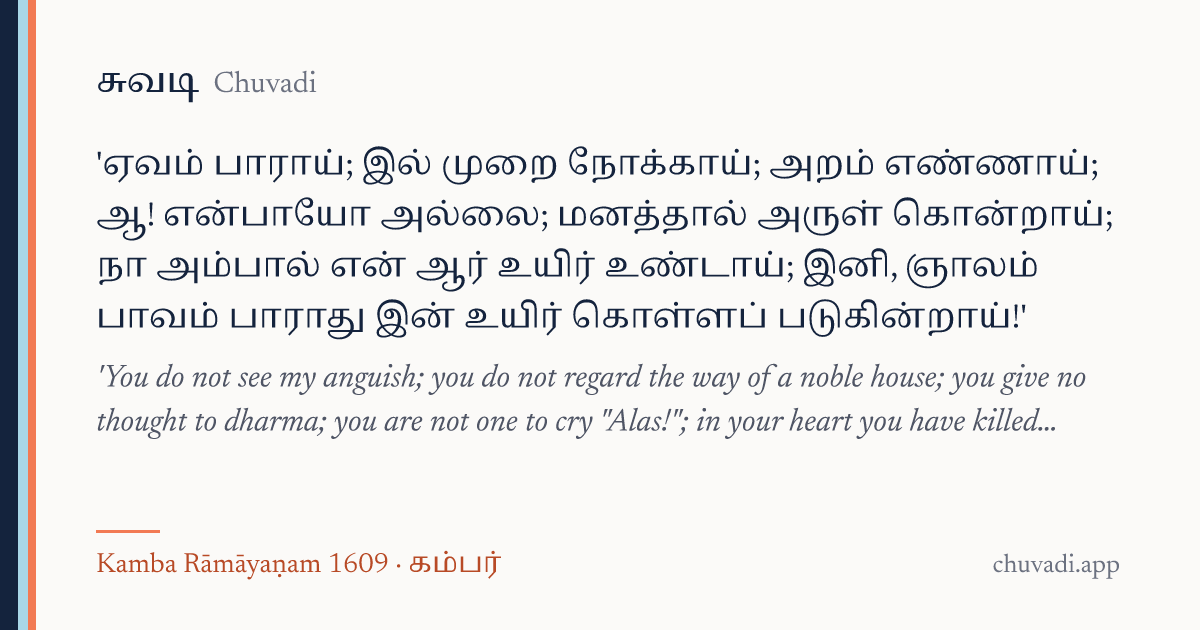
“ஏவம் பாராய் - (என்) துன்பத்தைப் பார்க்கின்றாய் அல்லை; இல் முறை நோக்காய் - நற்குடிப் பிறந்த பெண்ணின் நடைமுறையையும் கருதுவாய் அல்லை; அறம் எண்ணாய் - தருமத்தையும் நினைக்க மாட்டாய்; ஆ என்பாயோ அல்லை - ஐயோ என்று இரங்குவாயும் அல்லை; மனத்தால் அருள் கொன்றாய் - உன் மனத்தில் அருள் என்னும் பண்பையே கொன்றுவிட்டாய்; என் ஆர் உயிர் - என்னுடைய அரிய உயிரையும்; நா அம்பால் உண்டாய் - உன் நாவாகிய அம்பினால் கொன்றாய்; இனி ஞாலம் பாவம் பாராது - இனி இவ் வுலகத்து மக்களால் (பெண்கொலை) பாவம் என்று பாராமல்; இன் உயிர் கொள்ளப் படுகின்றாய் - உன் இனிய உயிரைக் கொள்ளப்படப் போகின்றாய்.”
பெண்ணிற்குரிய எந்த நற்பண்பும் இல்லாத உன்னை உலகத்தாரே கொன்றொழிப்பர் என்கிறான். ஏவம் - எவ்வம் என்பதன் விகாரம். மனத்தால் அருள் - உருபு மயக்கம். உண்டாய் - தெளிவு பற்றி வந்த கால வழுவமைதி.
ஆங்கிலம் · English translationAI
Translation
- 'You do not see my anguish; you do not regard the way of a noble house; you give no thought to dharma;
- you are not one to cry "Alas!"; in your heart you have killed compassion;
- with the arrow of your tongue you have devoured my precious life; now the world,
- heedless of the sin, will take your own sweet life!'
What the poem says
Tacarataṉ heaps reproaches on Kaikēyi: she has no regard for his suffering, for the conduct expected of a woman of good family, or for dharma, and she has slain pity in her own heart. Her tongue has been an arrow that has already taken his life.
He warns that the people, seeing a woman so lacking in every womanly virtue, will not shrink from the sin of killing a woman and will take her life. He speaks of his own death as already accomplished, so certain does it seem to him.