



கம்பராமாயணம் 1610 · அயோத்தியா 3.43
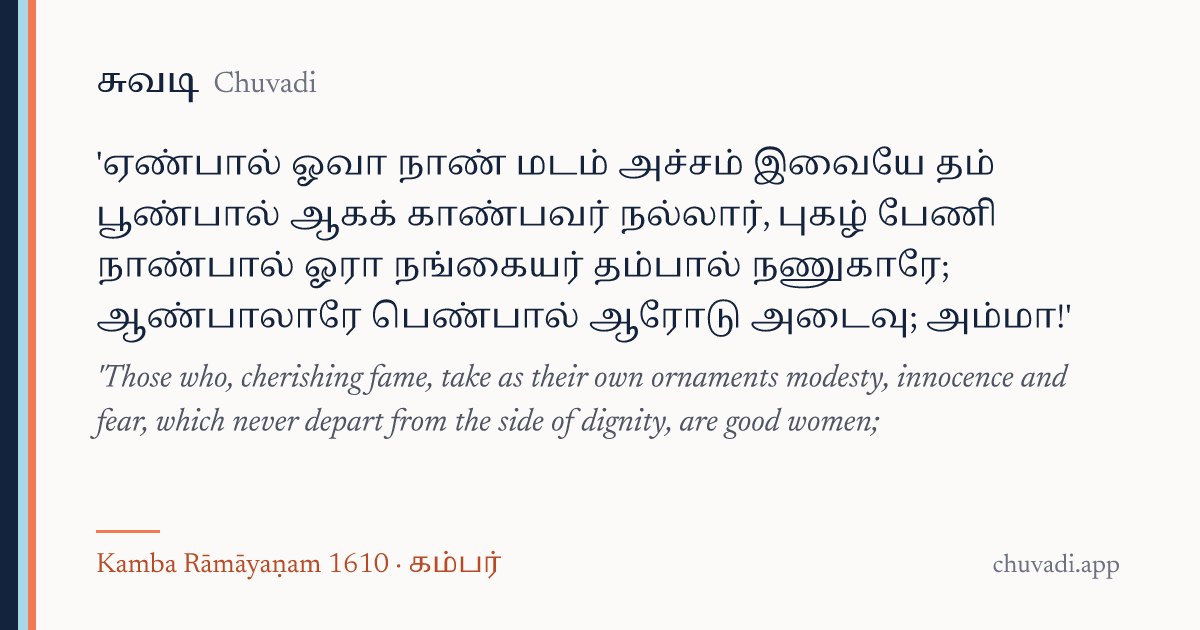
பாடல் · The poem
Tap a word to see its gloss in the commentary and where else it occurs.
பொருள் · Meaning in Tamil
“ஏண்பால் ஓவா - பெருமையின் பகுதியிலிருந்து நீங்காத; நாண், மடம், அச்சம் - நாணம், மடம், அச்சம் முதலிய; இவை தம் பூண்பால் ஆக - இவற்றைத் தம்முடைய அணிகலன்களாக; காண்பவர் நல்லார் - கருதுபவர் நற்பெண்டிர் ஆவர்; புகழ் பேணி - புகழை விரும்பி; நாண்பால் ஓரா நங்கையர் - நாணத்தின் தன்மையை அறியாத மகளிர்; தம் பால் நணுகாரே - தம் இனத்தில் சேர்ந்தவர் ஆகார்; ஆண்பாலாரே - (அவர்கள்) ஆண்மக்களே; பெண்பால் ஆரோடு அடைவு அம்மா - பெண்ணினத்தில் யாரோடு சார்ந்தவர் ஆவார்?” (ஒருவரோடும் சார்ந்தவர் அல்லர்)
பெண்களுக்குரிய சிறந்த பண்புகள் நாணம், மடம், அச்சம், பயிர்ப்பு என்பன. உபலட்சணத்தால் பயிர்ப்பும் கொள்ளத் தக்கது. நாணம் - தகாதவற்றின்கண் உள்ளம் ஒடுங்குதல்; மடம் - அனைத்தும் அறிந்தும் அறியாதது போல் இருத்தல்; அச்சம் - என்றும் காணாததைக் கண்டவிடத்து அஞ்சுதல்; பயிர்ப்பு - தன் கணவன் அல்லாதவரின் கை முதலியன மேற்படின் அருவருத்தல். ஆண்பாலாரே - ஏகாரம் தேற்றம்; நணுகாரே - ஏகாரம் அசை; அம்மா - வியப்பிடைச்சொல்.
ஆங்கிலம் · English translationAI
Translation
- 'Those who, cherishing fame, take as their own ornaments modesty, innocence and fear,
- which never depart from the side of dignity, are good women;
- women who do not know the ways of modesty do not belong among them;
- they are men indeed; with whom among womankind do they belong? Ah!'
What the poem says
Tacarataṉ declares that true women wear modesty, innocence and fear (traditionally also a fourth, an instinctive recoil from any man not their husband) as their real jewellery.
A woman who knows nothing of modesty does not belong among women at all; she is more like a man, and has no place in womankind. The commentary defines the qualities: modesty is the mind shrinking from what is unfitting; innocence is knowing all yet seeming not to know; fear is alarm at the unfamiliar.