



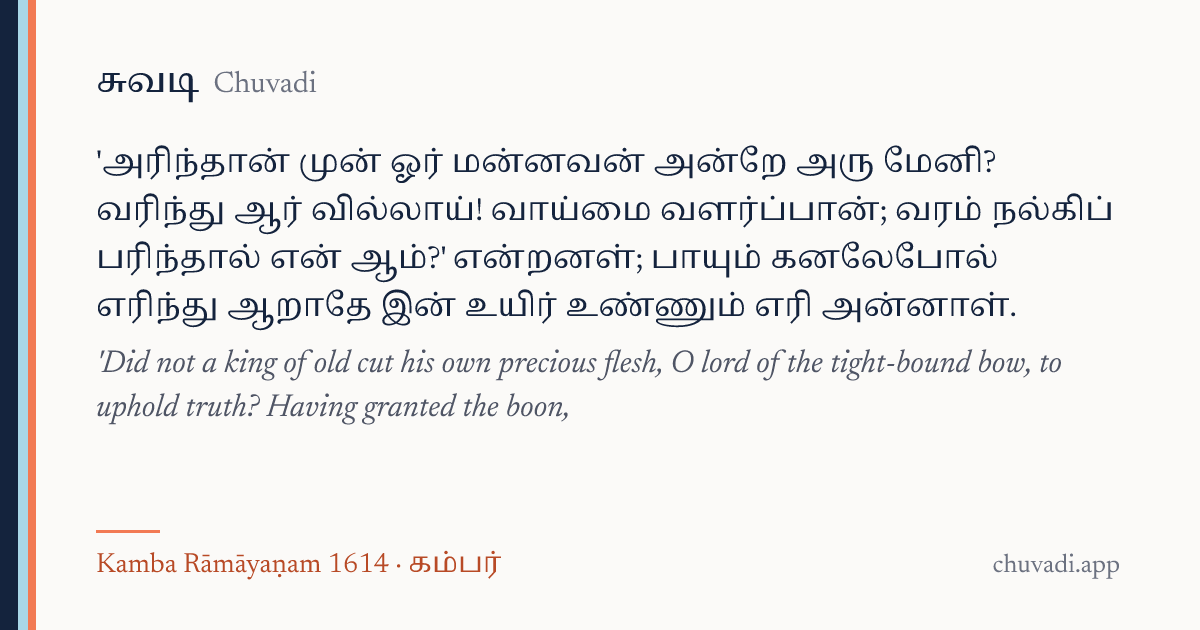
கம்பராமாயணம் 1614 · அயோத்தியா 3.47
பாடல் · The poem
Tap a word to see its gloss in the commentary and where else it occurs.
பொருள் · Meaning in Tamil
பாயும் கனலேபோல் - பரந்து எரியும் தீயைப்போல; எரிந்து ஆறாதே - எரிந்து தணியாமல்; இன்உயிர் உண்ணும் - இனிய உயிரை அழிக்கின்ற; எரி அன்னாள் - நெருப்புப் போன்ற கைகேயி; “வரிந்து ஆர் வில்லாய் - இறுக்கிக் கட்டப்பட்ட வில்லை உடையவனே; முன் ஓர் மன்னவன் - உன் குலத்தில் முன்பு தோன்றிய ஓர் அரசன்; வாய்மை வளர்ப்பான் - சத்தியத்தைக் காப்பதற்காக; அருமேனி அரிந்தான் அன்றே - அரிய தன் உடலை அரிந்து கொடுத்தான் அல்லவா?; வரம் நல்கி - (அவ்வாறிருக்க) நீ முன்னே வரத்தைத் தந்துவிட்டு; பரிந்தால் என் ஆம் - இப்போது வருந்தினால் என்ன பயன் உண்டாகும்;” என்றனள்.
வாய்மை காக்க அருமேனி அரிந்த மன்னவன் சிபிச் சக்கரவர்த்தி ஆவான். ஒரு பொருளைப் பற்றி எரித்த பின் தீயானது தணிந்துவிடுவதாய் இருக்கக் கைகேயியாகிய தீயோ உயிரோடு கூடிய மன்னவனைப் பற்றி எரித்தும் தணியாது அவன் உயிரையும் கொள்ளுகிறது என வேற்றுமையணி தோன்ற, ‘எரிந்து ஆறாதே இன் உயிர் உண்ணும் எரி அன்னாள்’ என்றார்.
ஆங்கிலம் · English translationAI
Translation
- 'Did not a king of old cut his own precious flesh,
- O lord of the tight-bound bow, to uphold truth? Having granted the boon,
- what use is it to grieve?' she said, she who was like a fire
- that, like spreading flame, burns without dying down and devours sweet life.
What the poem says
Kaikēyi cites the famous example of King Cipi, an ancestor of Tacarataṉ's line, who cut flesh from his own body to keep his word and protect a dove that had sought refuge with him. If he could do that, she argues, what is the point of Tacarataṉ grieving over a boon already given?
The poet likens her to a fire, but a worse one: ordinary fire dies down once it has burned what it seized, while she goes on burning and consumes the king's very life.