



கம்பராமாயணம் 1615 · அயோத்தியா 3.48
பாடல் · The poem
Tap a word to see its gloss in the commentary and where else it occurs.
பொருள் · Meaning in Tamil
மிடல் வேந்தன் - வலிமை பொருந்திய தயரதன்; “இவ் வெய்யவள் வீந்தாளே” என்னா - இந்தக் கொடியவள் நாம் உடன்படாவிட்டால் இறந்துவிடுவாள் என்று கருதி; “இவ் வரம் ஈந்தேன் ஈந்தேன் - இந்த வரங்களைக் கொடுத்தேன், கொடுத்தேன்; என் சேய் வனம் ஆள - என் மகன் இராமன் காட்டை ஆள; நான் மாய்ந்துபோய் - யான் இறந்துபோய்; வான் உலகு ஆள்வென் - விண்ணுலகை ஆள்வேன்; நெடிது - நெடுங்காலம்; நின் மகனோடும் - (நீ) நின் பிள்ளையாகிய பரதனுடன் கூடி; வசை வெள்ளம் - பழியாகிய கடலை; நீந்தாய் நீந்தாய் - கடக்க முடியாமல் அதனுள் நீந்திக்கொண்டே இருப்பாய்,” என்றான்.
தயரதன், வரம் தராவிட்டால் கைகேயி உயிரை விடுதல் உறுதி என்று அஞ்ச, ‘ஈந்தேன், ஈந்தேன்’ என்று விரைந்து கூறினான். இவ் அடுக்கு - தேற்றத்தையும் வெகுளியையும் காட்டுவது. வீந்தாள் - துணிவு பற்றி இறந்த காலத்தில் கூறினார்.
ஆங்கிலம் · English translationAI
Translation
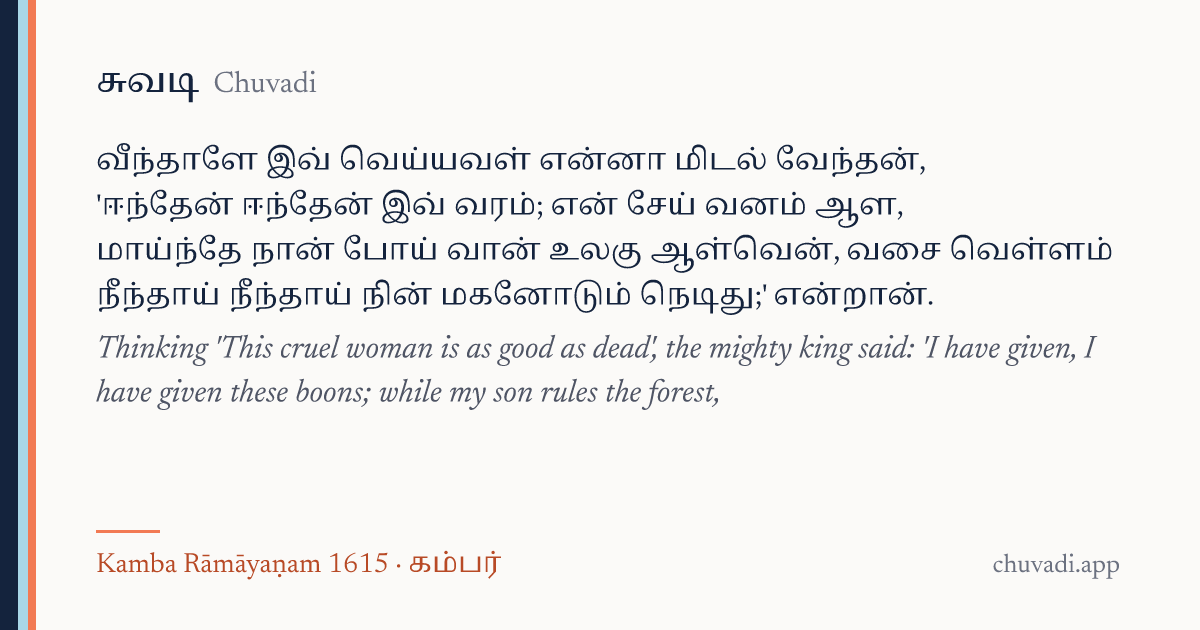
- Thinking 'This cruel woman is as good as dead', the mighty king
- said: 'I have given, I have given these boons; while my son rules the forest,
- I shall die and go to rule the heavenly world; in the flood of infamy
- you shall swim and swim, with your son, for a long, long time.'
What the poem says
Fearing that Kaikēyi really will kill herself if he refuses, Tacarataṉ suddenly gives in, crying 'I have given, I have given!' The repetition carries both finality and fury.
He sets out what will follow: Irāmaṉ will 'rule' the forest, Tacarataṉ himself will die and 'rule' heaven, and she with her son will swim on and on in a sea of infamy that they can never cross.