



கம்பராமாயணம் 1617 · அயோத்தியா 3.50
பாடல் · The poem
Tap a word to see its gloss in the commentary and where else it occurs.
பொருள் · Meaning in Tamil
சேண் உலாவிய நாள் எலாம் - நீட்சி பொருந்திய மிகப் பல நாளும்; உயிர்ஒன்று போல்வன செய்து - இருவருக்கும் உயிர் ஒன்றே என்று சொல்லத்தக்க செயல்களைப் புரிந்து; பின் - பிறகு; ஏண் உலாவிய தோளினான் - வலிமை பொருந்திய தோள்களையுடைய கணவன்; இடர் எய்த - துன்பத்தை அடைய; ஒன்றும் இரங்கிலா - அது கண்டு சிறிதும் மனம் நெகிழாத; வாள் நிலா நகை மாதராள் - ஒளிமிக்க பற்களையுடைய கைகேயியின்; செயல் கண்டு - தீச்செயலைப் பார்த்து; நளிர் கங்குல் ஆகிய நங்கை - குளிர்ந்த இரவாகிய பெண்; மைந்தர்முன் நிற்கவும் நாணினாள் என - ஆடவர் முன்னே நிற்பதற்கும் வெட்கமுற்றாள் என்னும்படி; ஏகினாள் - அகன்று போனாள் (இரவு கழிந்தது).
சேண் உலாவிய நாள் எலாம் - நீண்ட காலமாக; பல ஆண்டுகளாக; அஃதாவது திருமணம் ஆனதுமுதல் அதுவரை உள்ள நீண்ட காலம். இவ்வளவு காலமும் ஈருடலும் ஓருயிரும் போலக் கணவனுடன் ஒன்றுபட்டு அவன் இன்பத்தில் தான் இன்புற்றும், அவன் துன்பத்தில் தான் துன்புற்றும் வாழ்ந்தவள் இப்போது மாறுபட்டு இரக்கமின்றி அவன் பெருந் துயரத்திற்கும் காரணமாகிப் பழியேற்றது கண்டு, அது பெண்குலத்திற்கே இழுக்கு என்று கருதிக் கங்குலாகிய நங்கை ஆடவர் முன் நிற்கவும் நாணி அகன்றாள். தற்குறிப்பேற்ற அணி. வாள்நிலா - ஒருபொருட் பன்மொழி. நிற்கவும் - உம்மை இழிவு சிறப்பு.
ஆங்கிலம் · English translationAI
Translation
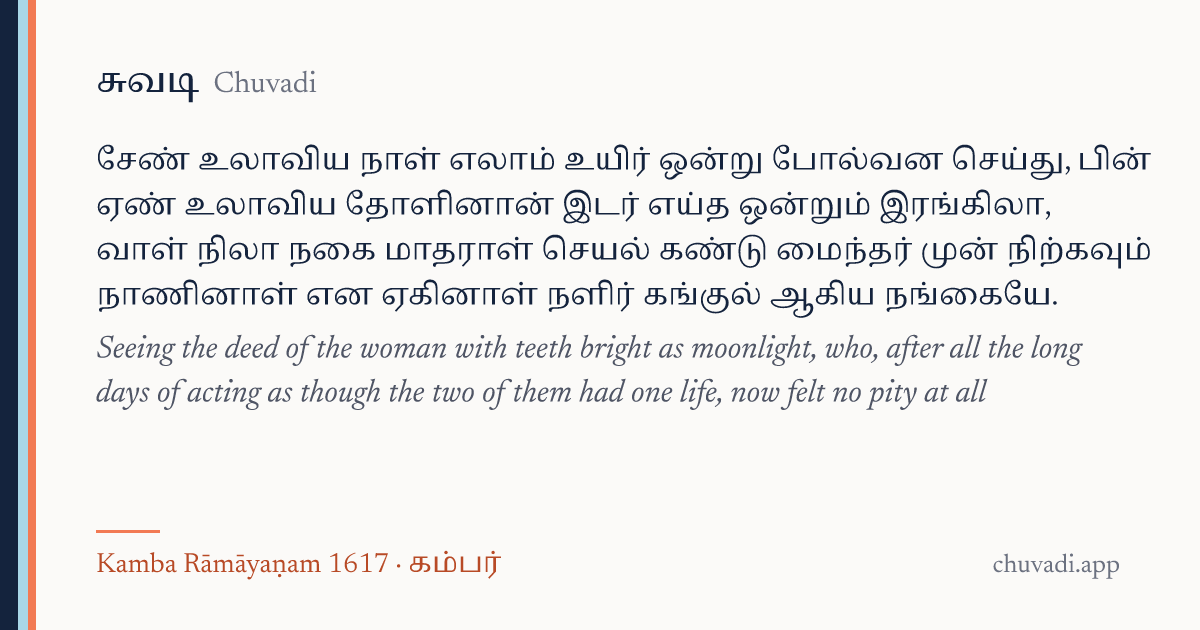
- Seeing the deed of the woman with teeth bright as moonlight, who, after all the long days
- of acting as though the two of them had one life, now felt no pity at all
- when her husband of mighty shoulders came to grief, as though ashamed
- even to stand before men, the lady who was the cool night went away.
What the poem says
The night ends, and the poet gives the dawn a reason of his own. For years Kaikēyi lived with her husband as one soul in two bodies, sharing his joys and sorrows. Now she has pitilessly become the cause of his agony.
Night, imagined as a woman, is so ashamed of what one of her sex has done that she cannot bear to stand before men, and slips away. This is a poetic fancy, the poet assigning his own cause to a natural event, and it opens a new metre in the canto.