



கம்பராமாயணம் 1619 · அயோத்தியா 3.52
பாடல் · The poem
Tap a word to see its gloss in the commentary and where else it occurs.
பொருள் · Meaning in Tamil
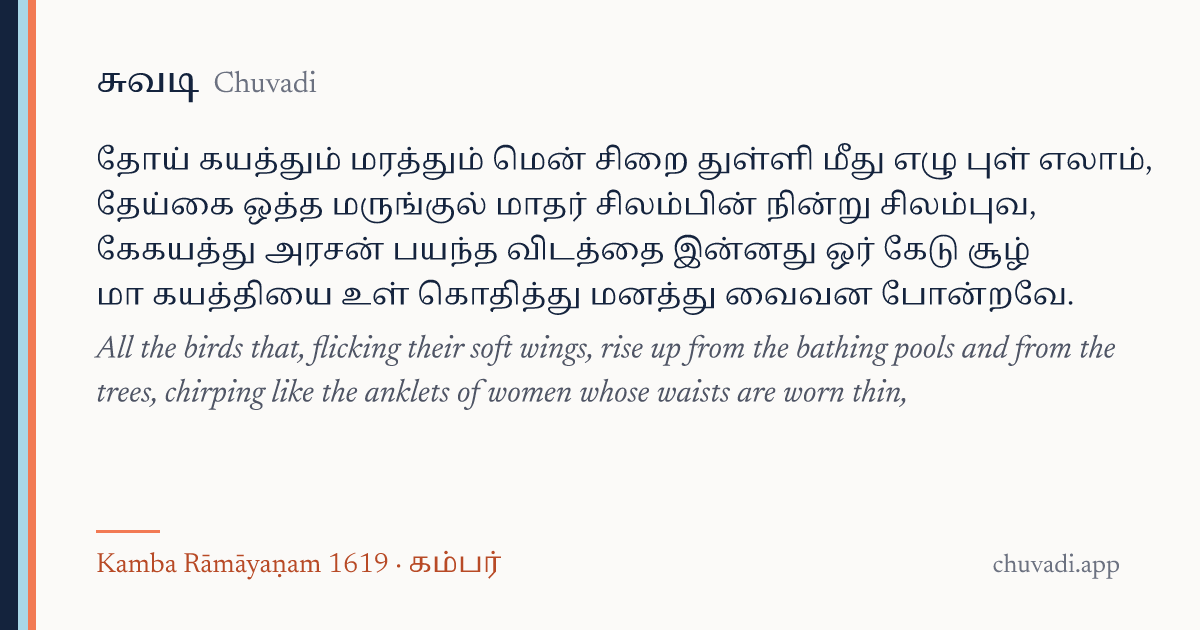
தோய் கயத்தும் - நீராடும் குளங்களிலிருந்தும்; மரத்தும் - மரங்களிலிருந்தும்; மென் சிறை துள்ளி - மெல்லிய சிறகுகளால் குதித்துக்கொண்டு; மீது எழு புள் எலாம் - வானத்தில் பறக்கின்ற பறவைகள் எல்லாம்; தேய்கை ஒத்த மருங்குல் - தேய்வு பொருந்திய சிற்றிடையையுடைய; மாதர் சிலம்பின் நின்று - பெண்களின் பாதச் சிலம்புகள்போலிருந்து; சிலம்புவ - ஒலிப்பவை; கேகயத்து அரசன் பயந்த விடத்தை - கேகய மன்னன் பெற்றெடுத்த விடம்போன்றவளை; இன்னது ஓர் கேடு சூழ் - இத்தகைய கெடுதியைச் சூழ்ந்து செய்த; மா கயத்தியை - மிக்க கீழ்மையுடையவளை; உட்கொதித்து - உள்ளம் புழுங்கி; மனத்து வைவன போன்ற - மனத்திற்குள் ஏசுவனவற்றை ஒத்திருந்தன; ஏ - அசை.
பறவைகள் விடியற் காலத்தில் ஒலிப்பதைக் கைகேயி செயல்கண்டு அவளைத் தம் மனத்தினுள் வைவது போலும் என்றார். இது தற்குறிப்பேற்ற அணி. கணவன் உயிரை வாங்கக் காரணமாதலின் ‘விடத்தை’ என்றார். கயத்தி - கயவன் என்பதன் பெண்பால்; கீழ்மையுடையவள். அவள் செயலின் கொடுமை நோக்கி ‘மா கயத்தி’ என்றார். ஏ - அசை.
ஆங்கிலம் · English translationAI
Translation
- All the birds that, flicking their soft wings, rise up from the bathing pools and from the trees,
- chirping like the anklets of women whose waists are worn thin,
- seemed, seething within, to be cursing in their hearts the poison born to the Kēkaya king,
- that utterly base woman who had contrived such ruin.
What the poem says
At dawn the birds rise from ponds and trees, chattering with a sound like the jingle of women's anklets.
The poet imagines that they are seething inwardly and cursing Kaikēyi, whom he calls 'the poison born to the Kēkaya king', since she is the cause of her husband's death, and 'the utterly base woman' because of the cruelty of her deed. Again the poet supplies his own fanciful reason for an ordinary dawn sound.