



கம்பராமாயணம் 1620 · அயோத்தியா 3.53
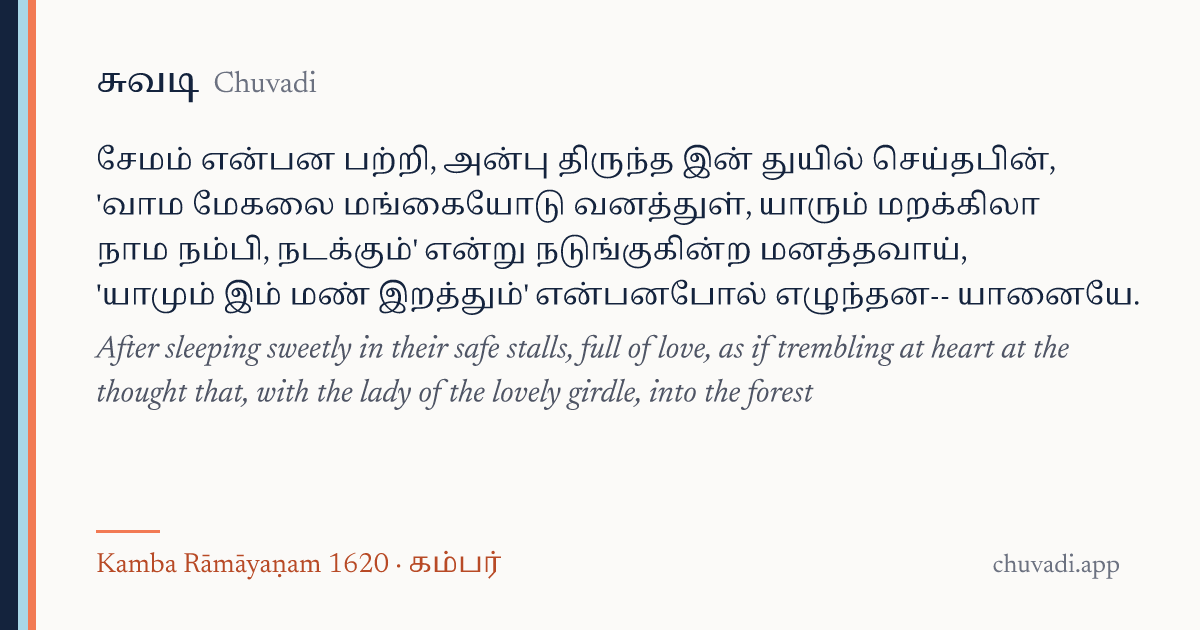
பாடல் · The poem
Tap a word to see its gloss in the commentary and where else it occurs.
பொருள் · Meaning in Tamil
யானை - யானைகள்; சேமம் என்பன பற்றி - தமக்குப் பாதுகாப்பான கூடங்களில் பொருந்தி; அன்பு திருந்த இன்துயில் செய்தபின் - இராமபிரானிடத்து அன்பு மிக இனிது தூக்கத்தைச் செய்த பின்பு; வாம மேகலை மங்கையொடு - அழகிய மேகலை அணிந்த சீதையோடு; யாரும் மறக்கிலா நாம நம்பி - எவரும் மறக்க முடியாத திருப்பெயரை உடைய இராமபிரான்; வனத்துள் நடக்கும் என்று - காட்டிற்குச் செல்வான் என்று; நடுங்குகின்ற மனத்தவாய் - வருந்துகின்ற நெஞ்சையுடையனவாய்; “யாமும் இம் மண் இறத்தும்” - நாமும் இந்த நாட்டைவிட்டுச் செல்வோம்; என்பன போல் - என்று கூறுவன போல; எழுந்தன - கிளம்பின.
யானைகள் எழுந்ததை, இராமபிரான் நாட்டை விட்டுக் காட்டுக்குச் செல்லப் போவதனால் நாமும் இந்நாட்டைவிட்டுச் செல்வோம் என எழுந்தது போலத் தோன்றியது என்கிறார். இது தற்குறிப்பேற்ற அணி. சேமம் - கூட்டு மிடம், கூடம். வாமம் - அழகு. மேகலை - எண்கோவை மணி. யானை - பால்பகா அஃறிணைப் பெயர்.
ஆங்கிலம் · English translationAI
Translation
- After sleeping sweetly in their safe stalls, full of love,
- as if trembling at heart at the thought that, with the lady of the lovely girdle, into the forest
- the noble one whose name no one forgets would walk,
- and saying 'We too will leave this land', the elephants rose.
What the poem says
The royal elephants wake and get up from their stalls at dawn. The poet imagines that they have somehow learned that Irāmaṉ, whose name no one can forget, is to walk into the forest with Cītai.
They seem to rise in alarm, as though declaring that they too will leave the land with him. Like the cocks and the birds, the elephants are given human feeling by poetic fancy.