



கம்பராமாயணம் 1624 · அயோத்தியா 3.57
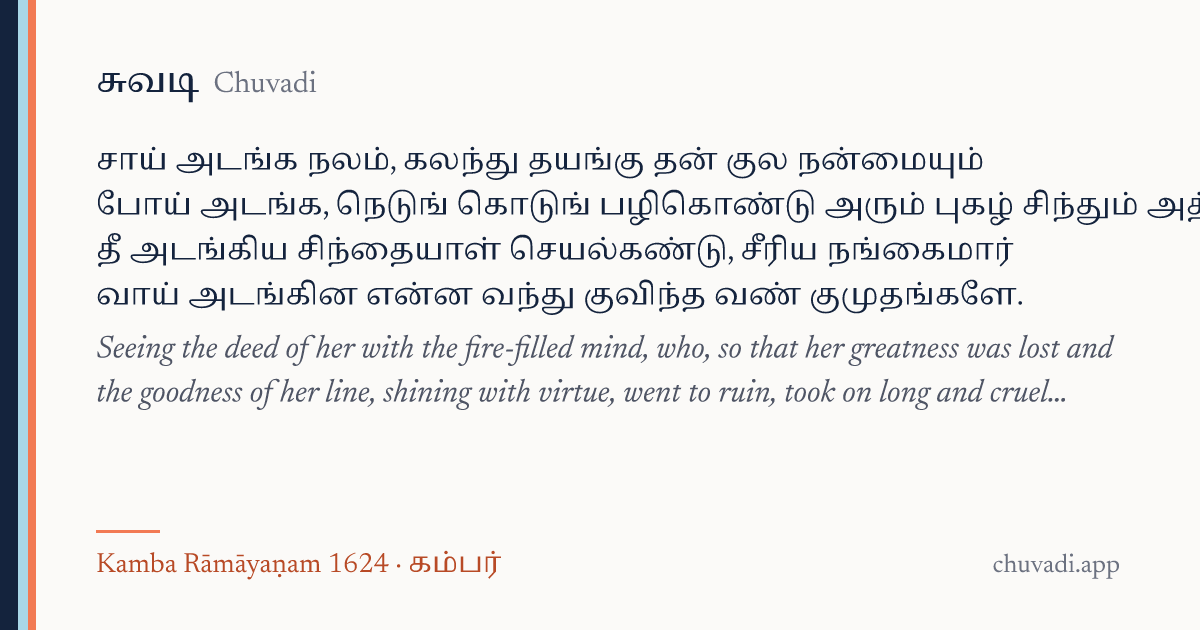
பாடல் · The poem
Tap a word to see its gloss in the commentary and where else it occurs.
பொருள் · Meaning in Tamil
சாய் அடங்க - தன் பெருமை அழியவும்; நலம் கலந்து தயங்கு தன்குல நன்மையும் - நன்மை பொருந்தி விளங்குகின்ற தனது குலத்தின் சிறப்பும்; போய் அடங்க - கெட்டழியவும்; நெடுங் கொடும் பழி கொண்டு - நெடுங்காலம் நிற்பதாகிய கொடிய பழியையேற்றும்; அரும் புகழ் சிந்தும் - பெறுதற்கரிய புகழைச் சிதறுகின்ற; அத் தீ அடங்கிய சிந்தையாள் - அந்தக் கொடுமை பொருந்திய மனத்தையுடைய கைகேயியினது; செயல் கண்டு - தகாத செயலைப் பார்த்து; சீரிய நங்கைமார் வாய் - சிறந்த பெண்களின் வாய்கள்; அடங்கின என்ன - அடங்கி மூடினாற்போல; வண் குமுதங்கள் - வளப்பத்தையுடைய செவ்வாம்பல் மலர்கள்; வந்து குவிந்த - (இதழ்கள் கூடி) மூடின.
ஆம்பல் மலர் காலையில் குவிதல் இயற்கை நிகழ்ச்சி. அது கைகேயியின் கொடுமை கண்டு குலப்பெண்டிர் வாயடங்கியிருந்தாற் போன்று இருந்தது என்பது தற்குறிப்பேற்றம். பழி கொண்டு புகழ் சிந்தினாள் என்பது மாற்றுநிலை அணி (பரிவர்த்தனாலங்காரம்). தீ - உவமவாகுபெயர்; தீப்போலும் கொடுமையைக் குறித்தது.
ஆங்கிலம் · English translationAI
Translation
- Seeing the deed of her with the fire-filled mind, who, so that her greatness was lost and the goodness
- of her line, shining with virtue, went to ruin, took on long and cruel infamy and scattered rare fame,
- the rich red water-lilies came together and closed,
- as though the mouths of noble women had fallen silent.
What the poem says
Red water-lilies bloom at night and close at daybreak. The poet imagines that, seeing what Kaikēyi has done, they close like the lips of virtuous women struck dumb with shame.
Kaikēyi has destroyed her own dignity and her family's good name, exchanging rare fame for lasting infamy. The commentary notes this trade of fame for blame as a figure of exchange, and the 'fire' of her mind as a metaphor for cruelty.