



கம்பராமாயணம் 1632 · அயோத்தியா 3.65
பாடல் · The poem
Tap a word to see its gloss in the commentary and where else it occurs.
பொருள் · Meaning in Tamil
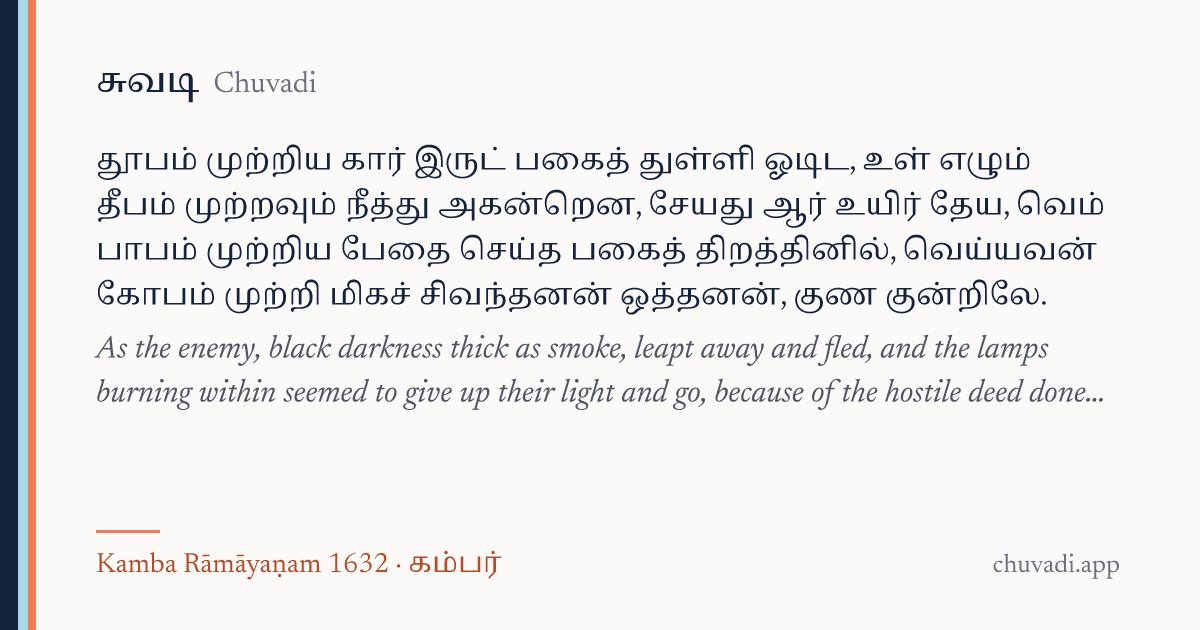
தூபம் முற்றிய - புகைபோல எங்கும் சூழ்ந்த; கார் இருள் பகை துள்ளி ஓடிட - கரிய இருளாகிய பகை குதித்து ஓடிப்போகவும்; உள் எழும் தீபம் முற்றவும் - வீடுகளின் உள்ளே எரிகின்ற விளக்குகள் எல்லாம்; நீத்து அகன்றென - ஒளியைத் துறந்து மழுங்கியபோல; சேயது ஆர் உயிர் தேய - தன் குலத்தில் பிறந்த தயரதனது அரிய உயிர் மெலியும்படி; வெம் பாபம் முற்றிய பேதை செய்த - தீவினை முதிர்ந்த கைகேயி புரிந்த; பகைத் திறத்தினில் - பகைச் செயலால்; வெய்யவன் - சூரியன்; குண குன்றின் - கிழக்கு மலையில்; கோபம் முற்றி மிகச் சிவந்தனன் ஒத்தனன் - சினம் முதிர்ந்து மிகவும் செந்நிறம் கொண்டவன் போலக் காணப்பட்டான்.
சூரியன் கிழக்கு மலையில் சிவந்து தோன்றியதனைத் தன் குலத்தில் பிறந்த தயரதனது உயிர் ஒடுங்குமாறு கேடு சூழ்ந்த கைகேயியின்மீது கோபம் கொண்டவன் போலத் தோன்றினான் என்றது ஏதுத்தற்குறிப்பேற்ற அணி. குண குன்று - கதிரவன் எழும் கிழக்கு மலை. குணக்கு - கிழக்கு.
ஆங்கிலம் · English translationAI
Translation
- As the enemy, black darkness thick as smoke, leapt away and fled, and the lamps burning within
- seemed to give up their light and go, because of the hostile deed done by the foolish woman
- ripe with burning sin, which wasted the precious life of his descendant,
- the sun on the eastern mountain seemed to have turned deep red in full-grown anger.
What the poem says
The sun rises red over the eastern mountain, driving off the smoke-thick darkness, while the lamps in the houses pale.
The kings of Ayōttī belong to the Solar dynasty, so Tacarataṉ is the sun's own descendant. The poet imagines that the sun glows red with fury at Kaikēyi for the wrong she has done, which is draining the life from his offspring. The commentary classes this as a fanciful attribution of cause.