



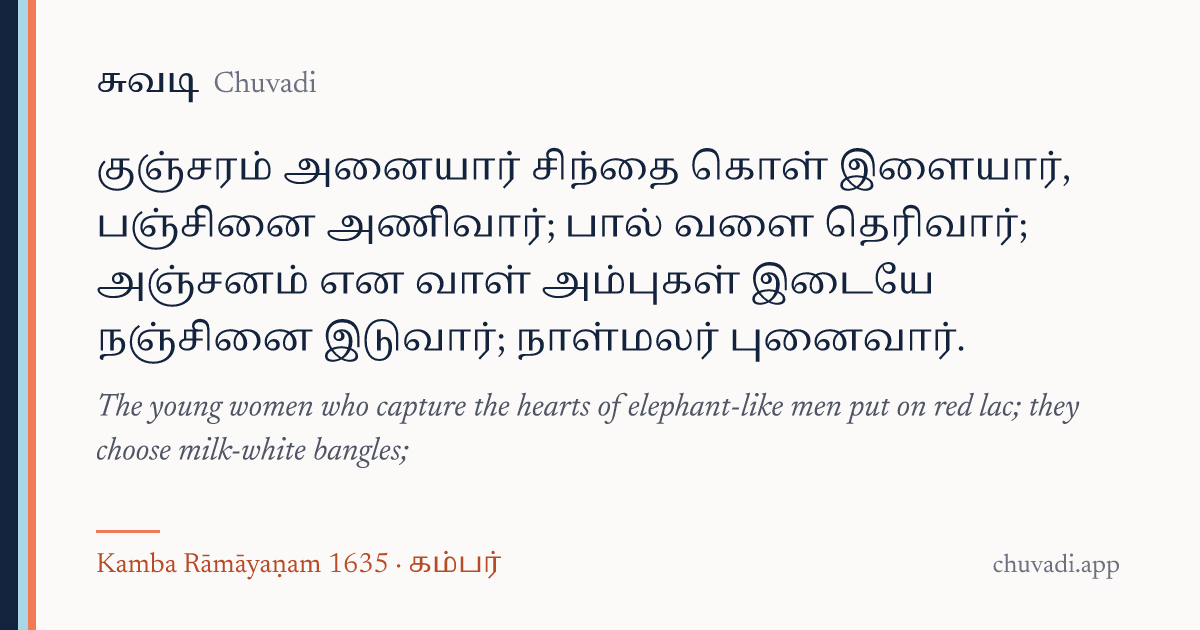
கம்பராமாயணம் 1635 · அயோத்தியா 3.68
பாடல் · The poem
Tap a word to see its gloss in the commentary and where else it occurs.
பொருள் · Meaning in Tamil
குஞ்சரம் அனையார் - யானைபோலும் பெருமிதமுடைய ஆடவர்களின்; சிந்தைகொள் இளையார் - மனத்தைக் கவர்கின்ற இளைய மங்கையர்; பஞ்சினை அணிவார் - செம்பஞ்சுக் குழம்பைக் கால்களில் பூசுவர்; பால்வளை தெரிவார் - பால்போலும் சங்குவளையல்களைத் தேர்ந்தெடுத்துக் கையில் அணிவர்; அஞ்சனம் என - மை என்று பேர் சொல்லிக்கொண்டு; வாள் அம்புகள் இடையே - வாளும் அம்பும் போன்ற கொடிய கண்களில்; நஞ்சினை இடுவார் - விடத்தை இடுவர்; நாள்மலர் புனைவார் - புதிய மலர்களைத் தலையில் சூடுவர்.
இளையார் என்பது மகளிரைக் குறித்தது. ‘இளையவர் தம்மொடு அவர் தரும் கலவியே கருதி ஓடினேன்’ என்னும் திருமங்கையாழ்வார் பெரிய திருமொழியிலும் (1) இச்சொல் இப்பொருளில் வருதல் காணலாம். ‘பந்தினை இளையவர் பயில் இடம்’ (79) என்னும் இடத்தும் இப்பொருட்டாதல் கருதத்தக்கது. கண்ணில் இடும் மையினை நஞ்சு எனக் கற்பனை செய்தலை (1564) பின்னும் காணலாம்.
ஆங்கிலம் · English translationAI
Translation
- The young women who capture the hearts of elephant-like men
- put on red lac; they choose milk-white bangles;
- between the swords and arrows of their eyes, calling it collyrium,
- they put poison; they deck themselves with fresh flowers.
What the poem says
The first of a series of short verses on how the women of Ayōttī dress for the coronation. The young women paint their feet with red lac, pick out white conch-shell bangles and put fresh flowers in their hair.
The sharpest touch concerns their eye make-up: their eyes are already as deadly as swords and arrows, and what they call collyrium is really poison laid between them. The commentary notes the poet uses the same conceit of kohl as poison elsewhere.