



கம்பராமாயணம் 1636 · அயோத்தியா 3.69
பாடல் · The poem
Tap a word to see its gloss in the commentary and where else it occurs.
பொருள் · Meaning in Tamil
பொங்கிய உவகை வெள்ளம் பொழிதர - மேலெழுந்த மகிழ்ச்சியால் தோன்றிய மகிழ்ச்சிப் பெருக்குப் பெருக; கமலம் பூத்த சங்கை இல் முகத்தார் - தாமரைபோல் மலர்ந்த களங்கமில்லாத முகத்தை உடையவராகிய; நறவம் மாந்தி - தேனையுண்டு; களிப்பன செங்கயல் சிவணும் கண்ணார் - களிப்பவையான செவ்விய கெண்டை மீன்களை ஒத்த கண்களையுடைய மகளிரது; குங்குமச் சுவடு நீங்கா - (மார்பில் அப்பிய) குங்குமக்குழம்பினது அடையாளம் நீங்காத; குவவுத் தோள் குமரர் எல்லாம் - திரண்ட புயங்களையுடைய ஆடவர் அனைவரும்; நம்பி தம்பியர் அனையர் ஆனார் - இராமபிரானுடைய தம்பிமாரை ஒத்தவராக ஆயினர்.
இராமபிரானைக் காட்டிலும் வயது குறைந்த இளைஞர்கள் தங்கள் தமையனுக்கு முடிசூட்டுவிழா நடப்பதாக எண்ணி மகிழ்ந்தனர். மதுவைக் குடித்துக் களித்திருக்கும் செங்கயலைச் செவ்வரி படர்ந்து களித்திருக்கும் மகளிர் கண்களுக்கு உவமை கூறினார். சோக வெள்ளத்தை நீக்குவதற்கு உவகை வெள்ளம் என்றார். சங்கை - குற்றம், களங்கம். சிவணல் - நிகர்த்தல்.
ஆங்கிலம் · English translationAI
Translation
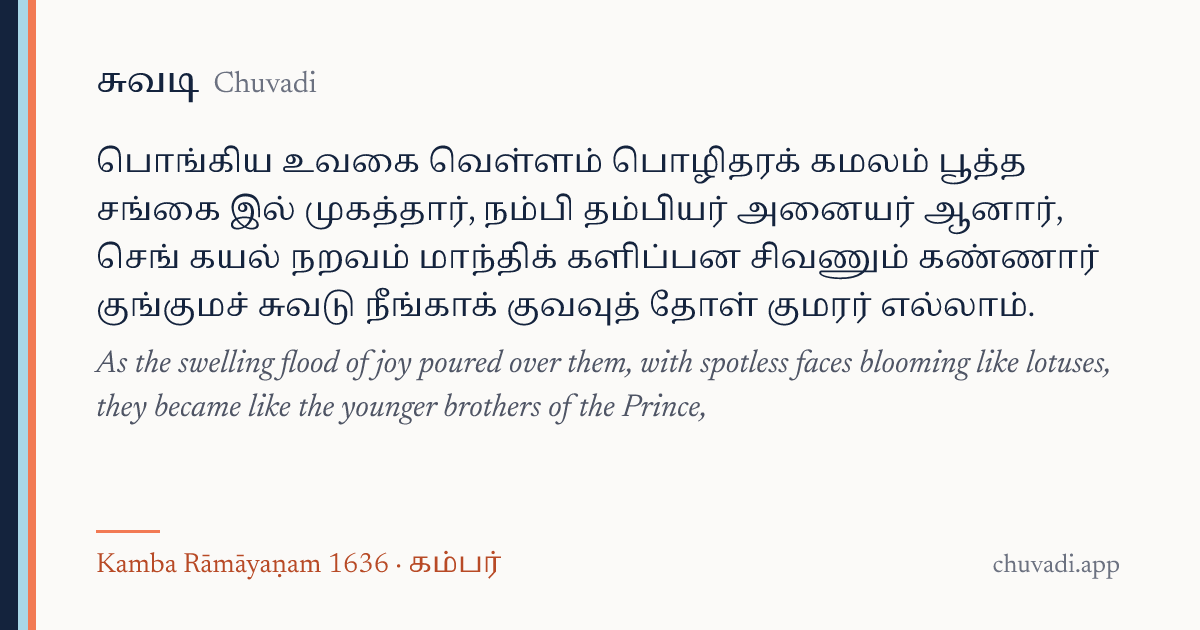
- As the swelling flood of joy poured over them, with spotless faces blooming like lotuses,
- they became like the younger brothers of the Prince,
- all the young men of massive shoulders from which never faded the marks of saffron
- from women whose eyes are like red carp that drink honey and grow merry.
What the poem says
All the young men of Ayōttī, their faces glowing like lotuses, rejoice as if they were Irāmaṉ's own younger brothers, celebrating the crowning of an elder brother.
They are lovers too: their shoulders still bear the saffron paste rubbed off from the breasts of women whose eyes, red-streaked with pleasure, are like red carp tipsy on honey. The 'flood of joy' is set against the flood of sorrow that will soon replace it.