



கம்பராமாயணம் 1637 · அயோத்தியா 3.70
பாடல் · The poem
Tap a word to see its gloss in the commentary and where else it occurs.
பொருள் · Meaning in Tamil
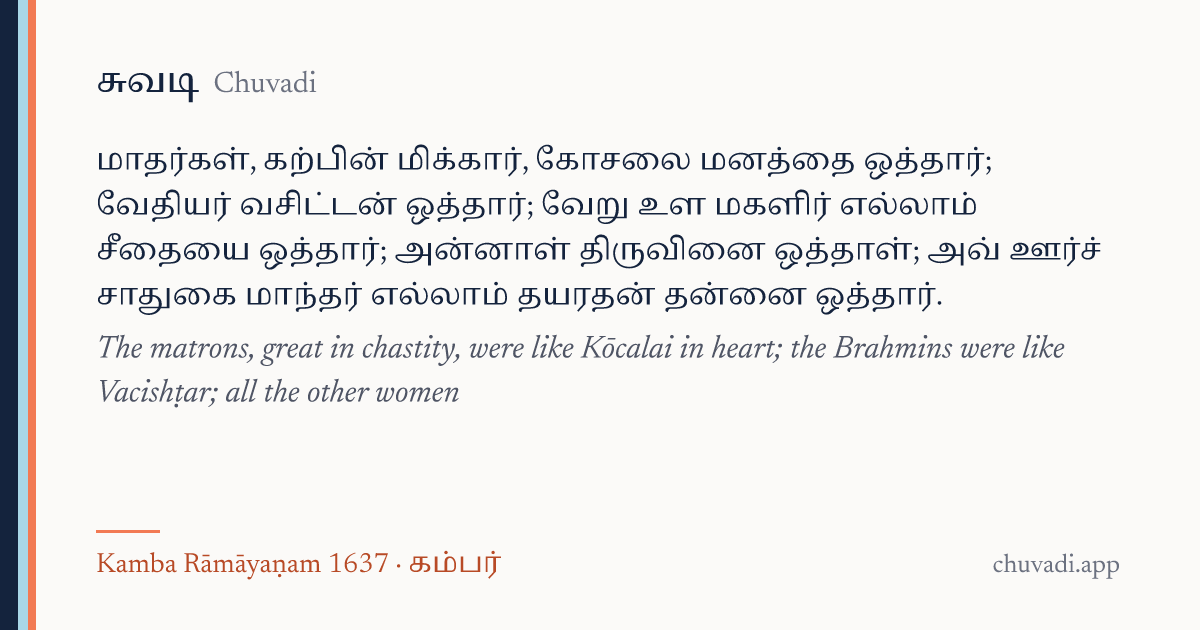
அவ் ஊர் - அந்த அயோத்தி நகரத்தில் வாழும்; கற்பின் மிக்கார் மாதர்கள் - கற்பிற் சிறந்த முதிய மகளிர்கள்; கோசலை மனத்தை ஒத்தார் - இராமனுடைய தாய் கோசலையின் மனம் போன்ற மனம் உடையவர் ஆயினர்; வேறு உள மகளிர் எல்லாம் - மற்ற இளம் பெண்கள் எல்லாம்; சீதையை ஒத்தார் - மகிழ்ச்சியில் சீதையைப் போன்றவர் ஆயினர்; அன்னாள் திருவினை ஒத்தாள் - அந்தச் சீதை இலக்குமியை ஒத்தவள் ஆயினாள்; வேதியர் வசிட்டன் ஒத்தார் - மறையவர்கள் வசிட்டமுனிவரைப் போன்றவர் ஆயினர்; சாதுகை மாந்தர் எல்லாம் - சாதுக்களான முதிய ஆடவர் எல்லாரும்; தயரதன் தன்னை ஒத்தார் - தயரத மன்னனைப் போன்றவர் ஆயினர்.
நகர மக்கள் அவரவர் தகுதிக்கேற்ப அடைந்த மகிழ்ச்சி பொருந்திய மனநிலை அழகுற எடுத்துக் காட்டப்படுகிறது. இராமன் முடிசூடுவது அரசத் திருவை மணத்தலாதலால் அத்திருமகள் மகிழ்வதுபோலச் சீதை மகிழ்ந்தாள் என்றார்.
ஆங்கிலம் · English translationAI
Translation
- The matrons, great in chastity, were like Kōcalai in heart;
- the Brahmins were like Vacishṭar; all the other women
- were like Cītai; and she was like Tirumakaḷ herself; and in that city
- all the good men were like Tacarataṉ.
What the poem says
Each group in the city shares the joy of the person closest to the event. Virtuous older women feel as Irāmaṉ's mother Kōcalai feels; the Brahmins rejoice like the royal preceptor Vacishṭar; the younger women are as happy as Cītai; and the good elders share the pride of Tacarataṉ.
Cītai herself is like Tirumakaḷ, the goddess of royal fortune, because a king's crowning was thought of as his wedding to that goddess. The reader knows that Tacarataṉ, whom they all imagine rejoicing, is at this moment lying in despair.