



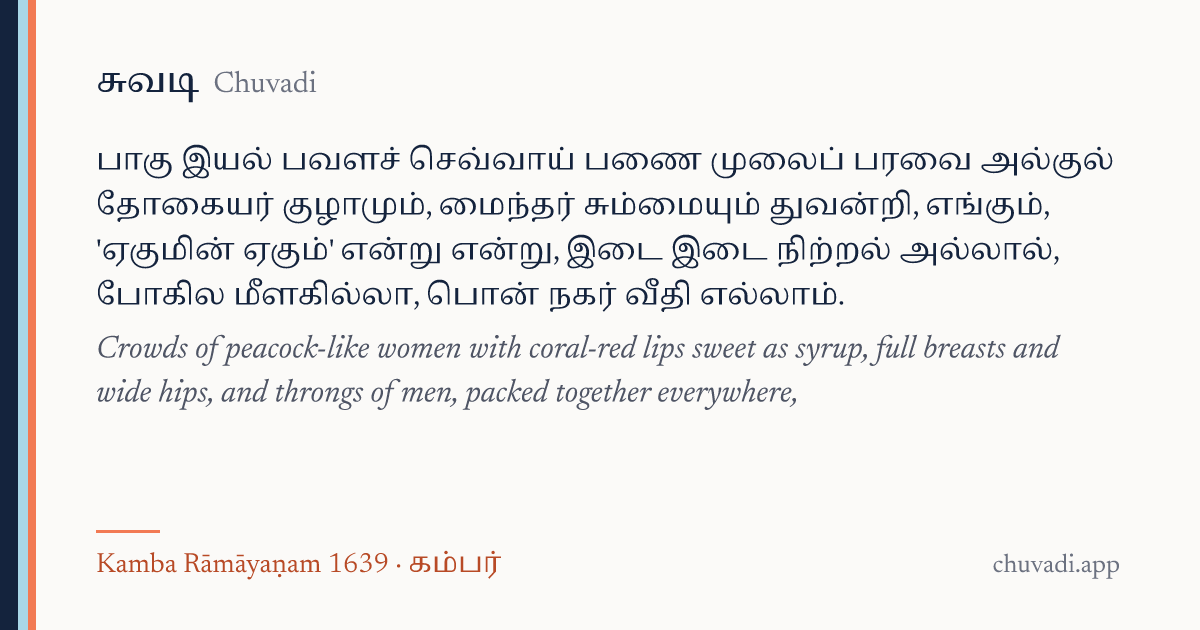
கம்பராமாயணம் 1639 · அயோத்தியா 3.72
பாடல் · The poem
Tap a word to see its gloss in the commentary and where else it occurs.
பொருள் · Meaning in Tamil
பொன் நகர் வீதி எல்லாம் - அந்த அழகிய நகரத்தின் தெருக்களில் எல்லாம்; பாகு இயல் பவளச் செவ்வாய் - தேன்பாகு போன்ற இனிமையையும் பவளம் போன்ற செம்மையையும் உடைய உதடுகளையும்; பணை முலை - பருத்த தனங்களையும்; பரவை அல்குல் - பரந்த அரைப் பகுதியினையும் உடைய; தோகையர் குழாமும் - மகளிரது கூட்டமும்; மைந்தர் சும்மையும் - ஆடவர் கூட்டமும்; எங்கும் துவன்றி - எல்லா இடங்களிலும் நெருங்கி; ஏகுமின் ஏகும் என்று என்று - செல்லுங்கள் செல்லுங்கள் என்று பலமுறை சொல்லிக்கொண்டு; இடை இடை நிற்றல் அல்லால் - தாம் தாம் நின்ற இடங்களிலேயே நிற்பதை அன்றி; போகில - முன்னேறிச் செல்லவுமில்லை; மீளகில்லா - திரும்பிச் செல்ல ஆற்றலற்றனவும் ஆயின.
இது நகரத்தில் உண்டான போக்குவரத்து நெருக்கடியைக் கூறுமுகமாகக் கூட்டத்தின் மிகுதியைப் புலப்படுத்தியது. தோகையர் - மயில்போலும் சாயலுடையவர். சும்மை - கூட்டம்.
ஆங்கிலம் · English translationAI
Translation
- Crowds of peacock-like women with coral-red lips sweet as syrup, full breasts and wide hips,
- and throngs of men, packed together everywhere,
- crying again and again 'Move on, move on!', could only stand still where they were;
- in all the streets of the golden city they could neither go forward nor turn back.
What the poem says
The streets of Ayōttī are so jammed with men and women that the crowds are at a standstill. Everyone keeps shouting 'Move on, move on!', yet nobody can go forward or turn back.
The poet conveys the sheer size of the gathering through a vivid picture of a traffic jam. The women are called 'peacocks' for their graceful bearing.