



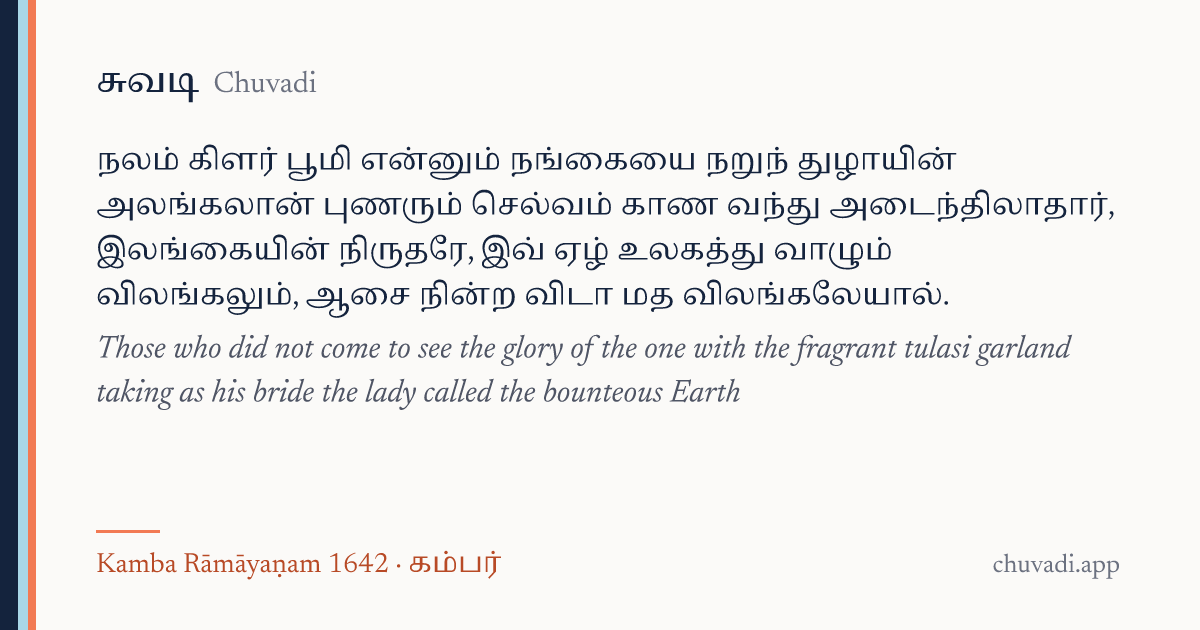
கம்பராமாயணம் 1642 · அயோத்தியா 3.75
பாடல் · The poem
Tap a word to see its gloss in the commentary and where else it occurs.
பொருள் · Meaning in Tamil
நறுந் துழாய் அலங்கலான் - மணம் பொருந்திய துளசி மாலையைச் சூடும் திருமாலான இராமபிரான்; நலம் கிளர் பூமி என்னும் நங்கையை - சிறப்பு மிக்க மண்மகள் என்னும் பிராட்டியை; புணரும் செல்வம் காண - சேருகின்ற பேற்றினைக் காண்பதற்கு; வந்து அடைந்திலாதார் - வந்து சேராதவர்; இலங்கையின் நிருதரே - இலங்கையில் உள்ள அரக்கர் மட்டுமே ஆவர்; இவ் ஏழ் உலகத்து வாழும் விலங்கலும் - அவரே யன்றி, இந்த ஏழு உலகங்களிலும் உள்ள மலைகளும்; ஆசை நின்ற விடா மத விலங்கல் - எட்டுத்திக்குகளிலும் நீங்காமல் நின்ற மதம் பொழியும் யானைகளுமே ஆகும்.
அரக்கர்களும், அஃறிணைப் பொருள்களான மலைகளும், திசையானைகளும் மட்டுமே வரவில்லை என்பதால் பிறர் எல்லாரும் வந்தனர் என்பதாம். அரக்கர் பகையானும், மலைகள் அசைதலின்மையானும், திசையானைகள் திசைகளைச் சுமத்தலைவிட்டு வரக்கூடாமையானும் வரவில்லை. நங்கை - குணங்களால் நிறைந்தவள். ஆல் - அசை.
ஆங்கிலம் · English translationAI
Translation
- Those who did not come to see the glory of the one with the fragrant tulasi garland
- taking as his bride the lady called the bounteous Earth
- were only the demons of Ilaṅkai, and the mountains that stand in these seven worlds,
- and the elephants that stand at the quarters, never ceasing to pour their must.
What the poem says
A coronation was thought of as the king's marriage to the Earth goddess. Everyone, the poet says, came to see Irāmaṉ, here identified with Vishnu who wears the tulasi garland, take the Earth as his bride.
The only absentees were the demons of Ilaṅkai, who are his enemies; the mountains, which cannot move; and the elephants that hold up the eight quarters of the world, which cannot leave their posts. The mention of Ilaṅkai quietly foreshadows the war to come.