



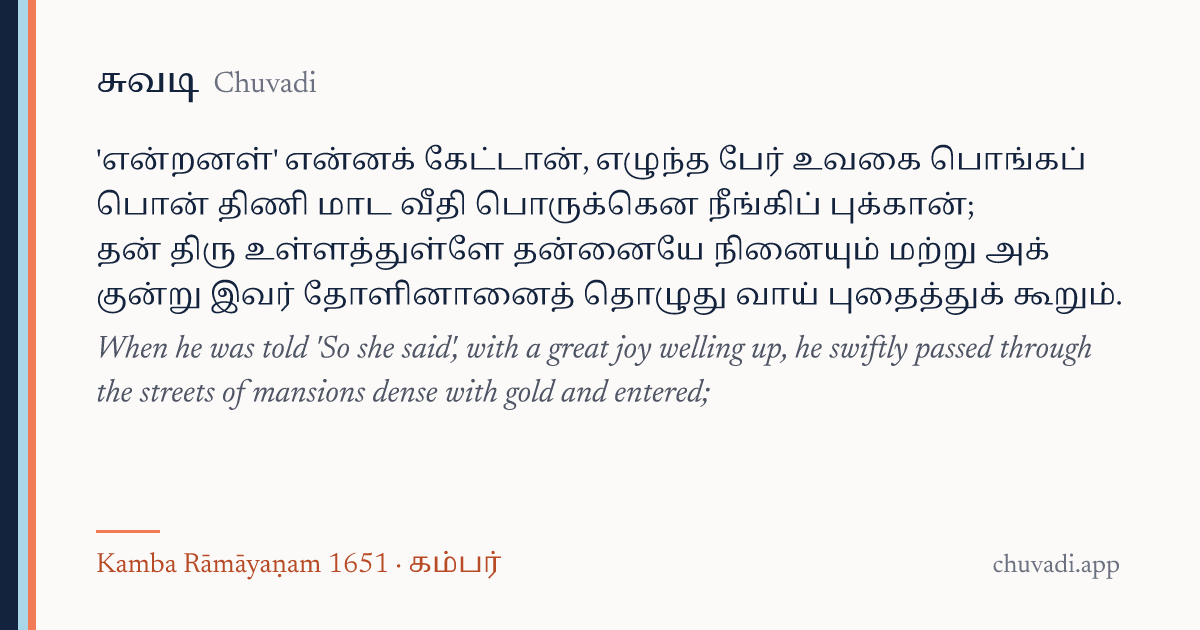
கம்பராமாயணம் 1651 · அயோத்தியா 3.84
பாடல் · The poem
Tap a word to see its gloss in the commentary and where else it occurs.
பொருள் · Meaning in Tamil
“என்றனள்” - ‘பிள்ளையைக் கொணர்க’ என்று கைகேயி சொன்னாள்; என்ன கேட்டான் - என்று கூறக் கேட்டான் சுமந்திரன்; எழுந்த பேர் உவகை பொங்க - உண்டாகிய மிக்க மகிழ்ச்சி மேலும் மேலும் பெருக; பொன் திணி மாட வீதி - பொன்மயமான மாடங்களையுடைய தெருக்களை; பொருக்கென நீங்கி - விரைவாகக் கடந்து; புக்கான் - (இராமனது) மாளிகையினுள் புகுந்தான்; தன் திரு உள்ளத்துள்ளே - (அங்குத்) தனது மனத்திற்குள்ளே; தன்னையே நினையும் அக்குன்று இவர் தோளினானை - தன்னையே நினைத்துக்கொண்டிருக்கின்ற அந்தக் குன்று போன்ற புயங்களையுடைய இராமபிரானை; தொழுது வாய் புதைத்து - (கண்டு) வணங்கி வாயை மூடிக்கொண்டு; கூறும் - (பின்வருமாறு) சொல்லலானான்.
இராமபிரான் தான் கொண்ட மானிட வேடத்திற்கு ஏற்றவாறு, உண்ணாமல் நோன்பு மேற்கொண்டு நாராயணனைத் தியானித்து நிற்றலின் ‘தன்னையே நினையும்’ என்றார். இராமனை வாழ்த்தித் தயரதனுடன் சேர்த்து அனுப்பக் கருதியே கைகேயி இராமனை அங்கே அழைத்திருப்பதாகச் சுமந்திரன் எண்ணியதால் எழுந்த பேருவகை பொங்குவதாயிற்று.
ஆங்கிலம் · English translationAI
Translation
- When he was told 'So she said', with a great joy welling up,
- he swiftly passed through the streets of mansions dense with gold and entered;
- and to him of mountain-like shoulders, who within his holy heart
- was meditating on himself, he bowed, covered his mouth, and spoke.
What the poem says
Cumantiraṉ is delighted, assuming that Kaikēyi wants Irāmaṉ brought so that she can bless him and send him to the ceremony with his father. He hurries through the golden streets to Irāmaṉ's palace.
There he finds Irāmaṉ fasting and meditating on Nārāyaṇa, as befits his human role, which the poet slyly describes as 'meditating on himself', since Irāmaṉ is Nārāyaṇa. Cumantiraṉ bows and covers his mouth with his hand, a gesture of respect when addressing a superior.