



கம்பராமாயணம் 1655 · அயோத்தியா 3.88
பாடல் · The poem
Tap a word to see its gloss in the commentary and where else it occurs.
பொருள் · Meaning in Tamil
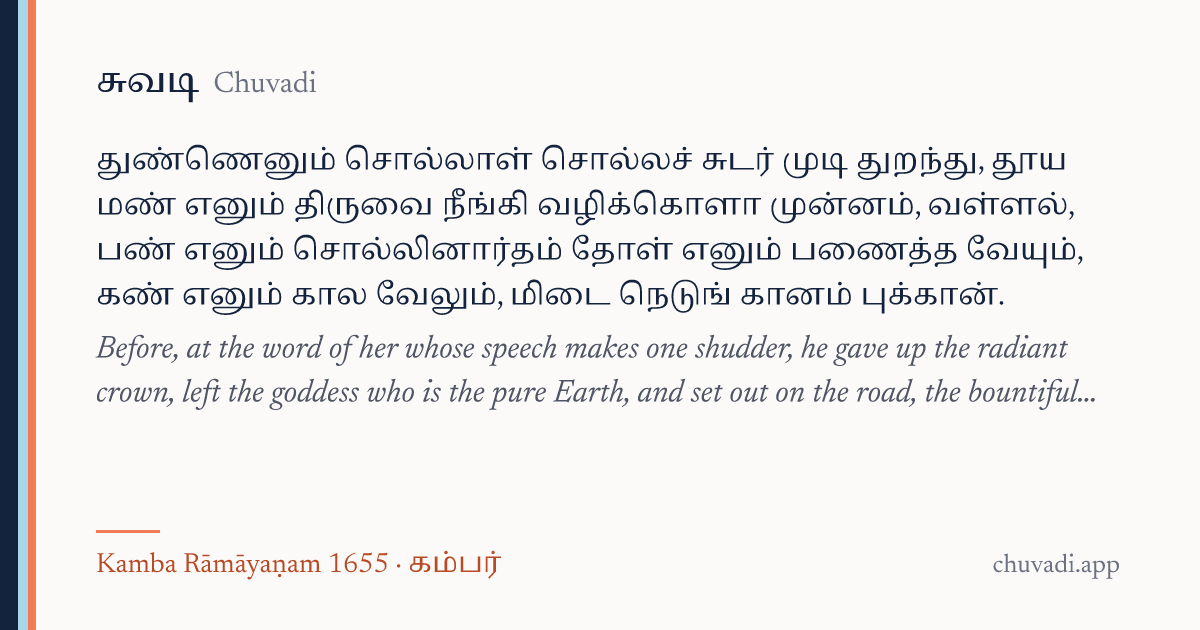
துண்ணெனும் சொல்லாள் சொல்ல - நடுங்கத்தக்க சொல்லினையுடைய கைகேயி சொல்லுதலால்; வள்ளல் - இராமபிரான்; சுடர் முடி துறந்து - ஒளி பொருந்திய முடிசூடுதலைத் தவிர்ந்து; தூய மண் எனும் திருவை நீங்கி - தூய்மையுடைய நிலமகள் என்னும் செல்வியையும் பிரிந்து; வழிக் கொளா முன்னம் - (காடு) செல்லுவதற்கு முன்னரே; பண் எனும் சொல்லினார்தம் - இசைப்பாட்டு என்று சொல்லத்தக்க சொற்களையுடைய பெண்களின்; தோள் எனும் பணைத்த வேயும் - தோள்களாகிய பருத்த மூங்கில்களும்; கண் எனும் கால வேலும் - கண்கள் என்னும் யமனைப் போன்ற வேல்களும்; மிடை நெடுங்கானம் புக்கான் - செறிந்த பெருங்காட்டில் புகுந்தான்.
பெண்கள் கூட்டம் மொய்த்து நோக்க, இராமபிரான் தேரில் சென்றான் என்பதாம். பின்வரும் நிகழ்ச்சியை முன்னே பொருந்திக் கூறியுள்ள நயம் கருதத்தக்கது. இவ்வாறு கம்பர் பாடுதலை 20, 2828, 3151, 4759 முதலிய பாடல்களாலும் உணரலாம்.
ஆங்கிலம் · English translationAI
Translation
- Before, at the word of her whose speech makes one shudder, he gave up the radiant crown,
- left the goddess who is the pure Earth, and set out on the road, the bountiful one
- entered a vast, dense forest of the swelling bamboos that are the shoulders
- and the deadly spears that are the eyes of women whose speech is music.
What the poem says
A double image. Soon, because of Kaikēyi's dreadful words, Irāmaṉ will give up the crown, leave the Earth goddess who should have been his bride, and enter a real forest.
But even before that, says the poet, he has already entered a forest: the crowd of women thronging around his chariot, whose rounded shoulders are like thick bamboo stems and whose glances are like deadly spears. The poet thus foreshadows the coming exile, a device he uses in other places too.