



கம்பராமாயணம் 1656 · அயோத்தியா 3.89
பாடல் · The poem
Tap a word to see its gloss in the commentary and where else it occurs.
பொருள் · Meaning in Tamil
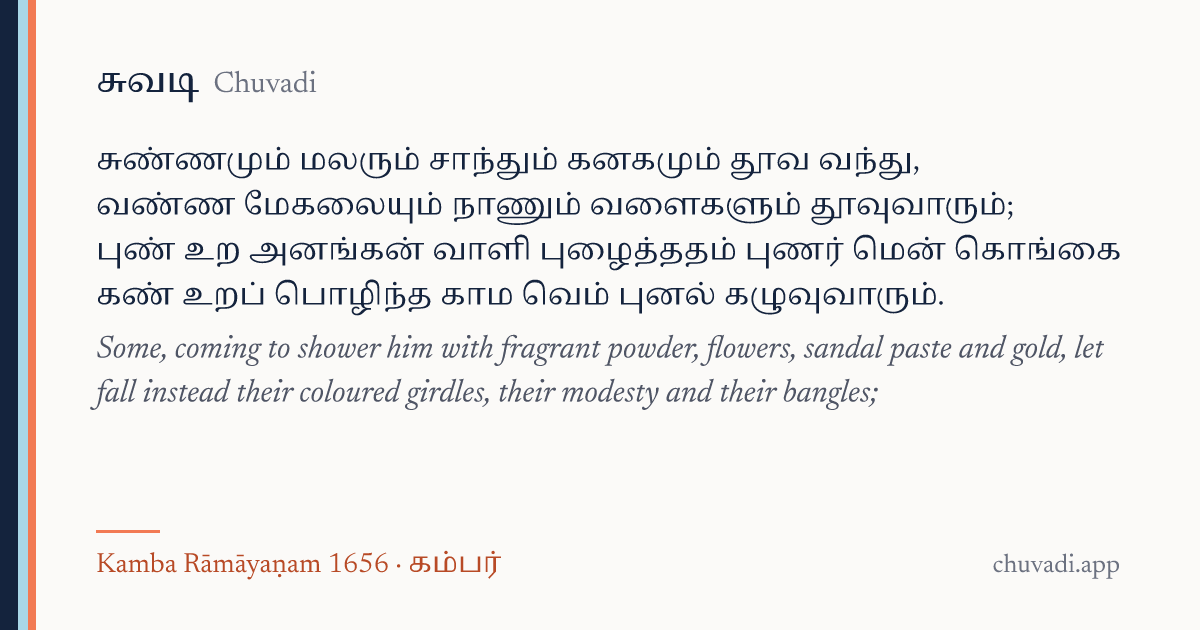
சுண்ணமும் மலரும் சாந்தும் கனகமும் - (அப்பெண்கள்) நறுமணப் பொடியையும், பூக்களையும், சந்தனத்தையும், பொன்னையும்; தூவ வந்து - இராமன்மேல் சிதறுவதற்கு வந்து; வண்ண மேகலையும் - (தங்கள்) அழகிய மேகலாபரணங்களையும்; நாணும் - நாணத்தையும்; வளைகளும் - வளையல்களையும்; தூவுவாரும் - நெகிழ விடுபவர்களும்; அனங்கன் வாளி புண் உறப் புழைத்த - மன்மதனின் மலரம்புகள் புண் உண்டாகும்படி துளைத்த; தம் புணர்மென் கொங்கை - தம்முடைய நெருங்கிய மென்மையான தனங்களை; கண் உறப் பொழிந்த - தங்கள் கண்கள் மிகுதியாகச் சிந்திய; காம வெம்புனல் - காமத்தால் தோன்றிய வெந்நீரால்; கழுவுவாரும் - கழுவுகின்றவர்களும் (ஆகி என ஒருசொல் வருவிக்க).
இது குளகம்; அடுத்த பாட்டில் வரும் நைவார் என்னும் வினைகொண்டு முடியும். இராமன்மேல் மங்கலப் பொருள்களைத் தூவ வந்த மகளிர் அதனை மறந்து இராமன்மீது உண்டான காதலால் தடுமாறி, தங்கள் ஆபரணங்களை நெகிழவிட்டனர். நாணமே மகளிர்க்குச் சிறந்த அணி; அதனையும் அணிகலன்களுடன் சேர்த்துச் சிந்தினர்.
ஆங்கிலம் · English translationAI
Translation
- Some, coming to shower him with fragrant powder, flowers, sandal paste and gold,
- let fall instead their coloured girdles, their modesty and their bangles;
- some bathed their soft, close-pressed breasts, pierced and wounded by the arrows of Aṉaṅkaṉ,
- with the hot water of desire that their eyes poured down.
What the poem says
This verse and the next form one sentence. Women who came to throw auspicious powder, flowers, sandal paste and gold over Irāmaṉ forget themselves in their love for him.
Instead of the offerings, they let slip their girdles and bangles, and with them their modesty, the finest ornament of all. Others weep hot tears of longing onto breasts already wounded by the flower-arrows of Aṉaṅkaṉ, the bodiless god of love.