



கம்பராமாயணம் 1659 · அயோத்தியா 3.92
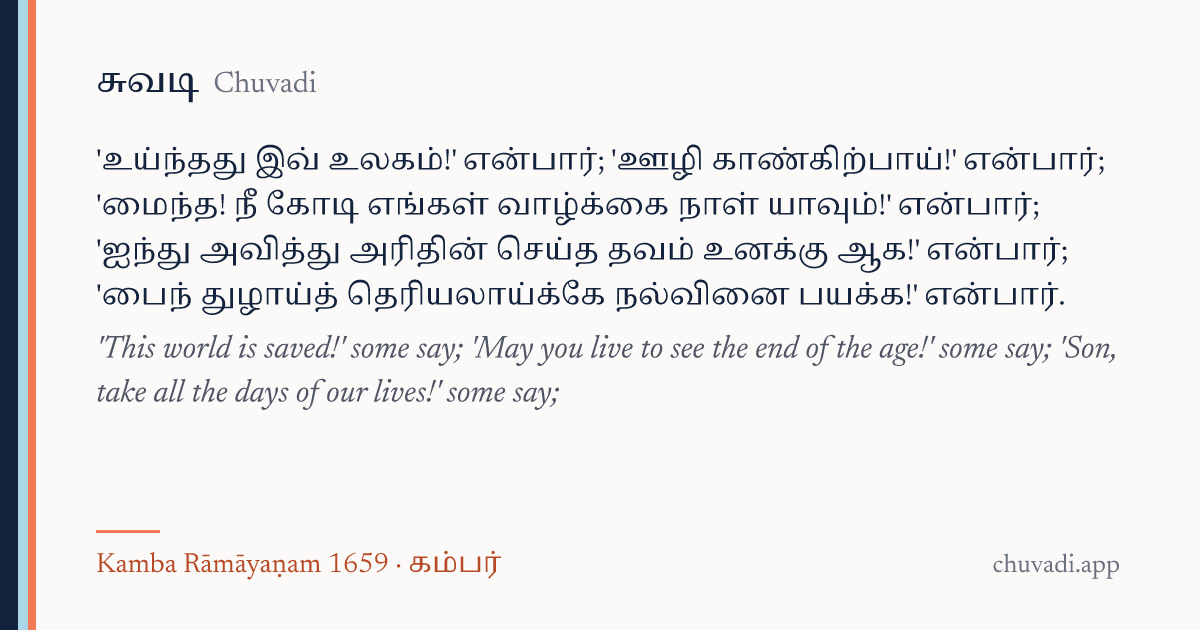
பாடல் · The poem
Tap a word to see its gloss in the commentary and where else it occurs.
பொருள் · Meaning in Tamil
இவ் உலகம் உய்ந்தது என்பார் - (அவர்களுள்) இந் நிலவுலகம் கரைமரம் சேர்ந்தது என்பார் சிலர்; ஊழி காண்கிற்பாய் என்பார் - நீ ஊழியின் முடிவு கண்டு வாழ்வாய் என்பார் சிலர்; மைந்த - ஐயனே; எங்கள் வாழ்க்கை நாள் யாவும் நீ கோடி என்பார் - எங்கள் ஆயுள் முழுவதையும் நீ எடுத்துக்கொள்வாய் என்பார் சிலர்; ஐந்து அவித்து அரிதின் செய்த தவம் - நாங்கள் ஐம்புலன்களையும் அடக்கி அரிதாகச் செய்த தவத்தின் பயன்; உனக்கு ஆக என்பார் - உனக்கு உளதாகுக என்பார் சிலர்; பைந் துழாய்த் தெரியலாய்க்கே - பசிய துளசிமாலையை அணிந்த உனக்கே; நல்வினை பயக்க என்பார் - புண்ணியம் உண்டாவதாக என்பார் சிலர்.
மக்கள் அனைவரும் தங்கள் ஆர்வம் தோன்ற இராமபிரானை வெவ்வேறு முறையில் வாழ்த்தினர். ‘எங்கள் வாழ்க்கை நாள் யாவும் நீ கோடி’ என்பதனோடு ‘யான் வாழு நாளும் பண்ணன் வாழிய’ (புறம். 173) என்பது ஒப்பு தக்கது. ஐந்து என்னும் முற்றும்மை விகாரத்தால் தொக்கது.
ஆங்கிலம் · English translationAI
Translation
- 'This world is saved!' some say; 'May you live to see the end of the age!' some say;
- 'Son, take all the days of our lives!' some say;
- 'May the penance we did with such pains, quelling the five senses, be yours!' some say;
- 'May all merit come to you, who wear the fresh tulasi garland!' some say.
What the poem says
The citizens shower blessings on Irāmaṉ, each in his own way. Some say the world is saved; some wish him life until the end of the age; some offer him all the remaining days of their own lives.
The sages offer him the fruit of their hard-won austerities, and others wish all merit on him, here pictured as Vishnu wearing the tulasi garland. The commentary compares an old Puṟanāṉūṟu poem in which a poet wishes his patron his own years of life.