



கம்பராமாயணம் 1671 · அயோத்தியா 3.104
பாடல் · The poem
Tap a word to see its gloss in the commentary and where else it occurs.
பாட வேறுபாடு · Project Madurai reads
பொருள் · Meaning in Tamil
ஆங்கு வந்து அடைந்த அண்ணல் - தயரதனின் அரண்மனைக்கு வந்து சேர்ந்த இராமபிரான்; ஆசையின் கவரி வீச - திசைகள் தோறும் சாமரைகள் வீச; பூங் குழல் மகளிர் உள்ளம் - பூவை அணிந்துள்ள குழலையுடைய மங்கையர் மனம்; புதுக் களி ஆட - புதிய மகிழ்ச்சியால் ஆடவும்; வீங்கு இருங் காதல் காட்டி - மிகுந்த விருப்பத்தை (தன் வருகையில்) காட்டி; ஓங்கிய மகுடம் சூடி - சிறந்த கிரீடத்தை அணிந்த; அரசன் - தயரதன்; விரி அரி சுமந்த பீடத்து - விசாலமான சிங்கம் தாங்கும் ஆசனத்தில்; உவகை வீற்றிருப்பக் காணான் - மகிழ்வுடன் வீற்றிருக்கவும் கண்டானில்லை.
மகளிர் உவகையால் ஆடுதலையும் தயரதன் காதல் காட்டி வீற்றிருத்தலையும் இராமன் காணவில்லை. அரண்மனை பொலிவின்றி இருந்தது என்றவாறு. ஆசை - திசை. வீற்றிருத்தல் - மற்றொருவர்க்கு இல்லாத சிறப்போடு விளங்கித் தோன்றுதல்.
ஆங்கிலம் · English translationAI
Translation
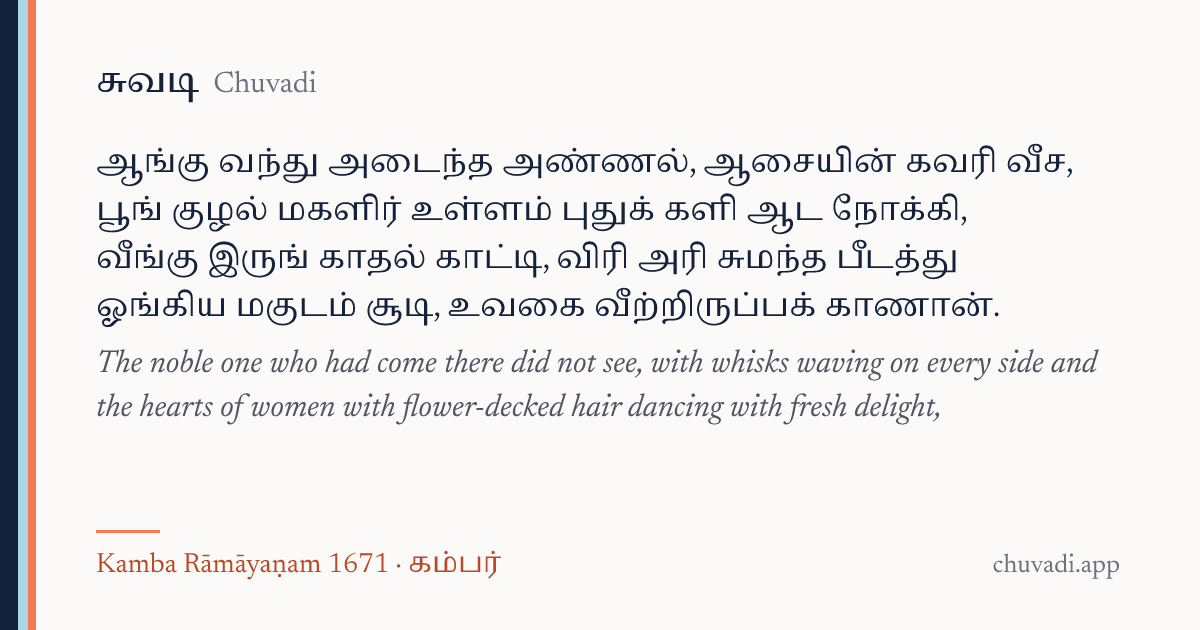
- The noble one who had come there did not see, with whisks waving on every side
- and the hearts of women with flower-decked hair dancing with fresh delight,
- the king, showing his swelling love, on the broad seat borne by lions,
- wearing the lofty crown, sitting there in joy.
What the poem says
When Irāmaṉ enters the palace, he does not find what he expects. There are no fly-whisks waving, no women dancing with joy, and no father sitting crowned on the lion throne, beaming with love to welcome him.
The palace is dim and lifeless. The verse describes the scene by listing everything that is missing.