



கம்பராமாயணம் 1674 · அயோத்தியா 3.107
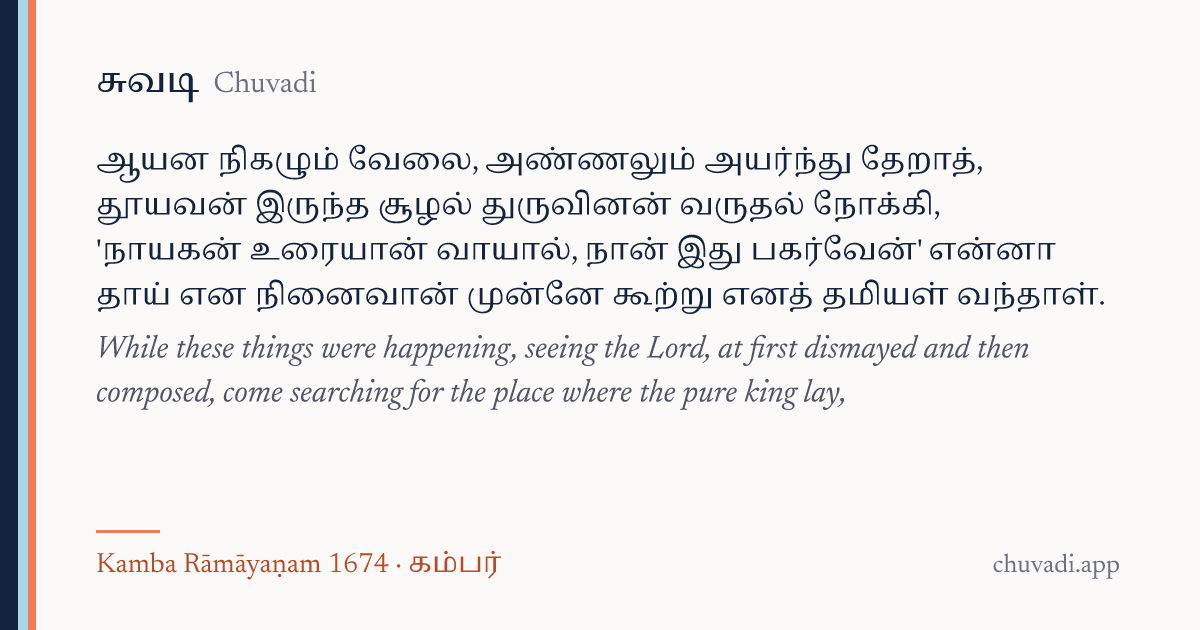
பாடல் · The poem
Tap a word to see its gloss in the commentary and where else it occurs.
பொருள் · Meaning in Tamil
ஆயன நிகழும் வேலை - அப்படிப்பட்டவை நடந்துகொண்டிருக்கும் வேளையில்; அண்ணலும் - இராமபிரானும்; அயர்ந்து தேறா - முதலில் மனம் சோர்ந்து பின்னர்த் தெளிவுற்று; தூயவன் இருந்த சூழல் - நல்லவனான தயரதன் இருந்த இடத்தை; துருவினன் வருதல் நோக்கி - தேடி வருவதைப் பார்த்து; நாயகன் வாயால் உரையான் - கணவன் தன் வாயால் சொல்ல மாட்டான்; “நான் இது பகர்வேன்” என்னா - நானே இதனைச் சொல்லுவேன் என்று எண்ணிக் கொண்டு; தாய் என நினைவான் முன்னே - தன்னைத் தாய் என்று கருதும் இராமபிரான் முன்னே; கூற்று என - எமன் போல; தமியள் வந்தாள் - நிகரற்ற கொடுமைக்காரியான கைகேயி வந்தாள்.
அன்பு பொழியும் தாய் என்று கருதுபவன் முன்னே துன்பு தரும் எமன் போல வந்தாள் என்க. ‘வாயால்’ என்று வேண்டாது கூறினார், இராமனுக்கு நன்மை பயப்பனவற்றையே சொல்லிப் பழகியவாய் என்று அறிவித்தற்கு. இது என்றது, அவள் பெற்ற இருவரங்களைத் தெரிவித்தலைச் சுட்டியது.
ஆங்கிலம் · English translationAI
Translation
- While these things were happening, seeing the Lord, at first dismayed and then composed,
- come searching for the place where the pure king lay,
- thinking 'My husband will not say it with his own mouth; I will tell it',
- before him who thought of her as his mother she came, alone, like Death.
What the poem says
Irāmaṉ, at first troubled at not finding his father in his usual place, collects himself and goes looking for where the king is lying.
Kaikēyi sees him coming. Knowing that Tacarataṉ will never be able to speak the words himself, since his mouth has only ever said good things to Irāmaṉ, she decides to tell him herself, and comes forward alone, like Death, to face the son who thinks of her as a loving mother.