



கம்பராமாயணம் 1676 · அயோத்தியா 3.109
பாடல் · The poem
Tap a word to see its gloss in the commentary and where else it occurs.
பாட வேறுபாடு · Project Madurai reads
பொருள் · Meaning in Tamil
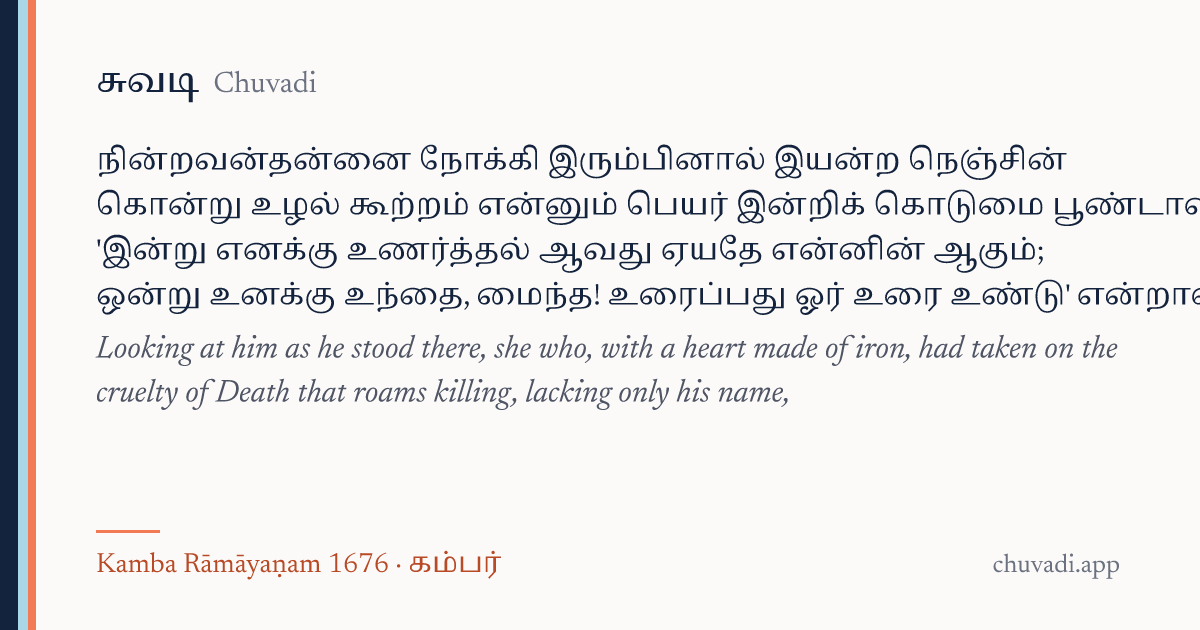
இரும்பினால் இயன்ற நெஞ்சின் - இரும்பினால் ஆகிய மனத்தோடு; கொன்று உழல் கூற்றம் என்னும் பெயர் இன்றி - உயிர்களைக் கொன்று திரியும் எமன் என்னும் பெயர்மட்டும் இல்லாமல்; கொடுமை பூண்டாள் - அவனுடைய கொடுந்தன்மையை மேற்கொண்டவளாகிய கைகேயி; “மைந்த - மகனே; உந்தை உனக்கு உரைப்பது - உன் தந்தை உனக்குச் சொல்வதாகிய; ஓர் உரை ஒன்று உண்டு - சொல் ஒன்று உள்ளது; இன்று எனக்கு உணர்த்தல் ஆவது ஏயது என்னில் - இப்பொழுது எனக்கு (உன்னிடம் அதைச்) சொல்வது பொருத்தமானது என்று நீ கருதினால்; ஆகும்” என்றாள் - நான் அதனைத் தெரிவிக்கலாம் என்றாள்.
கைகேயி தான் சொல்லப்போவது இன்னாத சொல்லாதலின் அதனை விரையக் கூறாது, இராமனுடைய இசைவு பெற்றுத் தெரிவிக்க எண்ணி நயமாகப் பேசுகிறாள். இது கைகேயியின் வஞ்சக மனத்தைக் காட்டுகிறது.
ஆங்கிலம் · English translationAI
Translation
- Looking at him as he stood there, she who, with a heart made of iron,
- had taken on the cruelty of Death that roams killing, lacking only his name,
- said: 'If it is fitting for me to tell you today, it can be done;
- son, there is one word that your father has to say to you.'
What the poem says
Kaikēyi, iron-hearted, has everything of Death, the roaming killer, except the name. She does not blurt out her news. Knowing how cruel it is, she approaches it cautiously and craftily.
She tells Irāmaṉ that his father has a message for him, and offers to deliver it herself if he thinks it proper for her to do so. By seeking his consent first, she prepares the ground, and the commentary sees her deceitful mind at work in this careful courtesy.