



கம்பராமாயணம் 1677 · அயோத்தியா 3.110
பாடல் · The poem
Tap a word to see its gloss in the commentary and where else it occurs.
பாட வேறுபாடு · Project Madurai reads
பொருள் · Meaning in Tamil
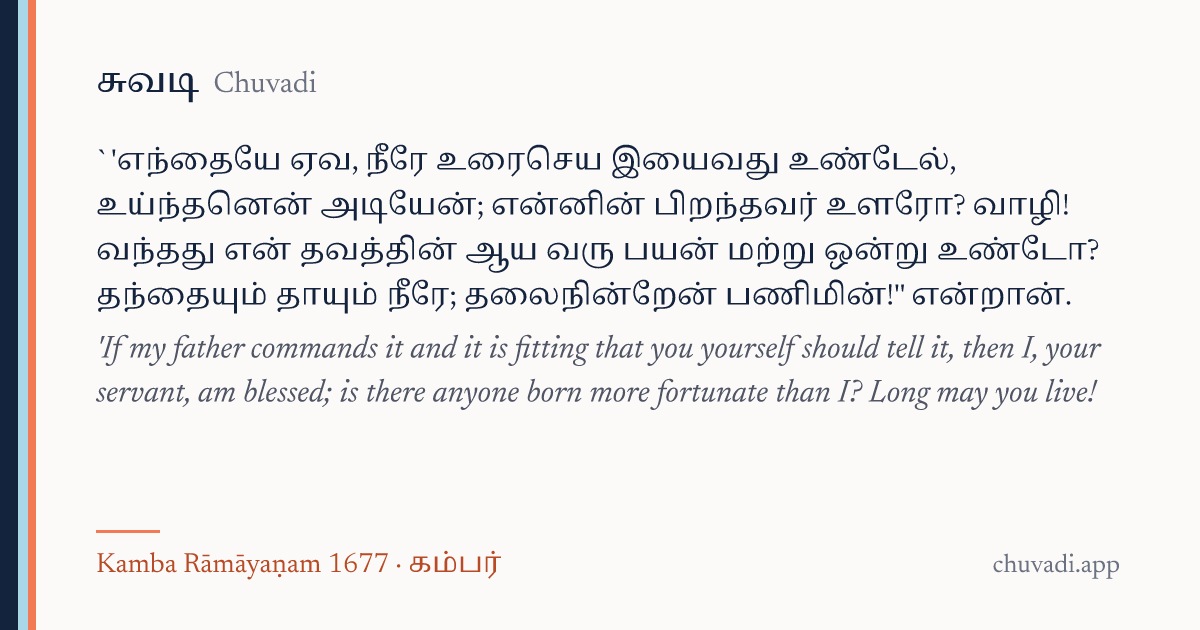
“எந்தையே ஏவ - என் தந்தையாரே கட்டளைவிட; நீரே உரை செய இயைவது உண்டேல் - (அதனை) நீரே தெரிவிக்க இசைவதானால்; அடியேன் உய்ந்தனென் - நான் ஈடேறிவிட்டேன்; என்னின் பிறந்தவர் உளரோ - என்னைக் காட்டிலும் (மேன்மை அடையும்படி) பிறந்தவர் வேறொருவர் இருக்கின்றாரோ? (இல்லை); என் தவத்தின் ஆய பயன் வந்தது - என் முன்னைத் தவத்தால் உண்டாகிய பயன் வந்துவிட்டது; வரு பயன் மற்று ஒன்று உண்டோ? - இதனினும் சிறந்ததாக வரக்கூடிய நற்பயன் பிறிதொன்று உள்ளதோ? (இல்லை); தந்தையும் தாயும் நீரே - எனக்கு நன்மையானவற்றைச் செய்யும் தகப்பனும், இனிமையானவற்றைச் செய்யும் தாயும் நீரே ஆவீர்; தலைநின்றேன் பணிமின் - நீர் சொல்லப்போவதைத் தலைமேற் கொண்டு நின்றேன் கட்டளையிடுங்கள்;” என்றான்.
இதனால் தாய் தந்தையரிடம் இராமன் காட்டிய மரியாதை புலப்படுகிறது. நீரே - பிரிநிலை ஏகாரம். வாழி - முன்னிலை அசை. தலைநின்றேன் - கால வழுவமைதி; தெளிவுபற்றி எதிர்காலம் இறந்த காலமாயிற்று. பயன் - இடைநிலை விளக்காக நின்று முன்னும் பின்னும் இயைந்தது.
ஆங்கிலம் · English translationAI
Translation
- 'If my father commands it and it is fitting that you yourself should tell it,
- then I, your servant, am blessed; is there anyone born more fortunate than I? Long may you live!
- The fruit of my penance has come; is there any other fruit to come?
- You are my father and my mother; I hold your word upon my head; command me!' he said.
What the poem says
Irāmaṉ answers with complete trust. If his father commands something and Kaikēyi herself delivers the message, he counts himself supremely blessed. No one could be more fortunate, and no greater reward could come to him.
She is both father and mother to him, the one who does him good and the one who does him kindness, and he declares that he has already accepted her command before hearing it. The commentary notes the past tense, 'I hold', used for a future act out of certainty.