



கம்பராமாயணம் 1678 · அயோத்தியா 3.111
பாடல் · The poem
Tap a word to see its gloss in the commentary and where else it occurs.
பொருள் · Meaning in Tamil
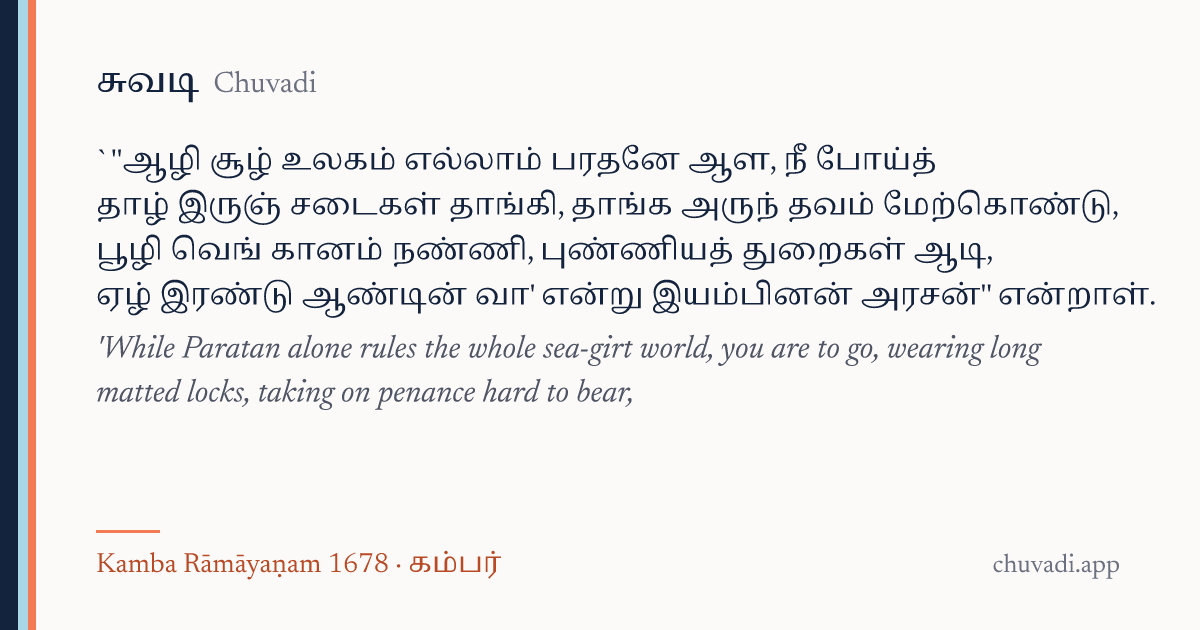
“ஆழி சூழ் உலகம் எல்லாம் - கடலால் சூழப்பட்ட உலகம் முழுவதையும்; பரதனே ஆள - பரதனே முடிசூடி ஆண்டுகொண்டிருக்க; நீ போய் - நீ நாட்டை விட்டுச் சென்று; தாழ் இருஞ் சடைகள் தாங்கி - தொங்குகின்ற பெரிய சடைகளைத் தாங்கிக்கொண்டு; தாங்க அருந் தவம் மேற்கொண்டு - தாங்குவதற்கரிய தவத்தை ஏற்று; பூழி வெம் கானம் நண்ணி - புழுதி நிறைந்த கொடிய காட்டை அடைந்து; புண்ணியத் துறைகள் ஆடி - புண்ணியத் தீர்த்தங்களில் நீராடி; ஏழ் இரண்டு ஆண்டின் வா என்று - பதினான்கு ஆண்டுகள் கழித்த பின்பு திரும்பி வருவாய் என்று; அரசன் இயம்பினன்” என்றாள் - அரசன் சொன்னான் என்றாள்.
இது, கைகேயியின் மனத்தையும் அவள் பேச்சின் நயத்தையும் காட்டுகிறது. பரதனே என்பதில் உள்ள பிரிநிலை ஏகாரம் அவள் ஆசையைக் காட்டுகிறது. தாழ்இருஞ் சடை தாங்குதல், தவம் மேற்கொள்ளல், கானம் சேர்தல், புண்ணியத் துறைகள் ஆடுதல் முதலிய நற்பயன்கள் கிட்டவே அரசன் இவ்வாறு பணித்தான் என்று கூறித் தான் வரங்கேட்டதை மறைத்தலின் அவளது வஞ்சகம் தெரிகிறது. பதினான்கு ஆண்டுகள் என்னாது ‘ஏழ் இரண்டு ஆண்டு’ என்று சுருக்கிக் கூறுதல் அவளது கரவுப் பேச்சைப் புலப்படுத்துகிறது. தான் பழியற்றவள் என்பதைக் காட்டுவதற்காக ‘இயம்பினன் அரசன்’ என்றாள். மேலும் தந்தை என்னாது அரசன் கூறினான் என்பதால் அரசு ஆணை இது மீறுதற்கு அரிது என்பதைச் சுட்டினாள்.
ஆங்கிலம் · English translationAI
Translation
- 'While Paratan alone rules the whole sea-girt world, you are to go,
- wearing long matted locks, taking on penance hard to bear,
- to the dusty, burning forest, bathing at the holy fords,
- and return after seven times two years: so the king has said,' she said.
What the poem says
Kaikēyi finally delivers the message. Paratan is to rule the whole world; Irāmaṉ is to go to the harsh forest as an ascetic with matted hair, bathe at holy places, and come back after fourteen years.
The commentary points out her cunning. She stresses 'Paratan alone'. She dresses up the exile as a chance to earn spiritual merit and hides the fact that she demanded it. She says 'seven times two' rather than 'fourteen' to make the term sound shorter. And she says 'the king has said', not 'your father', so that it carries the force of a royal order that cannot be disobeyed.