



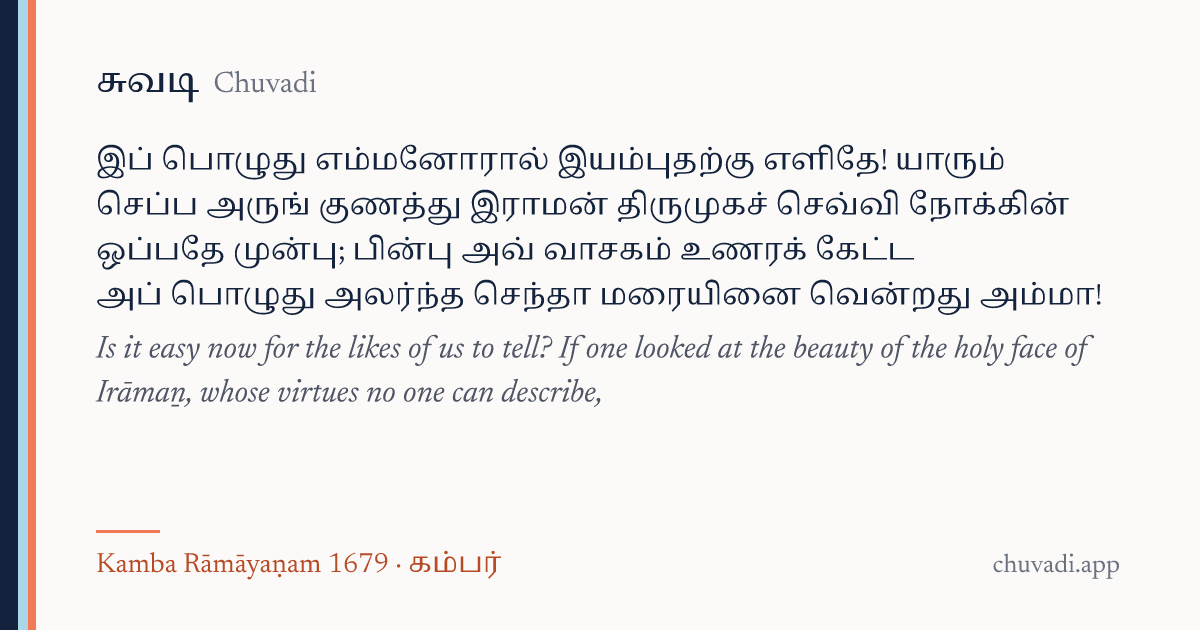
கம்பராமாயணம் 1679 · அயோத்தியா 3.112
பாடல் · The poem
Tap a word to see its gloss in the commentary and where else it occurs.
பொருள் · Meaning in Tamil
யாரும் செப்ப அருங் குணத்து இராமன் - எவராலும் சொல்லுதற்கரிய நற்பண்புகளையுடைய இராமபிரானது; திருமுகச் செவ்வி நோக்கின் - திருமுகத்தின் அழகைப் பார்த்தால்; எம்மனோரால் இயம்புதற்கு எளிதே - (அது) எம்மைப் போன்றவர்களால் சொல்லுவதற்கு எளிதோ? (அன்று); முன்பு பின்பு ஒப்பதே - கைகேயி சொன்னவற்றைக் கேட்பதற்கு முன்பும் அவற்றைக் கேட்டதற்குப் பின்பும் செந்தாமரையைப் போன்றிருந்தது; அவ்வாசகம் உணரக் கேட்ட அப்பொழுது - அந்தச் சொற்களைத் தெரியும்படி கேட்ட அந்தச் சமயத்தில்; அலர்ந்த செந்தாமரையினை - மலர்ந்த செந்தாமரை மலரினை; வென்றது - வென்றுவிட்டது.
கைகேயியின் கொடிய சொற்கள் இராமனைத் துன்புறுத்தாமல் இன்புறுத்தியதால் அப்பொழுது அவன் முகம் தாமரையின் அழகை வென்றது என்பதாம். எளிதே - ஏகாரம் எதிர்மறை. அம்மா - வியப்பு இடைச்சொல். இதனோடு, ‘மெய்த் திருப்பதம் மேவு என்ற போதினும், இத் திருத் துறந்து ஏகு என்ற போதினும், சித்திரத்தின் அலர்ந்த செந்தாமரை ஒத்திருக்கும் முகத்தினை உன்னுவாள்’ (5088) என்னும் சுந்தர காண்டப் பாடல் ஒப்பு நோக்கத்தக்கது.
ஆங்கிலம் · English translationAI
Translation
- Is it easy now for the likes of us to tell? If one looked at the beauty
- of the holy face of Irāmaṉ, whose virtues no one can describe,
- before, it only resembled one; but at the moment he heard and understood those words,
- it surpassed the red lotus in full bloom. Ah!
What the poem says
The poet marvels at Irāmaṉ's reaction. Before Kaikēyi spoke, his face could merely be compared to a red lotus. On hearing that he must give up the crown and go into exile, his face lights up so that it surpasses a lotus in full bloom.
Her cruel words have not hurt him but pleased him, because he is glad to obey his father. The commentary compares a famous verse later in the epic where Cītai remembers that Irāmaṉ's face looked exactly the same whether he was told to take the throne or to leave it.