



கம்பராமாயணம் 168 · பால 4.12
பாடல் · The poem
Tap a word to see its gloss in the commentary and where else it occurs.
பாட வேறுபாடு · Project Madurai reads
பொருள் · Meaning in Tamil
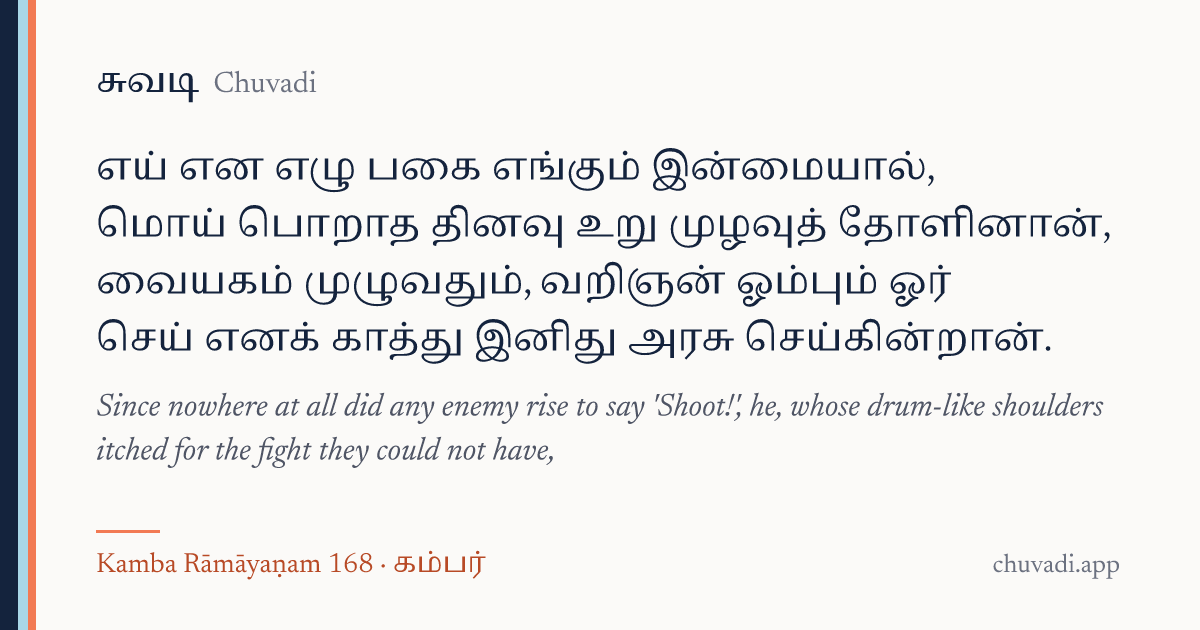
எங்கும் எய்என எழுபகை இன்மையால் - (அம் மன்னனுக்கு) எவ்விடத்திலும் விரைந்து எழுகின்ற பகைவர்கள் இல்லாமையால்; மொய் பொறா தினவு உறு - போர்த் தொழிலே பெறாமையால் தினவு கொண்டனவான; முழவுத் தோளினான் - மத்தளம் போன்ற திரண்ட தோள்களை உடைய அவ்வரசன்; வையகம் முழுவதும் - உலகில் வாழும் உயிர்கள் அனைத்தையும்; வறிஞன் ஓம்பும் ஓர் செய்என - வறியவன் தனக்குள்ள ஒரே வயலைக் கண்ணும் கருத்துமாகப் பாதுகாப்பது போல; காத்து, இனிது அரசுசெய்கின்றான் - பாதுகாத்து இனிமையான ஆட்சிசெய்து வருகிறான்.
மொய்பெறா: போர் செய்தல் இல்லாமையால் தோள்கள் தினவுறுதல் இயற்கை. தோளுக்கு ‘முழவு’ திரட்சியால் உவமை ஆயிற்று. பெறா: பெறாத ஈறு கெட்ட எதிர் மறைப்பெயரெச்சம். ஓம்புதல்: காத்தல்; உறு தோள்: வினைத்தொகை.
‘எய் என’ என்பதற்கு அம்புகளை எய்யுங்கள் என்று சொல்லும்படி எழுகின்ற பகை எனவும் பொருள் கூறுவர்.
ஆங்கிலம் · English translationAI
Translation
- Since nowhere at all did any enemy rise to say 'Shoot!',
- he, whose drum-like shoulders itched for the fight they could not have,
- guarded the whole wide world as a poor man guards
- his single field, and ruled it happily.
What the poem says
There are no enemies left, and Tacarataṉ's warrior shoulders itch for battle that never comes.
Instead he looks after the whole world as carefully as a poor farmer tends the one field that is all he owns. The canto ends here, and the next part of the story begins.