



கம்பராமாயணம் 1681 · அயோத்தியா 3.114
பாடல் · The poem
Tap a word to see its gloss in the commentary and where else it occurs.
பாட வேறுபாடு · Project Madurai reads
பொருள் · Meaning in Tamil
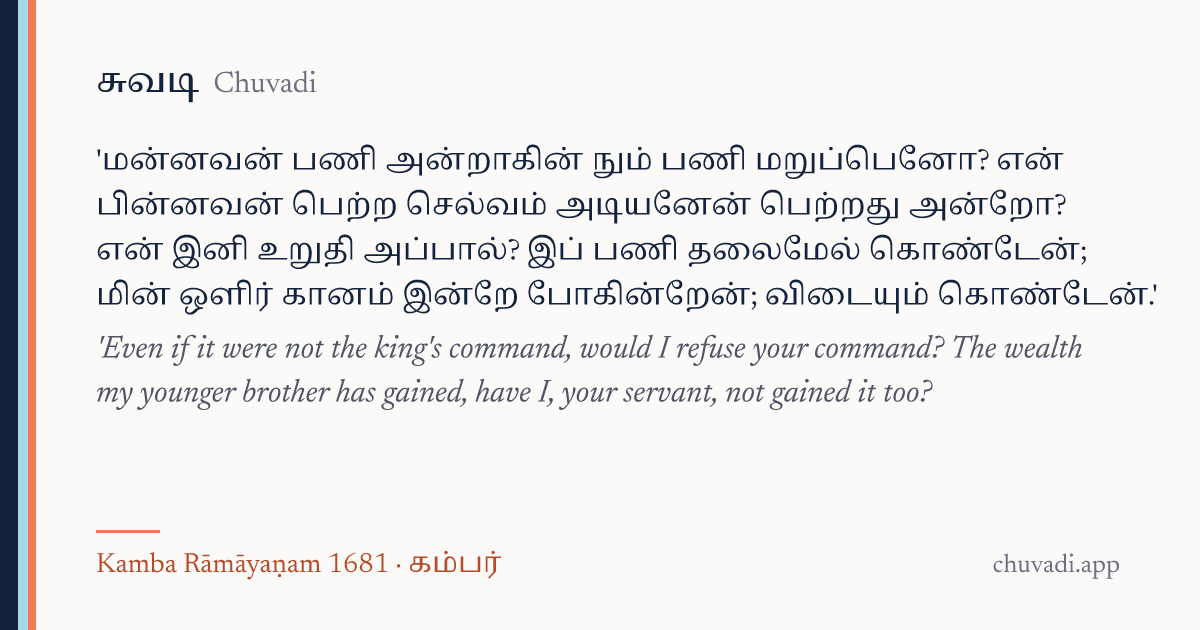
“மன்னவன் பணி அன்று ஆகின் - அரசன் கட்டளை அன்று என்றாலும்; நும் பணி மறுப்பெனோ - நுமது கட்டளையை யான் செய்யமாட்டேன் என்பேனோ?; என் பின்னவன் பெற்ற செல்வம் - என் தம்பி பரதன் அடைந்த பேறு; அடியனேன் பெற்றது அன்றோ - நான் அடைந்தது அன்றோ?; அப்பால் என் இனி உறுதி - இதற்குப் புறம்பான நன்மை வேறு யாது?; இப் பணி தலைமேல் கொண்டேன் - இக்கட்டளையைத் தலையின்மேல் ஏற்றுக்கொண்டேன்; மின் ஒளிர் கானம் - மின்னல் போல வெயிலொளி வீசும் காட்டிற்கு; இன்றே போகின்றேன் - இப்பொழுதே போகின்றேன்; விடையும் கொண்டேன் - நும்மிடம் விடையும் பெற்றுக்கொண்டேன்.”
அரசன் கட்டளையிட வேண்டும் என்பதில்லை; நுமது கட்டளையே போதும். கானகம் செல்வேன் என்றான் இராமன். ‘மன்னவன் பணி அன்று ஆகின்’ என்பதில் உம்மை தொக்கது. விடையும் கொண்டேன் - விரைவு பற்றி இறந்த காலத்தால் கூறப்பட்டது; கால வழுவமைதி.
ஆங்கிலம் · English translationAI
Translation
- 'Even if it were not the king's command, would I refuse your command? The wealth
- my younger brother has gained, have I, your servant, not gained it too?
- What greater good could there be beyond this? I take this command upon my head;
- I go this very day to the forest where the sun blazes like lightning; I have taken my leave.'
What the poem says
Irāmaṉ accepts without hesitation. Even if the order were Kaikēyi's own and not the king's, he would not refuse her. What his brother Paratan gains, he counts as his own gain.
He takes the command on his head, says he will leave for the sun-scorched forest today, and treats himself as having already taken leave of her. The commentary notes the past tense, 'I have taken my leave', expressing his readiness to go at once.