



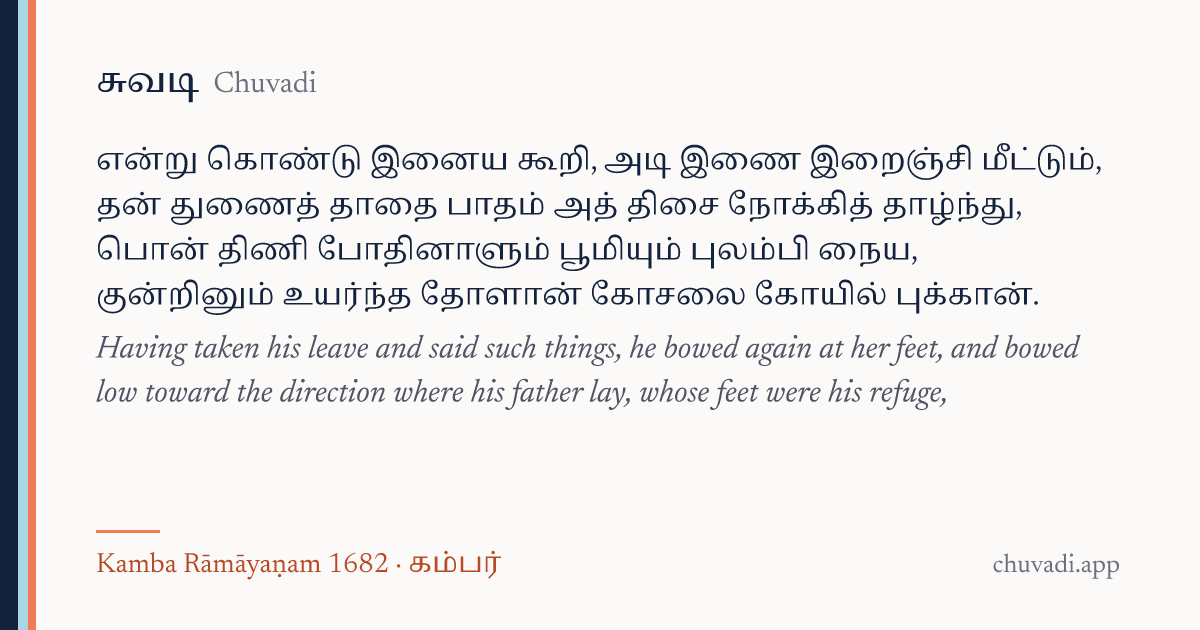
கம்பராமாயணம் 1682 · அயோத்தியா 3.115
பாடல் · The poem
Tap a word to see its gloss in the commentary and where else it occurs.
பொருள் · Meaning in Tamil
குன்றினும் உயர்ந்த தோளான் - மலையினும் சிறந்த தோள்களையுடைய இராமபிரான்; என்று கொண்டு இனைய கூறி - என்று விடைகொண்டு இத்தகையவற்றைச் சொல்லி; மீட்டும் அடி இணை இறைஞ்சி - மீண்டும் கைகேயியின் கால்களில் விழுந்து வணங்கி; தன் தந்தை துணைப் பாதம் - தன் தகப்பனாராகிய தயரதன் அடியிணையை; அத் திசை நோக்கித் தாழ்ந்து - அத்திக்கு நோக்கி வணக்கம் செய்து; பொன்திணி போதினாளும் - பொற்றாமரைப் பூவில் வீற்றிருக்கும் திருமடந்தையும்; பூமியும் - மண்மடந்தையும்; புலம்பி நைய - தனிமைத் துயரால் வருந்தி அழ; கோசலை கோயில் புக்கான் - (அங்கிருந்து புறப்பட்டுக்) கோசலையின் மாளிகையைச் சேர்ந்தான்.
பெரியோர்களைக் கண்டவுடன் வணங்குவதேயன்றிப் பிரியும்போதும் வணங்குதல் முறையாகலின், இராமன் கைகேயியை மீண்டும் வணங்கிச் சென்றான். தந்தையைக் காண முடியாமையின் அவன் இருக்கும் திசை நோக்கி வணங்கினான். தான் வனம் செல்வதனைத் தெரிவிக்கவும், அதனால் தயரதனுக்கு உண்டாகும் பிரிவுத் துயரைத் துடைக்குமாறு வேண்டவும் தன் தாய் கோசலை இல்லம் சென்றான் என்க. புலம்பு - தனிமை. புக்கான் - ‘புகு’ என்னும் பகுதி இரட்டித்துக் காலங்காட்டிற்று.
ஆங்கிலம் · English translationAI
Translation
- Having taken his leave and said such things, he bowed again at her feet,
- and bowed low toward the direction where his father lay, whose feet were his refuge,
- and, while the goddess of the golden lotus and the Earth lamented and pined,
- he whose shoulders rose higher than mountains entered Kōcalai's palace.
What the poem says
This is the last verse of the canto of Kaikēyi's plot. Irāmaṉ bows again to Kaikēyi, since one bows to elders on leaving as well as on arriving. Unable to see his father, he bows in the direction where the king lies.
Then he goes to his own mother Kōcalai's palace, to tell her that he is leaving and to ask her to comfort Tacarataṉ. Tirumakaḷ, goddess of royal fortune, and the Earth goddess, both of whom were to be his brides that day, weep at being left alone.