



கம்பராமாயணம் 1683 · அயோத்தியா 4.1
பாடல் · The poem
Tap a word to see its gloss in the commentary and where else it occurs.
பொருள் · Meaning in Tamil
“மழைக்குன்றம் அனையான் - மேகத்தால் மூடப்பெற்ற மலையை ஒத்தவனாகிய இராமன்; மௌலி கவித்தனன் வரும்” என்று என்று - மகுடம் சூடிக்கொண்டு வருவான் என்று நினைத்துநினைத்து; தழைக்கின்ற உள்ளத்து அன்னாள் முன் - மகிழ்ச்சியால் செழித்த மனம் உடையவளாகிய அக்கோசலையின் முன்பு; குழைக்கின்ற கவரி இன்றி - பக்கங்களில் வீசுகின்ற வெண்சாமரை இல்லாமல்; கொற்ற வெண்குடையும் இன்றி - வெண் கொற்றக்குடையும் இல்லாமல்; இழைக்கின்ற விதி முன் செல்ல - நன்மை தீமைகளை மெல்ல மெல்லச் செல்லச் செல்லக் காட்டி நடத்துகின்ற விதி முன்னே அழைத்துச் செல்ல; தருமம் பின் இரங்கி ஏக - அறக்கடவுள் வருந்திப் பின்னே தொடர்ந்து வர; ஒரு தமியன் சென்றான் - தன்னந் தனியனாய்ச் சென்றான்.
அரசராவார் முன்னர்ச் சாமரை வீச, பின்னர் வெண்கொற்றக் குடைபிடிக்க வருவர் ஆதலின் தன் மகனும் அவ்வாறு மகுடம் சூடி வருவான் என்று தாய் கோசலை எண்ணி மகிழ்ந்திருந்தாள். அவனோ அவள் கண்ணுக்குத் தன்னந் தனியனாய் வருகிறான். ஆயினும், அவனுக்கு முன்னால் விதி செல்கிறது. பின்னால் தருமம் இரங்கி அழுதுகொண்டே வருகிறது, சாமரையும் குடையும் போல என்கிறார் கவிஞர்.
விதி நிகழ்வுகள் முன் தெரிவதில்லை. நிகழ நிகழத்தான் தெரியும் ஆதலின், ‘இழைக்கின்ற விதி’ என்றது அரிய சொல்லாட்சி. கோலம் போடுகிற போது போடப் போடவே கோல வடிவு பெறுதல் போலவே விதியும் தன் வேலையை நிகழ்த்தும்.
ஆங்கிலம் · English translationAI
Translation
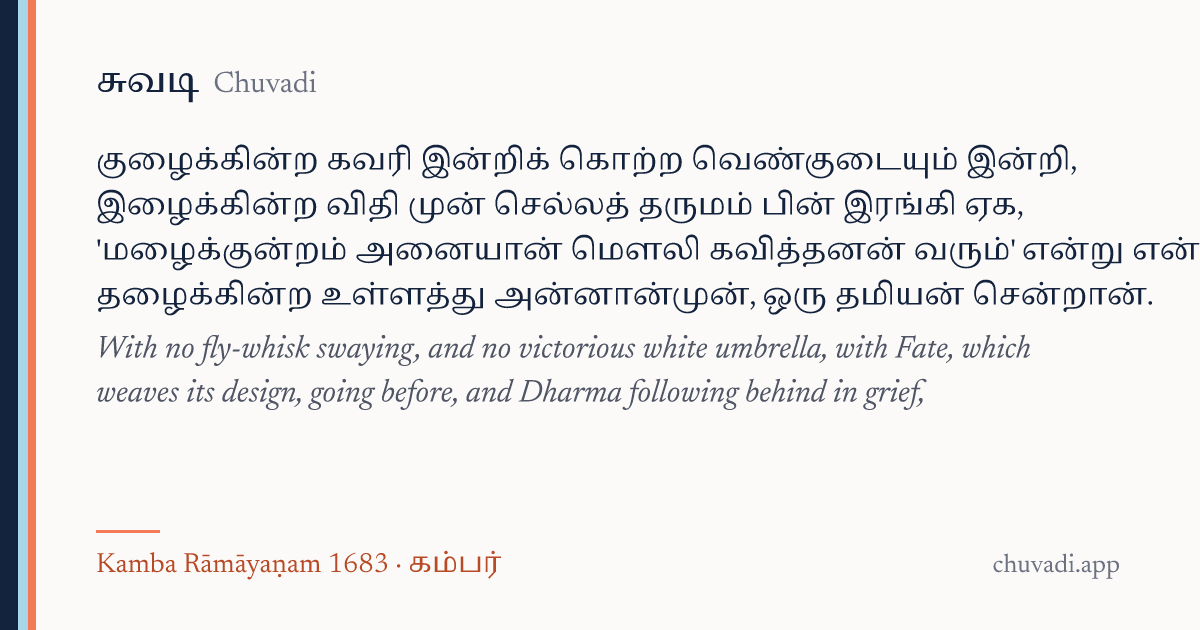
- With no fly-whisk swaying, and no victorious white umbrella,
- with Fate, which weaves its design, going before, and Dharma following behind in grief,
- before her whose heart was flourishing as she kept thinking 'He who is like a rain-cloud mountain will come crowned',
- he went, a man all alone.
What the poem says
This opens the canto 'Leaving the City'. Irāmaṉ comes to his mother Kōcalai, who is happily expecting him to arrive crowned, with fly-whisks waving before him and the white royal umbrella held behind.
Instead he comes quite alone. Yet in a sense he is still attended: Fate walks in front of him in place of the whisk, and Dharma follows behind weeping, in place of the umbrella. The commentary admires the phrase 'Fate that weaves': like a kōlam drawing on the threshold, fate's pattern only becomes visible as it is drawn.