



கம்பராமாயணம் 1685 · அயோத்தியா 4.3
பாடல் · The poem
Tap a word to see its gloss in the commentary and where else it occurs.
பொருள் · Meaning in Tamil
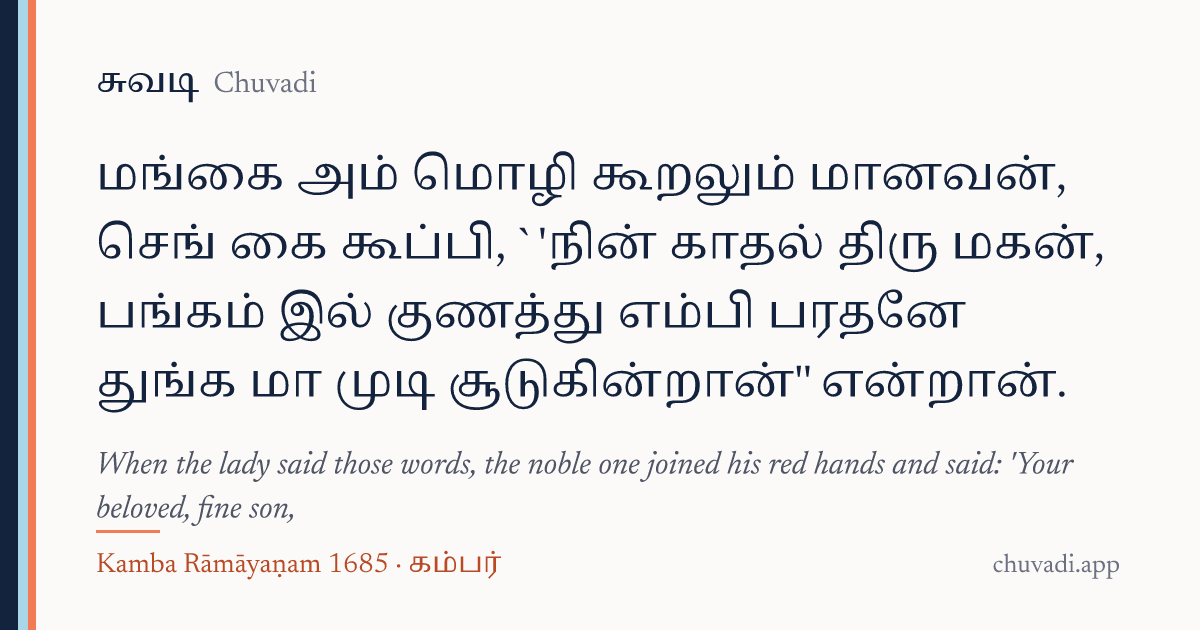
மங்கை - கோசலை; அம்மொழி கூறலும் - ‘நெடுமுடி புனைதற்கு இடையூறு உண்டோ?’ என்ற அந்த வார்த்தையைச் சொல்லிய உடன்; மானவன் - பெருமை குறையாத இராமன்; செங்கை கூப்பி - (தாயைச்) சிவந்த கைகளைக் கூப்பித் தொழுது; “நின்காதல் திருமகன் - உன்னுடைய அன்பிற்குரிய சிறந்த புதல்வன்; பங்கம் இல் குணத்து எம்பி - குற்றமற்ற குணநலன்களை உடைய என் தம்பி; பரதனே -; துங்க மாமுடி சூடுகின்றான் - பரிசுத்தமான சிறந்த முடியைச் சூடப்போகிறான்;” என்றான்.
தாயிடத்துக் கூறுகின்றான் ஆதலின், அவள் வேற்றுமை இன்றி உணர வேண்டி முன்னதாகவே ‘நின்காதல் திருமகன்’, ‘பங்கம் இல் குணத்து எம்பி’ என்றெல்லாம் இராமன் எடுத்துக் கூறினான். பரதன் என்ற சொல்லுக்கு ‘நாட்டைப் பரிப்பவன்’ - தாங்குபவன் என்பது பொருள். அப்பெயர்க்கேற்ப அவன் ஆட்சி உரிமை எய்தியது உணர்ந்து இன்புறற்குரியது.
ஆங்கிலம் · English translationAI
Translation
- When the lady said those words, the noble one
- joined his red hands and said: 'Your beloved, fine son,
- my brother of flawless virtue, Paratan,
- is to wear the great pure crown.'
What the poem says
Irāmaṉ breaks the news gently. Before naming Paratan, he calls him 'your beloved son' and 'my brother of flawless virtue', so that his mother will hear it without any sense that Paratan is someone else's son.
The commentary adds that the name Paratan means 'one who bears' the land, so it is fitting that he should receive the right to rule.